0
0

NEW YORK, July 13: The United States on Friday poured cold water on Indian pronouncements about its stand-off with Pakistan and said that there had been some easing of tensions and a significant decline in infiltration across the Line of Control.
The White House and the State Department also reaffirmed that the US wanted to see “a continuation of steps on the Indian side to ease off and de-escalate the situation.”
State Department Spokesman Richard Boucher also said that during his visit to India and Pakistan later this month he would try to persuade both countries to settle their differences over Kashmir.
“We’re continuing to look for the kinds of actions that both sides can take to move this process forward, such as closing of the camps where the militants on the Pakistani side are based,” Mr Boucher said. He said the United States also wanted to see “a continuation of steps on the Indian side to ease off and de-escalate the situation.”
“We want to keep the momentum going towards easing of tensions and we want to keep on the agenda the issue of dialogue, which is that ultimately these questions will be resolved,” Mr Boucher said.
White House Press Secretary Ari Fleicher reiterated that “through the very act of diplomacy and some of the personal efforts of the President and the Secretary of State, and numerous other diplomats, tensions have indeed been reduced tremendously between India and Pakistan.”
However, he said: “It remains one of the world’s most volatile, dangerous regions. It’s an area the administration is going to remain actively and consistently engaged in, hence the Secretary’s trip.”
Mr Boucher also said that in Pakistan “there is a movement towards democracy with elections in October that we want to firmly support. That can be an important step on the road back to democracy, which is very important to us”.
He said the Secretary of State Colin Powell would be in India and Pakistan on July 27-28 then travel to Kuala Lumpur on July 29, and Singapore on July 30. Mr Powell is to attend a meeting of the Association of Southeast Asian Nations in Brunei on July 30-Aug 1, then go to Jakarta on Aug 2, and Manila on Aug 3.
In reply to a question about the India-Pakistan tensions, Mr Boucher said that Mr Powell had been in close touch with leaders in this region in addition to visits undertaken to the region by Deputy Secretary Armitage and Defence Secretary Rumsfeld.
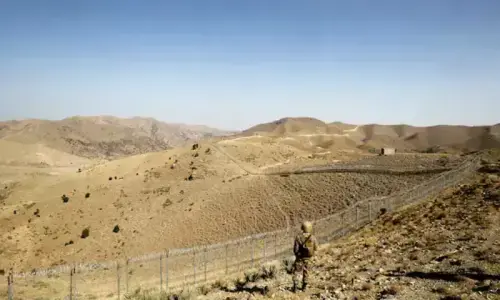
He said: “Those have produced the easing of tensions that we’ve seen. The Secretary is continuing to work with the leaders there by phone. He spoke last week to the outgoing Indian foreign minister and the incoming Indian foreign minister. He spoke on Monday to President Pervez Musharraf. So we’ve kept in touch directly, as well as through our ambassadors and our embassies out there. The issue I would say at this point is that there has been some easing of tensions, there has been a significant decline in the infiltration along the Line of Control.
“We continue to look for that to be made permanent in accordance with the pledges that President Musharraf has made. We’re continuing to look for the kind of actions that both sides can take to make this process move forward, in terms of, for example, ending the camps on the Pakistani side, continuing to take steps such as the Indians have taken to ease the tensions, to allow — you know, they’ve allowed personnel to go on leave from the military, they’ve redeployed some of their ships.
“And so we want to keep that momentum going towards the easing of tensions, and we want to keep on the agenda and in discussions with them the issue of dialogue, which is, I think we all agree, the way that ultimately these questions need to be resolved. So our interests in pursuing that and seeing it move forward is very strong.
“There are other issues. We have important relationships with both these countries as well, in Pakistan a growing and broadening relationship and a movement towards democracy with elections in October that we want to firmly support. That can be an important step on the road back to democracy, which is very important to us. And with India, a much broader relationship as well. So a lot to discuss.”
Question: We’ve been told that tensions are easing, and that the Indians — and some Indian soldiers, in fact, have been removed from the border, from the line of defence. But, the Indian ministers have been saying no; the Indian ministers have been saying that the infiltration is continuing, even increasing. Military and civilian Indian officials have also said this. Is the US confident there is some decline in tensions, that Musharraf is making good?
Boucher: “We are confident, and I think Indian officials have said this, whatever the temporary increases that they report, overall there’s a significant decline in the level of infiltration. Now, President Musharraf has said that that’s a permanent change. He’s made that commitment to us and we’ve conveyed it to the Indian government. And we all want to see that happen, that this does remain a permanent change. And second of all, we want to see the continued action that he has talked about, like the action against camps and groups. So we want to see those things continue. We also want to see a continuation of steps on the Indian side to ease off and de-escalate the situation.”