0
0


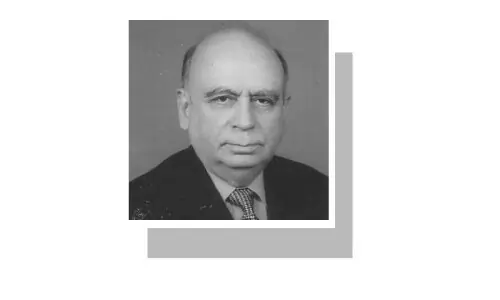
THE former chairman of the Sociology, Criminology and Population Sciences departments at the University of Karachi, Prof Dr Fateh Mohammad Burfat is one of the most dynamic personalities in the fields of academic and practical social work.
Having started his career at the age of 16, in 1973, Dr Burfat has had the privilege of teaching in both formal and as well as informal settings. He joined the University of Karachi in 1988 and after obtaining his PhD in 2001 is serving as a professor there.
Contemplating on his 36-year academic career, he proudly reflects “I am and have always been a teacher by choice.”
Dr Burfat has also served as a socialist officer for five years in Government of Sindh's Social Welfare Department after appearing for the Sindh Public Service Commission examinations in 1983. Then he was also engaged with the Karachi University's Business School, Commerce Department, as a faculty member in the department of Mass Communications while also having taught at the Public Administration and Pakistan Studies Centre there.
At present, he is also a visiting faculty member at the Aga Khan University Nursing School while also teaching at Notredame Institute of Education, a teacher-training institute. A faculty member of Hamdard Institute of Management Sciences, dean of Social Sciences at Greenwich University and an adjunct professor at Szabist, he is a very busy teacher indeed.
Pointing out the reasons behind our falling standards in teaching, he says “Teachers these days are entering the profession as a consequence of being unable to enter the medical and engineering professions or government service.”
The professor regards discrimination in our education standards as the cause for all our social problems. He particularly stresses on the education of women. Women's illiteracy in Pakistan was, after all, the topic of research for his PhD thesis.
While quoting the example of India, where there is free, standardised and indiscriminate primary education, along with compulsory 10th grade education, Dr Burfat talks about the antagonistic system in Pakistan, where primary education is most expensive and higher education cheap.
Facilitating students depends on the fee structure, which the university is unable to fulfill due to a low fee policy. Lodging his protest over this fact, he regards access of university education to everyone as a failure. Despite suggesting an appropriate fee structure so that universities could suffice to the need of students. Meanwhile, vocational training and adequate skill-based job opportunities should be provided to all holders of basic education.
He laments that despite there being a Primary Compulsory Education Law, there is no implementation. “Even after 62 years, we are unable to get basic education, a part of our millennium development goal. In order to target the real problem, we need a Primary Education Commission before a Commission for Higher Education,” he says.
The university's evening programme, a private endeavor, he feels, is benefiting students as well as teachers due to its sufficient fee structure.
Dr Burfat shares examples of students doing their MSc or even MBA and following that with English language courses. This in his eyes is a joke, a crime committed by society, where commercial institutions as well as the majority of private schools exploit children through their pseudo-imported education system.
Dr Burfat focuses on the rules of education. They are supposed to start from listening, then speaking and reading and finally, writing. But disappointingly, our schools prioritize grades. Due to a lack of listening and speaking skills, there is lack of communication skills. The so-called English-medium education in these centres is adopted for commercial purposes alone with only a few exceptions striving to reach the required educational standards.
“By the time a student enters university, he or she is a moulded hard pot, difficult for further shaping,” Dr Burfat points out.
Tending towards the solutions, Dr Burfat reveals his own efforts in his departments of Sociology, Criminology and Population Sciences, where he initiated practical research and projects of community work with the students.
“Recently, we completed a project with Channel 7 of the focus group discussion about US aid. We are trying to develop relations with international organisations and different communities, there is a need for universities to go to communities and vice versa,” he says, adding that, “I have completed one project on drugs and communities from the European commission that extended to over 15 years. We have done several such projects on drug awareness.”
The professor expresses his gratitude to civil society, especially the Population Council in Islamabad for their contribution to the departments as the university administration itself is incapable of facilitating the students, due to scant budget excuses.
“My students are working with the World Wildlife Fund (WWF) in the coastal areas to look into pollution problems and the development of these areas,” he informs.
Appreciating the efforts of the private sector he says “It has better prospects for employment with many avenues for sociologists, researchers, counselors, motivators and community development workers. The electronic media too has a need for them as no channel can ignore social issues.”
Dr Burfat reveals “I have as many as 15 MBBS doctors in the masters programme. They took up social sciences because they could not get jobs after studying medicine. The 21st century is the era of Social Sciences with an abundance of opportunities.”
Talking about their other projects, he mentioned community policing. “We are encouraging a new tradition of criminologists as police officers for which we have got quite a good response from the police, too. So we can also fight violence and terrorism through our social scientists, and not just the guns,” he points out.
Proud of his students, Dr Burfat says “My students are soldiers, ready to fight the social evils. I wish they could be equipped with proper resources, too.