0
0

 |
Since suffragette days the image of women activists has been somewhat tarnished. The media portrayed them as troublesome termagants badly in need of a scrub and a dab of makeup as well as a decent hair-do.
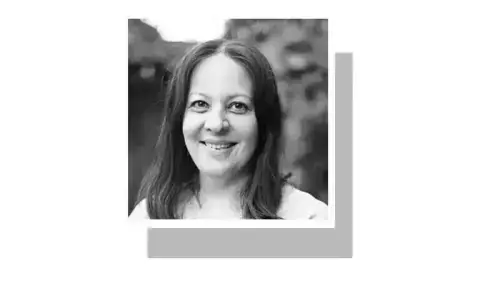
The Karachi-born writer Rukhsana Ahmad is definitely the opposite; her manner is gentle, she is elegant and her voice is soft and winning. She is, in fact, a charmer. But be not fooled. Ahmad is tempered steel and her writing cuts cleanly like a Samurai`s sword.
I first saw an example of Ahmad`s dramatic prowess in 1991 when her powerful play Song for a Sanctuary was staged at London`s Lyric Theatre. It centred round the intolerable life endured by a Sikh woman in England.
Her bullying husband still had the mindset of a Jat peasant from the Punjab; he believed that as the lord and master he owned, as it were, the woman he had married as well as his daughter. He had his way with them in any way that he liked. The play rises to a crescendo and culminates in bloody murder.
Based on a real life criminal case concerning an Asian family in England, this was no mere docu-drama. It was a study in cultural conditioning and deeply ingrained attitudes. The wife Rajinder, for example, though wronged and abused was almost arrogant about what she considered was the innate superiority of her Asian values.
She refused to wash her dirty linen in public in the cause of her family`s honour. Izzat, in fact, was her ultimate undoing.
Song for a Sanctuary went on tour and influential critics warmed to the characterisations and ideological clashes based on ethnicity, gender, class and generation.
Above all, what impressed was the use of language; so rich and diverse. Ahmad`s ear is keenly tuned to pick up the differences between the educated and the demotic. D`ye know what I mean? The use of language, after all, is every writer`s bread and butter, daal-roti, or in crunch-free times murg-masala.
Ahmad`s corpus of writing for the theatre spans two decades and includes Sepoy`s Salt, Zarina and the King, New Constitution (based on a story by Manto), Prayer Mats and Tin Cans, Shades of Limbo, Recall, Rags to Riches, The Gate-Keeper`s Wife, Black Shalwar (also based on a story by Manto), River on Fire, The Man who refused to be God, Last Chance, Partners in Crime, Mistaken the Annie Besant Story, and Letting Go.
Over the years she has campaigned consistently for Asian writers, especially Asian women writers. In 1990 she and actor-writer-director Rita Wolf founded the Kali Theatre Company which has produced and promoted much new talent.
For a time Ahmad was Kali`s artistic director but then handed the full-time responsibility to the energetic Janet Steel. The company has been praised for presenting cutting edge theatre at its best. Ahmad has also been associated with Tara Arts, headed by Jatinder Varma, which has done pioneering work in establishing a firm base for British Asian theatre.
Another company in the same area of operations is Tamasha headed by Kristine Landon-Smith and Sudha Bhuchar.
A firm believer in the concept of theatre in the community, Ahmad is a founding member of the Asian Women Writers` Collective and a founding trustee and current chair of SAALIDA (South Asian Arts and Literature in the Diaspora Archive).
She has taught Creative Writing in community and adult education colleges and has held three writer-in-residencies. In 2002, Meri Kahani, Meri Duniya was presented at London`s Waterman Arts Centre.
This cathartic experience was a follow-up of her drama workshops for survivors of domestic violence and involved the women`s activist group Southall Black Sisters and Kali.
Ahmad has a reputation as a writer for BBC radio. She rewrote Song for a Sanctuary as a radio play and did the same with Nawal el Saadawi`s Woman at Point Zero, Salman Rushdie`s Midnight`s Children, Nadeem Aslam`s Maps for Lost Lovers, R.K. Narayan`s The Guide, M. Padmanabhan`s Harvest, Freedom`s Daughter Indira Gandhi`s Letters and Jean Rhys`s Wide Sargasso Sea.
She was a member of the writing team of the BBC`s World Service serial Westway and her original radio dramas The Banker`s Tale (a celebration of Chaucer), The Errant Gene and An Urnful of Ashes got wide attention.
Currently she is turning Kiran Desai`s The Loss of Inheritance into a radio play.
Her short stories have been widely published and her novel The Hope Chest (Virago, 1996) received rave reviews from, among others, Fay Weldon. She is now completing another novel titled Sins.
Her translations include We Sinful Women Contemporary Feminist Urdu Poetry (The Women`s Press, 1991) and Altaf Fatima`s novel Dastak Na Do which was published in English as The One Who Did Not Ask (Heinemann, 1994).
Among her screenwriting credits are the following Savitri`s Story, a drama documentary about HIV/AIDS and Amal`s Story, an original screenplay about the terrible effects of September 11 on the life of a British Muslim boy.
Her major project at the moment is to make a film of Nadeem Aslam`s prize-winning novel Maps for Lost Lovers which also has much to do with izzat. Apart from writing the script she will also co-produce.
Having collected a clutch of degrees from Karachi, Reading and London she is generous with her knowledge. Ahmad has spent much of her time teaching others how to write creatively and how to go about getting their work published, their plays staged and their scripts televised and filmed.
She has been a Royal Literary Fellow at London University`s Queen Mary College, and Advisory Fellow of the Royal Literary Fund (RLF). A monument to scholarly and literary integrity, the RLF was founded by a priest named David Williams in 1790 when he was saddened to hear that an impecunious translator of the works of Plato had died a pauper in a debtor`s yard.
After receiving royal patronage and bequests from the estates of financially successful writers the RLF has for over two centuries advanced the cause of the writing profession.
The likes of Coleridge, Leigh Hunt, D.H. Lawrence and James Joyce received financial assistance when they were in straitened circumstances while Chesterton, Maugham, Ransome and Milne — among scores of others — have contributed generously to the RLF. Rukshana Ahmad`s work with the RLF is a mark of her commitment to the profession of authorship.
The path of course has not been an easy one. The move from Karachi to London, after her brother Rashid died in the infamous hijacking incident of 1971, was traumatic in many ways. There were racist rebuffs, overt and covert, and she was considered over-qualified for the jobs she applied for.
She became a socialist during her early student days in Karachi and found that England`s greatest gift to her was the opportunity to take direct action. She rejected war and joined CND rallies and in the process discovered her identity as an Asian woman. The first cheque she ever got for a piece of writing came from Asian Post, then edited by Chhotu Karadia who was an Indian journalist displaced from East Africa.
In Search of a Talisman is Rukhsana Ahmad`s amazingly frank testament as a woman and as a writer. It ends with the following statement
`On reflection I do not feel trapped by my identity/ies, past or present, or restricted by it/them. I use them when I want to. I am not enslaved by any of them. I have the ability to negotiate what I want from each.
The knowledge that I can, like a chameleon, call upon one of several colours, side-step the preconceptions of others, survive in both worlds with a code that is not parochial or narrow in any sense works like an unfailing talisman on the whole.
A fair return, I think, for the loss of a few certainties and a false sense of security which feeds on an unwillingness to change. But, as always, the talisman comes with a condition. You have to surrender the right to belong.`