0
0

 |
| A stockbroker monitors the latest share prices during a trading session at the Karachi Stock Exchange (KSE) in Karachi on March 4, 2009.-AFP |
KARACHI The dwindling number of foreign investors left in Pakistan must wonder whether its worth it after militants targeted the Sri Lankan cricket team in Lahore.
No legal return on capital is compelling enough to risk your life, said Asad Iqbal, director of the Karachi Stock Exchange.
While Westerners know they could be targeted any time by militant groups, the attack in Lahore on sportsmen from a country regarded as a friend of Pakistan, has sent a chilling message.
The blatant audacity of this attack has shown that no-one is safe any longer in Pakistan, said Mikaeel Habib, a 31-year-old businessman in the southern city of Karachi.
Its made me rethink about my future in Pakistan for myself and my family.
Eight members of the Sri Lankan squad were wounded, but six policemen and the driver of a coach carrying match officials were killed in an attack that reaffirmed Pakistans reputation as one of the most dangerous countries in the world.
Nuclear-armed, with a history of political instability, Pakistan is home to 170 million people, most of them Muslim, with close to a third living close to the poverty line or below.
Even International Monetary Fund officials refuse to come to Pakistan to review how the government is meeting targets set when it agreed to a $7.6-billion emergency loan programme in November to stave off a balance of payments crisis.
Consultations are held in Dubai, instead. IMF officials stopped coming to Pakistan after a suicide truck bomber killed 55 people at Islamabads Marriott hotel last September.
The first tranche of $3.1 billion was released in November, and another $840 million is expected by the end of March.
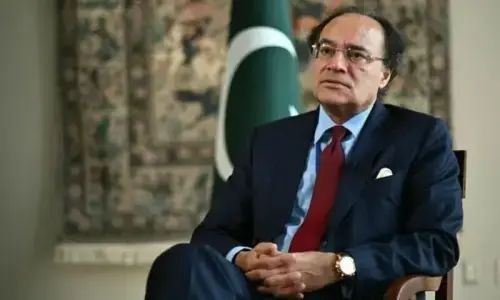
Pakistans foreign exchange reserves now stand above $10 billion, but Shaukat Tarin, adviser to the prime minister on finance, sees shortfalls ahead and the government is looking for another $4.5 billion from the IMF.
In the seven months through to the end of January, net foreign investment inflow to Pakistan was $2.23 billion, nearly 13 percent below the year-ago level.
Since January 1, almost $185 million of foreign portfolio investment has flowed out of the country.
Political crises
Tarin gave a slightly encouraging assessment last week, predicting economic growth would recover from 2.5 percent in the fiscal year ending on June 30, a rate equivalent to full blown recession in Pakistan, and rise to 4 percent next year.
He also expected inflation to average just 6 percent in 2009/10, compared with over 20 per cent this year.
That raised hopes among businessmen and share market investors that the central bank could cut its discount rate from 15 percent as early as April.
But the stock market is uneasy over a political crisis that has added to the woes of President Asif Ali Zardaris civilian government less than a year after it was formed.
Arch rival former prime minister Nawaz Sharif has urged street agitation after Zardari last week opted to impose central rule in Punjab, taking control of the provincial government away from Sharifs party.
Any continuing political unease ... is going to roll back the pace of reform and response, said Zainab Jabbar, investment strategist at IGI Securities.
The KSE-index is down 0.84 per cent this year after a 58.3 per cent fall in 2008 while the rupee has lost 1.4 percent against the dollar this year after weakening 22.1 percent last year.
Thanks to the IMF loan and falling world oil prices, Pakistans sovereign rating was raised to CCC-plus from CCC by Standard & Poors Rating Services in December, but that is still well into junk bond territory.
Pakistan has a triple C rating, so one has to come to terms with the fact that we are already on the fringes on the investment spectrum, said Jabbar from IGI.
Whether we can come back to the middle tier is at present a long shot -- simply because what was assumed to be a regional problem is very much an internal issue now, said Jabbar, referring to recent acts of terror.