0
0

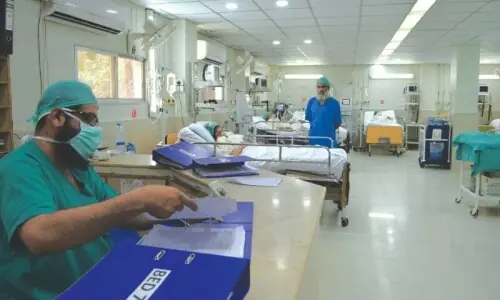
ISLAMABAD, March 19: Pharmaceutical manufacturers are earning profits to the tune of 106 per cent by supplying life-saving and essential drugs to markets at higher rates than those at which such medicines are being provided in public hospitals, official record available with Dawn reveals. The record shows that as against the rates fixed by the health ministry, manufacturers are providing medicines at lower rates to government hospitals like Pakistan Institute of Medical Sciences (Pims) or the Federal Government Services Hospital.
Consumers are paying much higher prices for different drugs available in the market compared to the rates at which the same medicines are available in various public hospitals, official record said. The health ministry, according to the document, is not taking notice of this practice despite public outcry. People have raised their voices several times in the past, demanding immediate reduction of prices of these medicines, but to no avail.
According to the document, during the period 2003-04, 105 million units of a drug called Streptakinase were provided to public hospitals at a rate of Rs2,800, whereas it was available for Rs5,765 in the market, which was 105.9 per cent higher.
Similarly, 200 tablets of Metronidazole 400mg were supplied at Rs165 to public hospitals whereas the price in the market was Rs274, i.e. 66 per cent higher. Likewise, a pack of 100 tablets of Contrinaxazole was available in the hospitals for Rs170 whereas in the market, it costs Rs253, which was 85 per cent higher.
During the same period, 30 tablets of Lisinopyrll were available for Rs191 compared to Rs291 in the market. A pack of 100 tablets of Suinasalezine was provided at Rs309 whereas the same medicine was supplied to the market at a price of Rs426.
Similarly Mebevene, Perindoorll 4mg, Fosindroll 10mg, Remiprll, Aspirin 300mg, Bromocripine and Tislodipin were supplied to the market at 37.6, 18.46, 32.19, 34, 35.6, 37.7, 34.6 per cent higher prices, respectively.
Similarly, injections Amioderone 150 mg, Lignecaine 2mg/ml, Metopralol 5mg, Haprin 500, Imipenen 500mg, Amikacin 250mg and Lignocaine were supplied to the market at 34.5, 35, 30.8, 49.5, 15.63, 32 and 35 per cent higher prices, respectively.
In response, the health ministry justified the phenomenon by saying that it was not mandatory under relevant rules to review maximum retail price of medicines keeping in view the rates quoted for supply to government hospitals. Under section 12(1) of the Drugs Act 1976, the health ministry through an official notification fixes maximum prices of drugs to be sold in the market.