0
0

GENEVA, Oct 22: The World Bank and International Monetary Fund said on Friday that poor textile-exporting countries could only expect help on a case-by-case basis to cope with the forthcoming end of import quotas.
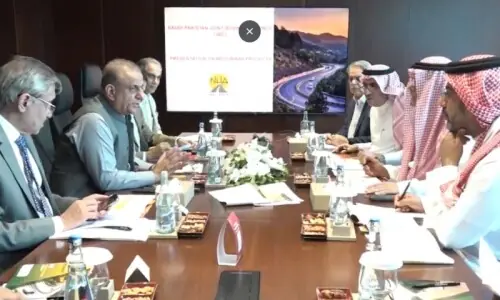
World Bank President James Wolfensohn and IMF Managing Director Rodrigo de Rato said there were already support schemes in place to help developing countries cope with greater trade liberalization.
"On the textile side we are working on a country-by-country basis, but we are not 100 per cent clear on the way the textile negotiations are going to come out," Wolfensohn said after a meeting with the WTO.
Rato told the WTO's 148 member states that IMF assistance under its Trade Integration Mechanism "addresses part of this problem" but offered no other initiative to provide assistance.
China, which stands to make huge gains in major export markets like the US and Europe after the quotas are lifted, earlier this month called on the World Bank and IMF to "significantly enhance" assistance for rival smaller exporters.
About 20 small or poor textile producing nations, including Mexico, Mauritius and Tunisia, have urged other trading nations to temper the impact of the binding agreement concluded nine years ago, which they fear will lead to massive job losses.
During their regular contact session with the WTO, both the World Bank and IMF emphasised existing support in place to tackle balance of payments problems, notably the IMF's recently introduced integration mechanism.
"The mechanism is directed at the possible balance of payments impact of liberalization by other countries, agreed in the context of the WTO and implemented unilaterally on a non-discriminatory basis," Rato said.
Bangladesh became the first country to obtain funding from the IMF scheme in July specifically to help it tackle balance of payments problems under the global liberalization of the textiles trade, he added.
"Already that mechanism is being applied and several other countries are contemplating it," IMF deputy director Augustin Karstens told journalists. WTO director general Supachai Panitchpakdi said the organization's task was now to help poorer member states take advantage of the mechanism.
Wolfensohn also raised the separate possibility of "alternatives" to support cotton farmers in developing countries that have been priced out of world markets by subsidies paid by rich countries to their producers.
"We have consistently underscored the unfairness of cotton subsidies that distort patterns of international production and trade," Wolfensohn told WTO members, pointing to credits to help reorganize the cotton sector in sub-Saharan Africa. West African countries gained a tentative concession by the United States to negotiate cuts in cotton subsidies in trade talks in July. -AFP