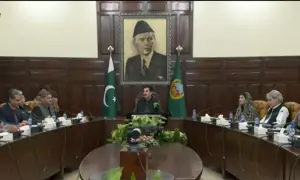
DADU, May 26: The Dadu District Council on Wednesday demanded that the government should stop release of poisonous and saline water from the Main Nara Valley Drain into the Manchhar Lake.
The council said that contaminated water from Punjab, Balochistan and upper Sindh had polluted sweet water of the Manchhar Lake and the Indus river. Jamshoro Union Council Nazim Naima Baloch said that the drain's water had made water of Manchhar poisonous.
She said that the contaminated water had caused deaths not only of human beings but birds and fish had also perished. She criticized irrigation officials for releasing the polluted water of Manchhar into the Indus river through the Aral Wah.
She said that people in Thatta, Karachi and Badin were using this water which was hazardous for their health. Mohammad Paryal Birhamani said that irrigation officials alone could not be blamed for the release of saline water into the Indus.
He said that the water level in Manchhar had reached 12 feet which was dangerous for its banks. He said that every season, the officials reduced the lake water level by seven feet.
Ali Mohammad Soomro said that hundreds of fishermen's families were using the contaminated water of the Manchhar Lake for drinking purpose. He criticized Sindh and federal governments for not taking any notice of the matter.
He said that action should be taken against officials of the Lakhra power plant, Jamshoro powerhouse and the Sandoz company for disposing of poisonous water into the River Indus.
Ms Shameem, Imam Zadi Shaikh, Abdi Lakhair, Mohammad Usman Jamali and Qazi Mushtaq also supported the resolution. The council decided to write a letter to the federal government for resolving the issue.
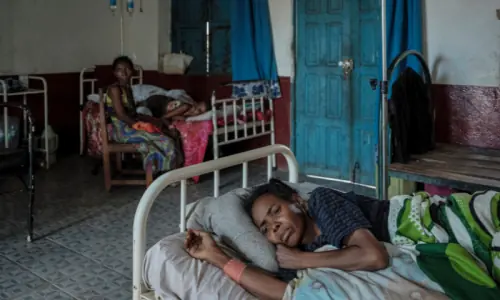
Raising the issue of the spread of hepatitis-B in the Kolachi Union Council, Mohammad Ali Khoso said that seven hepatitis-B patients had died in the Gahi Khan Janwari village and a large number of people were infected with the disease.
The EDO, health, Dr Maula Bux Jamali, informed the council that vaccines and medicines had been provided to residents in Kolachi to control hepatitis-B. He, however, said that the health department was facing shortage of medicines.
Qazi Mushtaq raised the issue of special budget to union councils and carrying out development works through union council Nazims. The members decided that if Rs1.5 million was not released to every union council Nazim, they would not pass the district council budget for 2004-05. Zahid Hussain Jatoi presided over the session.