0
0

TEHRAN: Iranian reformers may be facing defeat in Friday's parliamentary election showdown with religious hardliners, but they have at least managed to plant the seeds of the Islamic republic's liberalization.
Since their emergence with the election of Mohammad Khatami as president in 1997 and their landslide in legislative polls four years ago, the reformers' record has been a litany of hope and frustration.
Moves to curb the power of the fundamentalist clergy, to liberalize the economy and promote foreign investment, abolish torture and to open Iran to the outside world have all been hindered or blocked by the hardline leaders.
With the conservatives likely to score big in Friday's elections after massively disqualifying reformist candidates, few in the Khatami camp have any illusions things will get easier anytime soon.
"The conservatives will no doubt continue the economic reforms, precisely because they are economic," said Rajab Ali Mazrouie, a member of parliament from the Islamic Iran Participation Front.
"On the other hand, I think that on the cultural and political fronts they are going to try to impose restrictions and tighten up things," he said. Jailed academic Hashem Aghajari, one of Iran's most prominent dissidents, was more blunt, warning the reformist movement had reached a dead end and laying the blame on Khatami.
"Because of a lack of will and courage great opportunities were missed," he said in an open letter carried on Sunday by the Iranian student news agency. But signs abound that the seeds of change are taking root in the country of 65 million people as it marks the 25th anniversary of the Islamic Revolution that ousted a pro-western regime in Tehran.
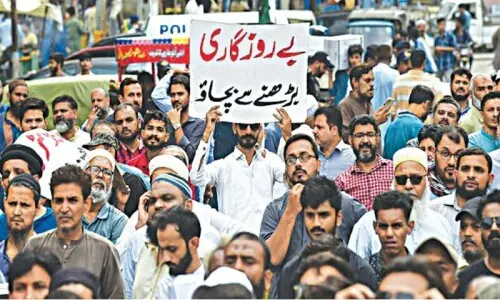
Informal workers' and student unions have sprouted and thousands of non-governmental groups have been established to tackle problems from pollution to drug addiction. Street protests and strikes are more common.
If little has been done to lift the veil from Iranian women, it now comes in a choice of colours and occasionally accompanied by make-up. The chador robes now often cover pressed jeans and stylish heels. But perhaps most striking, and probably irreversible, is the explosion in communications in a country that for the last four years has heard live radio broadcasts of the reformist line in parliament. -AFP