0
0

 ISLAMABAD, Dec 1: Federal Minister for Provincial Coordination Senator Raza Rabbani said the democratic governments in Pakistan and India should not let the “non-state actors” destroy the peace process as both the countries were not only committed to peace and development for their peoples but also the people across South Asia.
“We should not let the non-state actors play with our destiny and should not get caught in the blame game,” the minister said here on Monday while addressing the inaugural session of a three-day “Eleventh Sustainable Development Conference (SDC)” titled “Peace and Sustainable Development in South Asia: Issues and Challenges of Globalisation”.
It was organised by the Sustainable Development Policy Institute (SDPI) in collaboration with the Strengthening Democracy through Parliamentary Development (SDPD).
Senator Rabbani said in the present scenario, peace and sustainable development were of paramount importance, and hoped that the three-day conference would be fruitful and informative for parliamentarians to look at, read and learn from it.
Elaborating government’s security policy, Senator Rabbani stressed the need for looking at what his government has contributed towards the three Ds – dialogue, development and deterrence – to cope with the four Fs – fiscal, fuel, food and frontier -- crises.
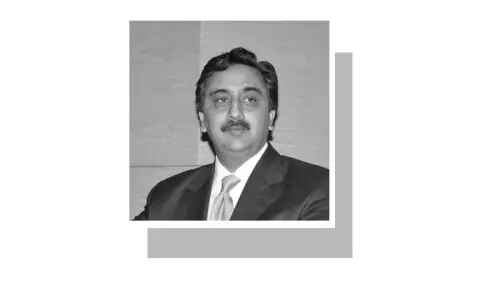
SDPI Board of Governors Chairperson H.U. Beg highlighted the two-fold role of the SDPI as an adviser through research, policy advice and advocacy; and its enabling role in providing other individuals and organisations with resource material to take up sustainable development agendas and activities.
SDPI Executive-Director Dr Abid Suleri said: “Peace and sustainable development and globalisation” was vital as the four F crisis spread in the region.
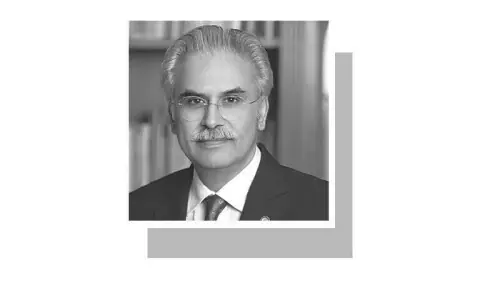
Shafqat Kakakhel, SDPI adviser on climate change, said there was a need for finding out a joint solution to transform this adversity into an opportunity. Impacts of climate change include extreme weather conditions, prolonged heat wave and hurricanes.
Mr Shafqat said Pakistan needed to focus on adaptation, development of infrastructure, and renewable energy resources.
In a session on “climate change and food security”, Ali from Lead said due to the climate change, we could predict change of destination of rain from monsoon to non-monsoon areas, change in time of the rain and increased floods and soil erosion.
Nazima Shaheen her paper on “Potential of sugarcane organic farming in mitigating climate change: the case of Pakistan” said awareness should be raised among farmers about organic farming and climate change by involving federal and local agriculture extension departments. The government should provide the subsidies during the conversion period.
Presenting a paper on “Climate change and food security: nexus in Pakistan”, Mohsin Iqbal from Global Change Impact Studies Centre discussed the food security prospects towards the end of this century while taking into consideration other climate-related and climate-independent parameters.
Ms Fatima from Oxfam in her paper on “Climate change adaptation and risk management in the context of Pakistan” said inclusion of climatic risks in the design and implementation of development initiatives was vital to reduce vulnerability and enhance sustainability.
Mohammad Aslam from the Ministry of Food and Agriculture emphasised the impacts of climate change, its vulnerability to food system and adaptation strategies. Sahib Haq from the Food and Agriculture Organisation (FAO) said due to increase in rainfall, there was a possibility of increase in plant diseases.
In “Rewriting History I – The Two Partitions (1947 & 1971)” session, Asif Farrukhi said the partition of India had been studied and analysed from several perspectives ranging from the socio-political to the literary. As a subject, it emerges as an important literary theme for the major writers of the period.
The paper offered a critique of the most widely held view which categorises “literature of the riots” (Fasadat Kay Afsaney), especially the evaluation of the work of Saadat Hasan Manto, Urdu’s greatest short fiction writer; and Krishan Chandra by critics of the period including Mohammad Hassan Askari and Mumtaz Shirin.
Showing his disagreement over the one-sided accounts in the recorded history, Ahmed Salim, a senior research associate at the SDPI, said it was full of biases, state ideologies, untruthfulness and inaccuracies.
He said to counter all these problems to a broader objective of providing unbiased information to our next generations, the SDPI launched a research project two years ago titled “Re-Writing History: The Two Partitions” that was based on oral accounts and people’s prospect.
Harris Khalique, presenting his paper on “Writing unfinished histories: collecting narratives on people and places”, said it was impossible to reconcile and forget the pain and anguish of the partition; but the two parties could always be open about discussions and giving vent to their feelings, so that the grievances and misunderstandings could not culminate and result in violent eruptions.
In a session on “Managing conflict through trade: the case of Pakistan and India”, Siddhartha Mitra of CUTS was of the opinion that the future path envisioned for Indo-Pakistan trade is based on synergy between peace dividends and trade dividends. Greater trade between the two countries will lead to peaceful relations benefiting economic opportunities.