0
0

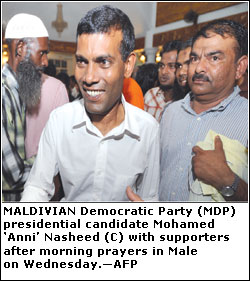 MALE: The Maldives is known around the world as a holiday paradise, but its residents face problems ranging from corruption and a lack of housing to child malnutrition and a serious youth drug problem.
Voters in the island nation voiced their desire for radical change Wednesday, using their first taste of democracy to oust from power the man who has been president for 30 years.
“People simply voted for change,” said opposition lawmaker Ibrahim Ismail after Maumoon Abdul Gayoom lost Tuesday’s run-off vote to Mohamed ‘Anni’ Nasheed.
“It was clear that Gayoom had to go for us to move forward with political reforms as well as economic improvement.”
Local journalist Ibrahim Mohamed, 20, said he had campaigned for two years to topple Gayoom as young people were fed up with his autocratic rule and cronyism.
“It is really the young people who made this happen,” Mohamed said. “I was arrested and locked up three times in the past two years. I was determined to work for a change.”School teacher Fathimath Niusha, 27, said she and her friends voted for Nasheed hoping he would increase funding for education and address drug problems affecting one third of all young people in the capital Male.
“We need to deal with drug abuse, the housing problem and education,” she said.
Nasheed has promised to root out corruption, improve healthcare and communication to remote islands, privatise state enterprises and turn the presidential palace into the country’s first university.
Several families often cram into a single room in Male, the world’s most congested capital city with 90,000 people living in a one square-mile area.
Gayoom supporters were crestfallen after the result.
“We knew that people wanted a change, but we didn’t think it would be like this and so fast,” a supporter close to Gayoom said asking not to be named. “We still think this is a bad dream.”
Western nations, led by Britain, had pressured Gayoom to embrace multi-party democracy and stem a wave of discontent which spilt onto the streets in 2003.—AFP