0
0
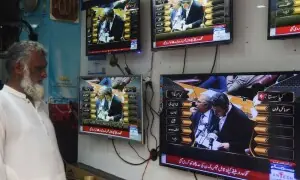
LONDON, Aug. 16: The three-day visit to Pakistan early last week by Sir Mark Lyall Grant, a senior British diplomat who had played a key role in the Musharraf-Benazir deal negotiations is being seen here in diplomatic circles as marking a turning point in the relationship between the two countries with Britain now willing to focus more on promoting democracy, social uplift and alleviation of poverty and less on using Pakistan for fighting the West’s wars as its so-called frontline state.
Insisting that Britain has no role one way or the other in the ongoing Musharraf’s impeachment moves and that it was not trying to save Musharraf from impeachment, a diplomatic source on condition of anonymity told Dawn that the UK did not wish to see the fledgling democracy derailed and the sound and fury of impeachment process to cause further economic destabilisation in the country.
Giving an on-record response to Dawn’s query, Natasha Khan, Foreign Office’s spokesperson on Pakistani affairs confirmed that Sir Mark met Musharraf, Asif Zardari, Nawaz Sharif and COAS Gen Kayani but categorically stated that Britain was neither meddling in nor trying to dictate the political process in Pakistan.
She said: “Our aim is to see Pakistan as a stable, strong and prosperous country for its citizens, the region, and the world as a whole.
“Britain fully supports the democratic process in Pakistan and believes in supporting the democratic institutions, not individuals.”
She said Sir Lyall Grant had met “leaders from across the political spectrum” during his three-day visit, which was a long planned visit, as a routine matter without having anything to do with affecting the “reconciliation process which is in Pakistan’s national interest”.
Meanwhile, the influential British newspaper Financial Times in an editorial (Bye bye Musharraf) on Saturday said the departure of Pervez Musharraf as president of Pakistan now looked only a matter of time.
The editorial, however, warned the ruling coalition not to overplay its hands as the army will not standby “and watch Gen Musharraf, its former chief of staff, humiliated by parliamentary impeachment…Pakistan cannot afford another layer of crisis.”
The editorial accused Musharraf of shutting out the mainstream parties instead of mobilising them to build a democratic bloc against militants and extremism and to reinvigorate Pakistan’s institutions.
“That boosted Islamist factions, at the same time as he allowed some of his officers to abet jihadi forces in Afghanistan and Kashmir,” the editorial claimed.
The FT editorial advised the US to learn the lesson of the Musharraf years and direct more aid to democratic recovery and make the lavish aid it gives the military conditional on performance.
The weekly Economist in its editorial (Beyond Musharraf-Aug.16) said Musharraf’s “chances of hanging on are, anyway, small”. After listing the options available to him to avert impeachment, the editorial said that it was in the interest of both the country and the armed forces that the soldiers should stay away.