0
0

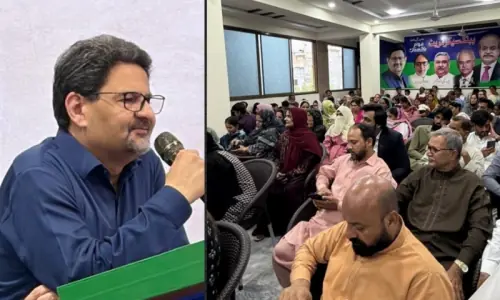
KARACHI, May 24: Highlighting the role that qualified pharmacists can play to help ensure proper use of medicines by patients, speakers at a seminar on Saturday called for druggists’ active involvement in reducing the negative impact that the substance abuse cast on society.
The seminar was organised by the pharmaceutical science department of the Federal Urdu University for Arts, Science and Technology.
The speakers observed that intravenous drug abuse had become a major factor in the spread of HIV and hepatitis in addition to causing enormous damage to youths, who under the influence of drugs were unable to perform satisfactorily in educational institutions and workplaces. They stressed that pharmacists be trained to identify and help treat drug addicts.
Representatives of an NGO held that Pakistan had 5.7 million drug addicts, of whom 1.2 million lived in Sindh.
“Karachi alone has about one million drug addicts, who are either vagabonds or associated with educational institutions, industries and other workplaces,” said a representative of the NGO while calling to adopt preventive measures at all levels in the community.
However, another speaker was of the view that the more the people were educated, the less is their chance of getting indulged in drugs. It was estimated that one addict spent about Rs150 a day though to know the drug abuse problems and risks involved, need was underlined to conduct research studies.
M. Izhar, a marketing executive from a pharmaceutical company, said that pharmacists had a great role to help ensure appropriate use of drugs and were required to work on true prescription of drugs with a high visibility, contributing to the screening of the addicts and their appropriate counselling and follow-ups and rehabilitation.
Prof S. Intisar H. Taqvi, a senior teacher of the university, said that various factors, including idealism, pseudo concepts, lack of awareness or any kind of deprivation, could be cited behind the spread of drug addiction, which needed to be nipped in the bud through some social stimulus.
Dr Obaid Ali said that there was a need to invest more in knowing about adverse drug reaction as, according to him, significant number of people died everyday even in developed and civilised countries due to misuse of aspirin.
Emphasising the responsible use of drugs, Mohammad Khalid Yusuf of another pharmaceutical firm said that druggists could help stop drug abuse by ensuring supply of drugs under prescription, discourage the over-the-counter sale of medicines, chemical substances and street drugs, recreational drugs. Pharmacists must also be trained to distinguish that the prescriptions presented to them were neither fake nor advised by quacks.
It was suggested that drugs be classified in view of their potential abuse and the supervision of pharmacists be made mandatory for the sale of drugs. Besides, the speakers suggested that all hospitals having 50-bed capacity compulsorily engage a qualified pharmacist to ensure sale of registered and required drugs only.
Dr Norin Baig of the NGO said that sale of non-medical opiates, stimulants, central nervous system depressant and anti-anxiety drugs, legal drugs and non-prescribed opioids be monitored to check misuse of drugs.
Pharmacists should inform and advise patients and buyers about how to take medicines appropriately and ensure the scope and effective use of the medication, she noted.
Call to civil society
Abdul Haseeb Khan, a senior pharmaceutical industrialist who was chief guest on the occasion, observed that it was lack of education and awareness that children belonging to both the poor and well-off were turning drug addicts. “Civil society should address the issue of drug addiction and fulfil its responsibilities towards education and ethical grounds for the young generation,” he added.
He said that the pharmacists had to play as watch dogs in respect to sale of drugs, including the aspects of quality control and pricing. He also called for enhancing interactions and relations between the academic and industry for imparting technical and practical knowledge to the pharmacy graduates the universities were churning out.