



 0
0

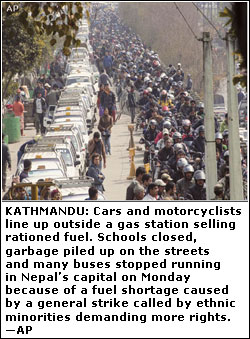 KATHMANDU, Feb 18: A general strike in ethnically tense southern Nepal entered its sixth day on Monday, with violence worsening and fuel running out in the capital, officials said.
The unrest comes less than two months before the impoverished Himalayan nation is due to hold elections that will determine the country’s political future and most likely end the world’s last Hindu monarchy.
The town of Nepalgunj, which experienced deadly clashes over the weekend, remained under curfew on Monday after one protester was killed and 59 police and protesters were injured in violent clashes, officials said.
“The acts of violence on Sunday by protesters led to this curfew,” said Narendra Raj Sharma, a senior local official from Nepalgunj, situated in southern Nepal’s restive Terai lowlands bordering India.
Last week, the United Democratic Mahadhesi Front (UDMF) called an indefinite strike — a move that has effectively blockaded the capital Kathmandu.
The Terai’s Mahadhesi community have long complained of being excluded from Nepal’s corridors of power, and say they were also excluded from the peace deal signed between the government and former rebel Maoists in late 2006. A Mahadhesi leader said on Monday that the unrest was not likely to stop soon.
“The state has neglected us, not respected our demands and instead accused us of trying to break the country,” Mahanta Thakur, a UDMF leader, told reporters in Kathmandu.
“The state can try and crush us and our movement, but our struggle will continue.” Home to around half of Nepal’s 27 million population, the Terai region is known as the country’s bread basket and is where most fuel imports come through from its sole supplier, India.
The strike has caused nationwide food and fuel shortages, with tanker drivers refusing to work because of ongoing violence.
Fuel supplies had already been limited for several months because of Nepal’s non-payment of its fuel bill — but the strike has seen even the black market begin to run dry.An official said that authorities have issued additional curfews to try and ensure the tankers safe arrival in the capital.
“Curfews have been imposed this afternoon in two districts of southern Nepal to allow the tankers to get to Kathmandu by Tuesday afternoon,” said Ekmani Nepal, assistant spokesman for the Home Ministry.
Former US president Jimmy Carter, whose Carter Centre employees are assisting in the monitoring of the April 10 polls, urged the government and Mahadhesis to settle their disputes amicably to allow the crucial elections to take place.—AFP





























