0
0

KARACHI, Jan 24: “The security of a nation is quintessentially dependent upon its internal dynamics of power. It is people, and not weapons, who ensure lasting security of a country.”
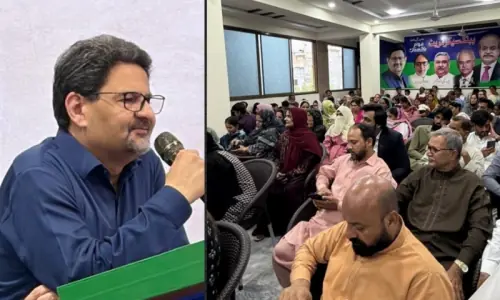
These views were expressed by former ambassador Mr Mehdi Masood at a seminar on “Internal Security Dynamics and Their Impact on Foreign Policy” held at the Department of International Relations, University of Karachi, under its programme on Peace Studies and Conflict Resolution on Thursday.
There are some major internal challenges Pakistan is faced with at this particular moment of its history, according to Mr Masood, who identified the challenges as terrorism, religious extremism, safety of nuclear assets, transformation of society into democracy and economic hardships. He said theses challenges could best be understood by having a comprehensive study of the society.
As far as terrorism is concerned, this problem is associated with the absence of a culture of tolerance and accommodation. Moreover, the parochially tied knots of attachments result in tribal tendencies which do not let process of integration in the society. The problem is of nation-building because a society becomes strong when it has a vibrant process of nation building.
The ambassador pointed out that the incidents of suicide bombings and other violent acts reflected the criminal obscurantism that had been unleashed by the forces that wanted to destabilise Pakistan. He said Islamabad’s engagement in the internal politics of Afghanistan both during and after the Cold War had cast a profoundly negative impact on Pakistan’s domestic fabric.
Ambassador Masood was of the view that things like terrorism and extremism had been infiltrated into Pakistani society and it became monstrously difficult for Islamabad to deal with them. Pakistan’s foreign policy could become more meaningful and result-oriented if its internal dynamics were turned politically stable and viable.
“Pakistan has successfully faced foreign policy challenges in the past few years and it will be able to do the same in the future, too, if it domestically enjoys a healthy and strong political culture,” he observed.
The requirement for a peaceful society, he said, was a strong culture of tolerance. “Education is one of the best means for inculcating civic and human values into the individuals of society,” he argued, adding that the need was to have a revitalised and original version of Islamic teachings that promoted universal human brotherhood.
Prof Moonis Ahmar, Chairman of the IR Department and Programme Director, said in his concluding remarks that a lesson must be learnt from the past so that mistakes already made were not repeated. “The danger to the country is more from within and we should first put our own house in order,” he stressed.
Dr Mutahir Ahmad, Dr Naeem Ahmed and other faculty members were among those who attended the seminar.