0
0

NEW DELHI, Oct 12: India’s finance minister expressed surprise on Friday over a steep rise in the country’s benchmark stock market index and said he expected things to cool down.
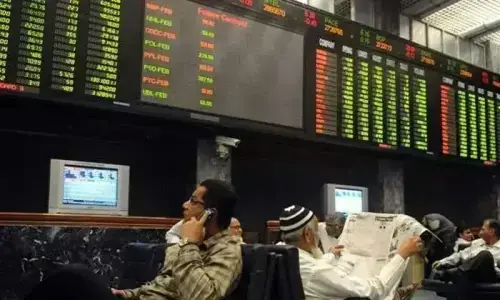
India’s Mumbai Stock Exchange Sensitive Index, or Sensex, has gained nearly 3,000 points in just over three weeks.
The rapid rise has been propelled by heavy foreign inflows from investors drawn by economic growth of nine per cent, a rising rupee that is boosting returns and a desire to cut exposure to US subprime-driven worries.
The “steep rise in the Sensex sometimes surprises me, sometimes worries me.
I don’t think the fundamentals of the economy change day to day,” Chidambaram told a conference in New Delhi organised by the Hindustan Times newspaper.
“To an extent, speculators are taking advantage of Sensex... I think things will cool down,” he said.
Indian share prices fell 2.1 per cent or 395.03 points to 18,419.04 Friday, down from an intraday record of 18,844.62, snapping three days of gains as investors locked in profits amid weak Asian and overnight US markets.
But dealers said the market could strengthen again next week.
“The markets corrected after a sharp run-up in previous days. The markets could, however, see new highs next week on renewed liquidity,” said a dealer at Mumbai brokerage Jamnadas Morarjee.
Analysts are looking for a protracted rally as companies dealing in energy, commodities, finance, infrastructure and consumer goods benefit from broad-based growth in the country of 1.1 billion people.
Some analysts have said they expect to see the Sensex at levels of 30,000 to 40,000 in three years.
Indian stocks are trading at an average 20 times current earnings -- a common measure of share value -- versus a long-term average of 18.4. That compares with 15 times current earnings for the United States.
Analysts note that Chinese stocks are at far higher multiples than in India and say investors may be coming round to the view that emerging markets with fast-growing economies can trade at a substantial premium to developed markets.
Other analysts, however, have said a speculative bubble may be developing in emerging markets.—AFP