



 0
0

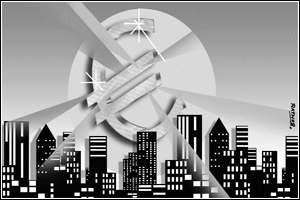 The economic challenge for developing countries in Asia, Africa and Latin America is to develop and implement policies which meet the challenges of domestic poverty and a competitive international economic environment.
While European and American economies have witnessed higher levels of activity and income, Asia, Latin America and Africa have not given much cause for applause. With the exception of China, the horizon of most developing countries has been characterized by crisis, which have adversely affected the performance.
In 1997, the ‘Asian Tigers’ ran into financial crisis. Currency devaluation, domestic financial sector difficulties, declining output and growing unemployment followed by financial whirlwind were the consequences which most developing countries are yet to recover from. In Latin America, the economic problems resulting from the financial market reactions are a recurring decimal. The example of Brazil is instructive. For Asia and Africa, the situation is even less encouraging. Wars, declining commodity market prices, deficiency of economic infrastructure and lack of proper leadership have combined to produce a continent increasingly irrelevant in global economic calculations.
A key expectation regarding the euro as single currency is that it will lead to reforming labour markets and addressing other structural problems, and consequently, to medium-term output gains. It may, however, not solve Europe’s structural unemployment problems but is expected to spur economic growth. It may also speed up deregulation in the airline and telecom industries in Europe. Governments would be more willing to sell the state-owned corporations. The increasing wave of deregulation is transforming Europe into a freer, more efficient market. It is expected that more jobs would be created and prices reduced due to the competition, especially in telecommunications and electricity sectors.
There will be a massive expansion of European equity markets. More investors both within and outside Europe will be attracted to the euro zone. The euro will lower the cost of money and create more resources for corporate innovation and individual wealth. It will also bring monetary stability to businesses in Spain and Italy where fluctuating currencies have increased the risk and the cost of foreign investment. The euro will make it easier for local businesses to embark on bigger investment projects.
The greatest impact of single market will be in trade and financial linkages. Increased activity and high import demand will lead to increased exports from the developing and transition economies. In the same way, exchange rate arrangements, financial market developments and capital flows will have implications on these economies and their policies. For instance, where there is a single trade regime for the EU and a different one for member countries, the EU regime would supersede. One of the benefits is in lower tariffs. Average weighted industrial tariffs for individual countries are currently higher than the 3.6 per cent average for the EU and so countries exporting to the EU zone will enjoy reduced tariff at this rate.
It is also expected that the emerging markets whose currencies are linked to Deutsche mark or French franc would shift the links to euro, as has been done by the Central Bank of West African States (BCEAO), on January 1, 1999. Changing values between dollar or yen could affect such countries’ external competitiveness when the currency of exchange rate target deviates from the trade-based effective exchange rate. Also, countries with dollar or yen denominated debt would be affected. An increase in the value of euro will benefit those who peg their currencies to euro. Any depreciation of euro would increase the cost of debt service.
To offset these effects, countries may decide to adjust their exchange rate regimes to better reflect the composition of their trade and financial links, or to change their debt-management policies. Countries that peg to euro would be able to lower their dollar exposure and reduce the fluctuations in their dollar-denominated debt payments.
The euro will bring continents even closer because consolidation of eleven different markets will create a more liquid market with a source of capital far bigger than the sum of its parts. Capital markets in the zone will come to represent a fresh source of funds for the European and the US companies. In essence, such companies will no longer need to look to the developing world for growth. Increasingly, Western companies are getting more capital, while flows of net credit into emerging countries are declining.
It is obvious that the investors in both zones are moving towards low but less volatile returns rather than looking for short-term high returns, especially in the light of Asian crises which almost eroded the confidence in emerging markets. Strong export demand by the advanced countries for euro zone and depreciation of their currencies in the last three years have stimulated recovery in these areas and have also helped in offsetting the effects of Asian crises. The IMF and the World Bank have shifted grounds and now agree that the developing nations imbibe financial controls since the floating currencies and the free inflows of ‘hot money’ may hurt countries with primitive financial systems. It is now agreed that the European and the US financial systems, where capital inflows account for only 2 per cent of the economic output, are big and sophisticated enough to absorb hot money shocks as opposed to these developing nations. One way by which developing countries can help themselves is by greater transparency in banking system. Since its 1994 crash, Mexico has tried to put this in place and so far this has helped it escape the worst of the panic.
Another effect of the European Monetary Union (EMU) will be felt in export of goods from the emerging countries. The developing countries are getting less for the commodities they produce.
Since a lot of their currencies’ values have depreciated, the purchasing power, especially for the machinery and the raw materials, has declined, making them unable to increase exports. Without the inflow of funds from the developed world, many developing nations are now clearly more disadvantaged than they were previously.
Unlike in the early 90’s when there was massive capital inflows into the emerging markets from the western world, now they are left alone to struggle out of the recession. It is also seen that the direct investment by multinational companies have also declined whose effect is that the emerging countries now face years of slower growth, as the cost of capital has become astronomical.
These countries have lost the ability of increasing the global growth. It is likely that the new foreign direct investment (FDI) will be concentrated in few countries such as China, Korea, Mexico, India, Pakistan and Poland for strategic reasons, after the post September 11 attacks on the World Trade Centre and the Pentagon.
There are, however, some financial risks that emerging market countries will now be exposed to. A successful EMU that raises productivity and growth could make Europe more attractive to investors and increase the cost of capital for the emerging market economies. Furthermore, the increased competitiveness of European financial institutions and the depth of markets in euro zone could lead companies in developing and transition countries to raise capital in euro rather than in their domestic currencies, thus challenging the local capital markets. This could, however, provide an incentive for such countries to strengthen their financial intermediation and build sound banking systems.
Rather than calculating the gains to euro zone and the disadvantages to countries outside the zone, for developing countries the challenge is to take concrete actions and launch initiatives to make their exports more competitive with the highest quality of goods they can produce.






























