0
0

ISLAMABAD, Aug 24: Pakistan and the United Kingdom on Friday inked a treaty on repatriating their nationals serving prison terms in each other’s prisons.
“Prisoners involved in any minor or major offence will be sent to their home country to complete their terms,” Interior Ministry spokesman Brig (retd) Javed Iqbal Cheema told Dawn.
Now, the UK nationals who have been awarded death sentence in Pakistan would get relief as there is no capital punishment in the UK and the maximum punishment there is life imprisonment.
The provisions of the treaty were agreed upon by Prime Minister Shaukat Aziz and his British counterpart Tony Blair in November 2006.
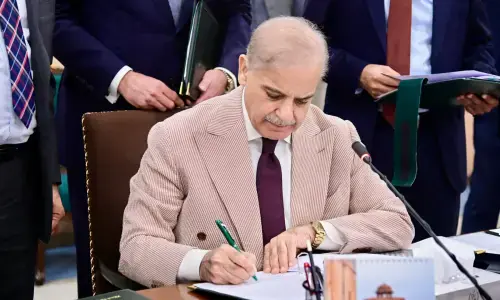
Interior Secretary Syed Kamal Shah and British High Commissioner to Pakistan Robert Brinkley signed the treaty. Interior Minister Aftab Ahmed Khan witnessed the ceremony.
Under the agreement, the two countries will encourage social rehabilitation of the inmates by giving them the opportunity to complete their sentences in their own countries.
Speaking on the occasion Interior Minister Aftab Ahmed Khan said there were 423 male and five female Pakistani prisoners in the UK while only seven British nationals were serving sentences in Pakistan.
The charges against these prisoners range from violence against a person to burglary, theft and drug offences.
Responding to a question, the minister said: “We also have a joint working group and its next meeting will be held in the last week of next month in London to discuss issues of bilateral interest,” he said.
He said both the countries were cooperating in the war against terrorism and Pakistan would continue that cooperation.
British High Commissioner Robert Brinkley said the agreement would allow the Pakistani nationals to come to their homeland and serve the remaining part of the sentence. “In Pakistan they would have an opportunity to meet their families,” he added.
He said seeking consent of a prisoner was essential before transferring him to his country.
Regarding extradition treaty, the UK ambassador said negotiations were in progress and it would be signed after due consideration. He, however, said there were some constitutional and legal problems in signing that treaty. He said the two countries were facing the threat of terrorism but they were determined to fight it.