0
0

KARACHI, July 30: The television industry in Pakistan is still in its nascent stage but has to quickly get a sense of its responsibilities. The recently ‘reinstated’ chief justice has termed a fearless media as one of the guardians of public interest. The crisis-ridden, chaotic existence of Pakistanis found solace in the role played by the private media in recent months. The media and specifically television channels fought on the frontlines to uphold the supremacy of the law amid the harshest of circumstances.
But it is equally true that in spite of what appears to be public service being rendered by these private channels, they seem to be in a race to be the first to broadcast news—at times raising serious questions about their credibility and more so their judgement. In this seemingly crazy rush the gatekeepers fail to realise the impact of images that often appear on television screens. Some of these are in no description suitable for any audience, let alone the younger one.
Whether it is suicide explosions, the Lal Masjid operation, assassination of officials, political violence at home or international conflict, the blood and gore has been distastefully (and indiscriminately) displayed on almost all Pakistani channels. Competition has given rise to a rather tabloid-like environment where only the most sensational can have the lead. Nobody seems to hesitate as they display decapitated bodies, charred human remains, limbless victims of suicide bombings in the throes of death, even stripping the human body of dignity, of its privacy, in death.
As most TV channels rely on commercial revenue, the race for news is also a race for advertising revenues. With an evident logic of “if it bleeds - it leads”, shock tactics are used as a convenient tool for grabbing more eyeballs. The ethical underpinnings of the television channels directly influence their viewer ship as TV often blurs the distinction between real life and entertainment.
Since the early days of television and film, violence has been a popular prodigy. But as cameras and digital technology have made capturing images easier, today’s pictures are getting clearer, sharper and more graphic. The information-savvy Pakistani who is glued to TV screens for news bulletins has to witness the carnage which appears to be shown without any consideration as to its impact on impressionable minds.
The news and current affairs programming of almost all channels is full of images of death and gore, begging the question of how and why these images add to the viewer’s information or are in the public interest? Sections of the western media have been long debating the airing of such pictures as “the oxygen of publicity” to the perpetrators of terror, while others argue that such videos contain real information and are news and to refuse to show them would be a political act of censorship.
Here, recent events whose images have caused trauma to many underline the need for debate also. Perhaps then it will be recognised that the need of the hour is collective self-regulation and adherence to a code of conduct, which the channels must come up with on their own as a government watchdog can easily become a tool for the ruler of the day to curb media freedoms.
The UK’s Ofcom, an electronic media regulator, and the Press Complaints Commission are working examples. A similar independent watchdog can be formed by responsible media houses comprising an assortment of experts and independent observers. But even before such bodies are created, some sort of self-regulation on the grounds of taste, decency and responsibility is a must. The truth has to come out and an independent media can serve as a conduit but what is the imperative for giving free rein to blood and gore on TV screens and newspaper front-pages (many of which are in colour now).
A fearless media, according to the Chief Justice, has to establish its trustworthiness and bear in mind Friedrich Nietzsche’s analysis: “Be careful when you fight the monsters, lest you become one.”
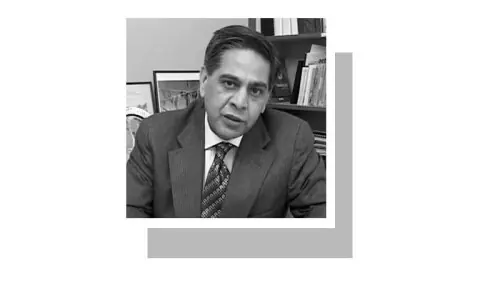
(The writer is a presenter with DawnNews)