0
0

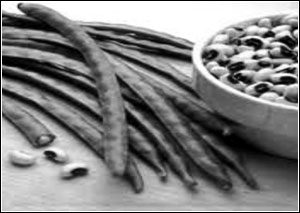 A system of agriculture without the use of a leguminous crop tends to lessen the productivity of the soil and makes necessary large outlays for nitrogenous fertilisers. With a leguminous crop grown at frequent intervals, the productivity may be maintained or even increased.
Cowpea is an important leguminous crop and locally called as chunra or lobia, originated from central Africa, the Mediterranean regions, and south Asia including India.
Pakistan achieved production of 553 tons of cowpea from 257 hectares in 2003-04. This crop is rich source of protein and grains are used dry as well as in green stages as vegetables. It can be used as green manure. The fully developed pods when start changing colour from green to light green, is the appropriate time to pick the pods, for green supply in the market and over-matured pods are left for grain purpose.
Cowpeas can be planted as an intercrop or in rotation and can tolerate drought. Cowpeas make an excellent N source ahead of fall-planted crops and attract many beneficial insects that prey on pests. Cowpeas also can be used on poor land as part of a soil-building cover crop sequence. And can be rotated with other crops to prevent nematode intervention.
The cowpeas can be successfully grown alone for hay; it is a much better practice as a rule to grow them in mixtures. The most widely used crop for this purpose is sorghum. The sorghum serves to support the cowpea vines, and its use usually results in increasing the yield of hay considerably. An additional important advantage is that the hay is more easily cured, as the sorghum prevents the matting together of the cowpea plants. Corn is also used very extensively in mixture with cowpeas, but only to a small extent for hay purposes.
Other crops that have been used to grow in mixture with cowpeas are millet, soybeans, and Johnson grass. Make good cowpea hay requires careful handling of the crop. The plant should have made its growth and have at least the first pods ripe when the mowing is done. Uniformity in maturing is essential in getting the best results.
Cowpeas for hay production are very advantageously grown in mixture with sorghum, Johnson grass, or soybeans. The yield is thus increased, the quality improved and the curing more easily done. Cowpeas give very good results when grown with sorghum in cultivated rows and are very commonly planted in corn and used for grazing or ensilage.
Pasturing cowpeas is not the most economical practice, but it is frequently resorted to because of the small expense it entails. Cowpea hay is very nutritious. It is nearly equal to wheat bran as part of a ration. It is satisfactory for work stock and for beef or milk production, and it gives good results when fed to poultry.
The grain is a rich feed, excellent for poultry but little used for other feeding. Cowpea straw is an excellent roughage and nearly as valuable as the hay. Cheaper cowpea seed will result in the much more extensive growing of the crop. Harvesting for seed can be done most cheaply by the use of machinery.
The crop should be cut with a mower or self-rake reaper' when half or more of the pods are ripe. When thoroughly dry the threshing row, be done with an ordinary grain separator with some modifications, with a two cylinder cowpea thresher, or with a one-cylinder special machine which has all the threshing spikes sharpened in addition to having ingenious devices which make it the most satisfactory thresher for handling cowpeas. Cowpeas add nitrogen to the soil and improve its mechanical condition. They are most profitably grown in rotation with other crops.
The following rotations are good ones(a) Cotton, three years; corn and cowpeas, fourth year; and then cotton again. This is all right on the better soils of the South, but the cotton should be planted only two years in succession on the poorer soils. (b) Wheat or oats with cowpeas each season after the removal of the grain crop, the land being seeded to grain again in the fall, making two crops a year from the same land. (c) Cotton, first year; corn and cowpeas, second year; winter oats or wheat followed by cowpeas as a catch crop, third year; and then cotton again.
Benefits: Drilled or broadcast cowpea plantings quickly shade the soil to block out weeds. Thick stands that grow well can out-compete Bermuda grass where it does not produce seed and has been plowed down before cowpea planting.
Cowpeas nodulate profusely, producing an average of about 130 lbs properly inoculated in nitrogen deficient soils, cowpeas can produce more than 300 lbs higher moisture and more soil N favour vegetative growth rather than seed production. Unlike many other grain legumes, cowpeas can leave a net gain of nitrogen in the field even if seed is harvested.
* Cowpeas have "extra floral nectaries" – nectar-release sites on petioles and leaflets - that attract beneficial insects, including many types of wasps, honeybees, lady beetles, ants and soft-winged flower beetles. Plants have long, slender round pods often borne on bare petioles above the leaf canopy.
* Cowpea seed valued as a nutritional supplement to cereals because of complementary protein types. Seed matures in 90 to 240 days. Cowpeas make hay or forage of highest feed value when pods are fully formed and the first have ripened. A regular sickle-bar mower works for the more upright-growing cultivars Crimping speeds drying of the rather fleshy stems to avoid over-drying of leaves before baling.
* Once they have enough soil moisture to become established, cowpeas are a rugged survivor of drought. Cowpeas’ delayed leaf senescence allows them to survive and recover from midseason dry spells. Plants can send taproots down nearly eight feet in eight weeks to reach moisture deep in the soil profile.
* This crop is of kharif and can tolerate high temperature but cannot withstand frost. The crop is photosensitive and pod formation and filling takes place in the months of September and October when days and nights are either equal or there is very little difference in the length of day or night. This crop is drought resistant and requires very little amount of water. Cowpeas are cultivated on sandy to clay loam soils having no drainage problem. For higher yields loamy soils are considered as best soils. To get a good stand, the seedbed should be well cultivated, fine, firm and free of weeds.
Fertiliser and irrigation: Compost and manure should be applied three to four weeks before planting. Cowpeas have low fertiliser requirements and grow well using fertiliser left in the soil by the previous crop (residual fertiliser). In all three irrigation are needed to an independent crop and one to two to intercrop. In case of independent crop first irrigation three to four weeks after sowing and subsequent irrigation after every three weeks interval. Whereas, in intercropped first irrigations should be applied immediately after finishing crop.