0
0

ISLAMABAD, Dec 14: South Asia has the second lowest female labour force participation rate worldwide after the Middle East and North Africa due to lesser opportunities of formal employment and access to resources.
Resultantly, India, Nepal, Bangladesh and Pakistan rank 99th to 107 on the gender development index and are at the bottom of the distribution.
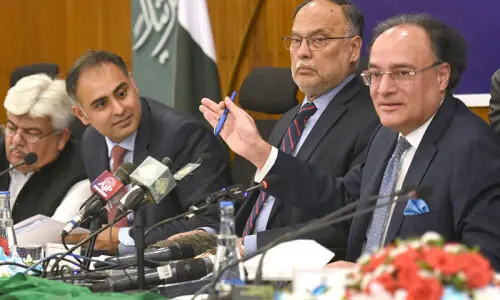
These were the findings of speakers at a session on “The underbelly of globalisation - gender and economic integration in South Asia” at the ninth sustainable development conference here on Thursday.
Dr Karin Astrid Siegmann from the Sustainable Development Policy Institute (SDPI) said economic globalisation created opportunities for those endowed with productive resources, such as human and physical capital, access to formal employment and geographical mobility.
She suggested that access of women and girls to resources such as rights to land, access to capital and technology, support for unconstrained mobility and equal access to education needed to be strengthened.
Dr Alessandra Mezzadri in her paper on “Indian garment sector” pointed out that recent trends in the Indian garment industry were quite discouraging, since they showed how the formation of class solidarity was purposefully suffocated by the producers’ strategies for labour control.
With reference to two of the new growing Indian garment export centres - Chennai and Bangalore - she explored strategies that showed success in preventing the formation of a conscious and cohesive working class in the Indian garment production.
Moreover, she highlighted how producers’ politics of production pushed female workers to participate in the reproduction of the conditions which prevented the formation of class consciousness.
Dr Veena Jha’s study examined whether an export-oriented change in the production sector can bring changes in the socio-economic condition of women in India. Her findings concluded that empowerment of women and export orientation of state economy were significantly related, provided literacy rates and health indicators were also high.
Dr Aliya Khan from the Quaid-i-Azam University said the human face of globalisation was gendered and stressed the importance of looking at all policies through a gendered lens.
Secretary ministry of women development Mehmood Saleem, who chaired the session, said Pakistan had taken many steps for empowerment of women. He said nobody can stop women from getting education and participating in politics.
Meanwhile, the session on human security in South Asia concluded that the mainstream discourse on human security was gender blind and stressed the need for genderising human security and making gender sensitive laws at national and international levels.
Dr Saba Gul Khattak of SDPI, while presenting her paper on “Gender, human security - the case of Pakistan and Bangladesh” said the state not only granted security to women but was also responsible for their insecurity as reflected in the Constitution. She stressed that both law and legislation along with peoples’ attitude and perceptions needed to be sensitised.
Urvashi Butalia from India said crimes against women and children were a major part of modern warfare just as they had been a decade ago during the partition of India.