0
0

LANDI KOTAL, Aug 25: A non-committal response from the United States for the so-called tribal reconstruction opportunity zones has put a damper on tribal investors keenly waiting for the fulfilment of a commitment made by President George Bush himself.
A team of American experts led by Greg Polk met a group of tribal investors in Landi Kotal to discuss the prospects of reconstruction opportunity zones to be set up in the tribal regions straddling the Pak-Afghan border to overcome growing unemployment and poverty and counter extremism.
Though American experts emphasised that there had been no assurances of any economic assistance or guarantees regarding the continuation of reconstruction opportunity zones, tribal traders and investors said they remained apprehensive that the whole project would be wound up long before they invested their hard-earned money, leaving them high and dry.
Mr Pol informed tribal investors that the purpose of their visit was to assess and evaluate locations, prospects of potential trade to the mutual advantage of Pakistan and the United States, and industrial capacity in the tribal regions aimed specifically at providing duty free access to Pakistani products manufactured in the reconstruction opportunity zones of the tribal regions.
He said that the purpose of their visit was to investigate the feasibility of reconstruction opportunity zones and look at the possibility of further improving trade in the tribal region.
Mr Polk clarified that furnishing of guarantees regarding the continuation of the reconstruction opportunity zones programme or direct US investment was never part of the commitment made with Pakistan except that the US would provide duty-free access to manufactured goods, including furniture, fabrics, gems, garments and marble.
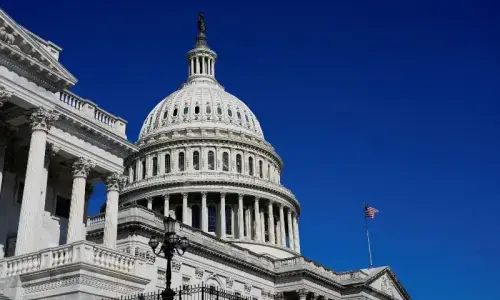
He told traders that it would take Bearing Point, a consultancy firm, to draft the charter and mandate of the programme following which it would be put up to Congress for approval. He hoped that reconstruction opportunity zones would turn into a reality sometime next year.
The visiting US expert said that his visit was a follow up of a visit to the region by the deputy assistant secretary of state for economic affairs, Don Sullivan.
Tribal traders and investors pointed out that a similar US-funded programme to root out poppy cultivation by helping Pakistan set up the Gadoon Amazi Industrial Estate in the NWFP had turned into an industrial graveyard due to lack of US commitment to ensure the continuation of the programme.
They pointed out that lack of skilled labour, locational disadvantage vis-a-vis the long distance from the sea port, transportation of raw material and poor infrastructure were some of the problems that could affect reconstruction opportunity zones in the tribal regions.