0
0

NAIROBI, Aug 8: An oil spill caused by Israeli raids on a Lebanese power plant could rival the 1989 Exxon Valdez disaster that despoiled the Alaskan coast if not urgently addressed, the United Nations said on Tuesday.
The Nairobi-based UN Environment Programme (UNEP) said the spill that poses severe ecological and human threats is already comparable to a 1999 oil tanker accident off the coast of France and had the potential to get far worse.
“In the worst-case scenario and if all the oil contained in the bombed power plant at Jiyyeh leaked into the Mediterranean Sea, the Lebanese oil spill could well rival the Exxon Valdez disaster of 1989,” it said in a statement.
“We are dealing with a very serious incident and any practical steps are still constrained by the continuation of hostilities,” UNEP chief Achim Steiner said in a blunt appeal for immediate cooperation to stem any damage.
“While I fully understand the complexity and political implications, many are appalled ... there has been no on-the-ground assessment to support the Lebanese government, no moves possible towards a clean-up and indeed few practical measures to contain the further spread of the slick,” he said.
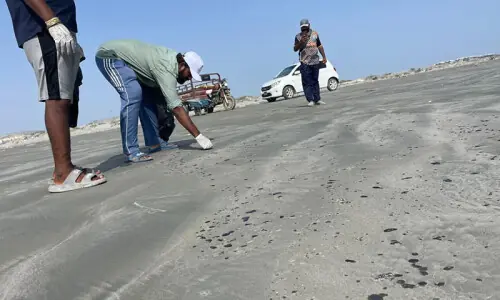
The UNEP said 12,000 tons of leaking oil from the Jiyyeh plant, which was bombed by Israel on July 14 and July 15 a few days into its offensive against Hezbollah in Lebanon, had already polluted more than 140 kilometres of the Lebanese coast and spread north into Syrian waters.
The Exxon Valdez spilled 37,000 tons of oil into Alaska’s Prince William Sound after running aground on a reef on March 24, 1989, causing massive damage from which some scientists argue the area has yet to completely recover.
The UNEP said two environmental experts had arrived in Syria to begin assessing the impact of the Jiyyeh spill, which it said it feared had already affected marine life, particularly tuna and turtles, in the Mediterranean.
“This oil slick definitely poses a threat to biodiversity,” said Ezio Amato, one of the two UNEP consultants.
In Rome, an Italian environmental agency which monitors the Mediterranean said the spill posed a heightened risk of cancer.
The leakage ‘is a high-risk toxic cocktail made up of substances which cause cancer and damage to the endocrine system’, Simonetta Lombardo of Info-Rac told reporters.
“It is not oil that has flowed but fuel for power stations,” she said. “This contains substances such as benzene, categorised as a Class 1 carcinogen.”
Info-Rac monitors compliance with the Barcelona Convention, drawn up in 1976 and designed to protect the Mediterranean. So far some 22 countries have signed up to the text.—AFP