
The Saudi–Pakistan private equity fund, launched on Nov 9 with a reported first-phase target of $500 million, 75pc of it earmarked for Pakistan, is a welcome expression of confidence. But it raises a fundamental question: is Pakistan ready for private equity? Capital is only one ingredient. Investible businesses, willing owners, transparent accounts, enforceable shareholder rights and credible exits matter equally, and Pakistan is weak in all of them. The fund may find that raising capital is easier than deploying it profitably, and exiting harder still.
Private equity differs from lending or portfolio investment: it acquires stakes, improves performance and sells at a profit. That requires businesses willing to accept outside shareholders, professional management and transparency.
Pakistan has no shortage of entrepreneurs, but few businesses are institutionally investible. Ownership is concentrated in families reluctant to dilute control, share decisions or accept scrutiny. Reporting and governance standards vary widely, and transparency may expose undocumented transactions and tax liabilities.
Yet genuine needs exist. Succession disputes, retiring founders, expansion plans and heirs unwilling to run inherited businesses create openings for outside capital. Minority stakes can finance growth without displacing families; majority acquisitions can give owners an exit. Both sides need protection: investors require enforceable rights over major decisions, related-party transactions and exits; families need assurance against unrealistic performance demands and premature sales.
The most promising opportunity is consolidation. Textiles, engineering and food processing contain many firms too small to achieve scale, invest in technology or meet international standards. Private equity could combine them into professionally managed enterprises able to compete globally.
Private equity needs clarity on the taxation of income, dividends, capital gains, restructuring and distributions. Taxing the same income at company, fund and investor levels would erode returns. Tax-neutral mergers and share exchanges, predictable capital gains treatment and relief from cascading dividend taxation would help, as would pass-through taxation, with safeguards against disguising ordinary business income as concessionally taxed gains. The National Private Equity Framework, still being drafted, is the right vehicle. Its reforms should benefit all qualifying investors, not only participants in this initiative.
The recent super tax cuts, including exemption for large exporters, are a welcome correction. But high corporate and dividend taxation and uncertain treatment of restructuring still deter investment.
Pakistan’s greatest weakness may be the absence of reliable exits. The Pakistan Stock Exchange (PSX) offers few sizable listings; concentrated ownership, limited free float and compliance costs discourage companies from going public. Strategic buyers are few, and sales back to founders depend on their liquidity.
Abraaj’s experience is a warning. Shanghai Electric agreed in 2016 to buy its controlling stake in K-Electric for $1.77 billion; the deal was abandoned in 2025. Abraaj’s own collapse compounded concerns about fund governance, though not every difficulty was its doing: K-Electric’s regulated business, circular debt and government disputes created separate complications. The lesson is plain nonetheless: an investor may acquire an asset yet struggle for years to leave it.
Private equity cannot flourish where contracts are hard to enforce, approvals unpredictable and repatriation uncertain. Pakistan needs credible pathways to IPOs, strategic sales and buybacks, backed by effective commercial dispute resolution.
The test should be whether investment is productive rather than speculative: does it add employment, productivity and export earnings, not merely transaction value? By that test, consolidation of established industries stands out. Agriculture offers dairy, meat processing, horticulture, cold chains and food exports, where Saudi partners could bring assured markets. Auto components have developed valuable engineering skills; consolidation could improve scale and quality and enable diversification into electric vehicle parts, agricultural machinery and industrial equipment. Export-oriented textiles, pharmaceuticals, surgical instruments and established IT exporters offer similar scope.
Other candidates suit conventional private equity less. Mining needs specialist expertise and patient capital. Railways, ports and airports have long horizons and regulatory risks are better served by dedicated infrastructure vehicles. Monetising government land may yield immediate proceeds without creating productive capacity, and deserves caution.
Foreign investors measure returns in dollars. A business earning 15pc in rupees delivers only about 4.5pc in dollars if the rupee depreciates 10pc a year. That strengthens the case for export-oriented investments over businesses reliant on protected domestic markets.
Fund governance is equally important: transparent decisions, independent valuations, conflict-of-interest safeguards and professional management. Deals involving businesses linked to sponsors need particularly rigorous scrutiny, and improving performance after investment demands specialist knowledge across sectors.
The government’s role is to improve tax rules, shareholder protection, listing opportunities, repatriation procedures and commercial dispute resolution, and to avoid guarantees or privileges that shift investment risks to taxpayers.
The $500m remains a target, not committed capital, and success should be judged by more than money deployed. The real test is whether the fund creates additional investment rather than merely transferring ownership, improves governance, consolidates fragmented enterprises, generates exports and jobs, and builds a record of successful exits.
Pakistan needs long-term risk capital, but capital cannot overcome weak governance, unpredictable policy and an underdeveloped market for corporate ownership. The initiative could catalyse change; its greatest contribution may be showing that transparent, internationally competitive businesses can attract capital without protection or privilege.
Pakistan’s challenge is not simply to attract private equity. It is to create enterprises worthy of investment, and a market from which investors can eventually exit.
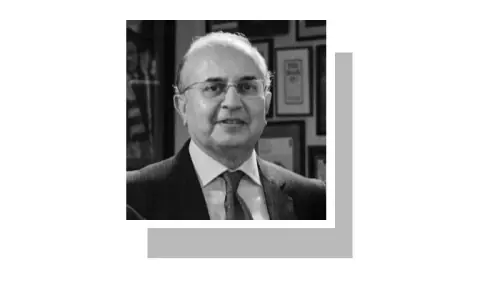
The author is a former CEO of Unilever Pakistan and of the Pakistan Business Council.
Published in Dawn, The Business and Finance Weekly, November 16th, 2026