THE world is not changing hands; it is actually changing shape. The age in which one superpower could dominate the global conversation is now giving way to an era where influence is scattered, contested and increasingly difficult to sustain. For decades, the United States stood at the centre of the international system. However, things are changing, steadily altering the global balance.
The US remains a military, financial and technological giant. The dollar continues to occupy a central position in international finance, while American universities, technology companies and security partnerships provide Washington with enormous global influence. What is changing is not America’s importance, but its ability to shape international outcomes without facing serious resistance.
China is at the heart of this transforma- tion. Its economic scale, manufacturing capacity and expanding diplomatic presence have made it impossible to discuss global politics without China. Yet, describing
the future as simply a transition from an American to a Chinese world would be misleading. China may seek greater influence, but the international system is too complex for one rising power to inherit the entire US supremacy.
India represents another important centre of gravity owing to its enormous population, expanding economy, techno-
logical capacity and strategic importance which together give it enough room to pursue an independent foreign policy. Rather than permanently aligning itself with one camp, New Delhi has demons-trated the value of maintaining relation-ships with competing powers. This reflects a broader trend among countries across the Global South.
For most of the developing states, foreign policy is no longer about choosing between Washington and Beijing. It is now about extracting maximum benefit from both. They want Chinese investment, Western markets, Russian energy, Gulf capital and strategic cooperation with a multitude of partners. Such flexibility is becoming a diplomatic asset.
The growing importance of BRICS and other alternative platforms also reflects dissatisfaction with a global system in which decision-making has often been concentrated among a limited group of powerful states. However, these emerging groupings are not unified blocs. Their members have competing interests and a variety of political priorities. Their importance lies less in replacing the West than in making the global system a lot more pluralistic.
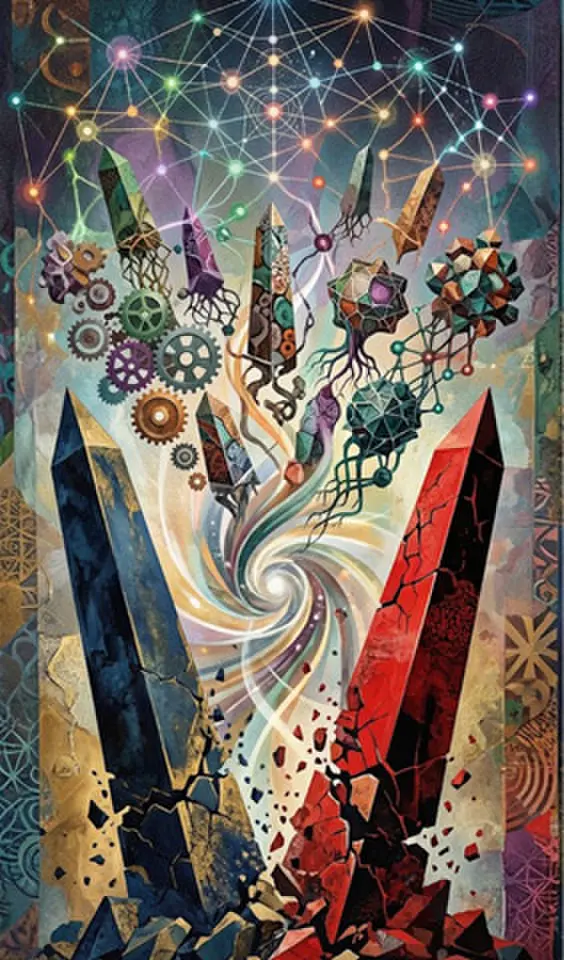
At the same time, power itself is now becoming fragmented. Military strength remains crucial, but control over semi-conductors, artificial intelligence (AI), energy, critical minerals, food supplies, data and financial networks can be equally consequential. A country may be powerful in one domain while depending heavily on another state in a different one.
This fragmentation carries risks. More centres of power can give smaller states greater choices, but they can also make global politics unpredictable. Trade disputes can become security disputes; techno-logical competition can become diplomatic confrontation; and economic dependence can become a strategic vulnerability. The world, therefore, is moving towards a much more contested international order. Will competing powers learn to coexist in a world where none is powerful enough to dictate the rules alone? The answer to this question will define the coming decades.
Sanaullah Mirani
Daharki
Published in Dawn, November 11th, 2026