Anti-encroachment drive deals severe blow to Haripur traders
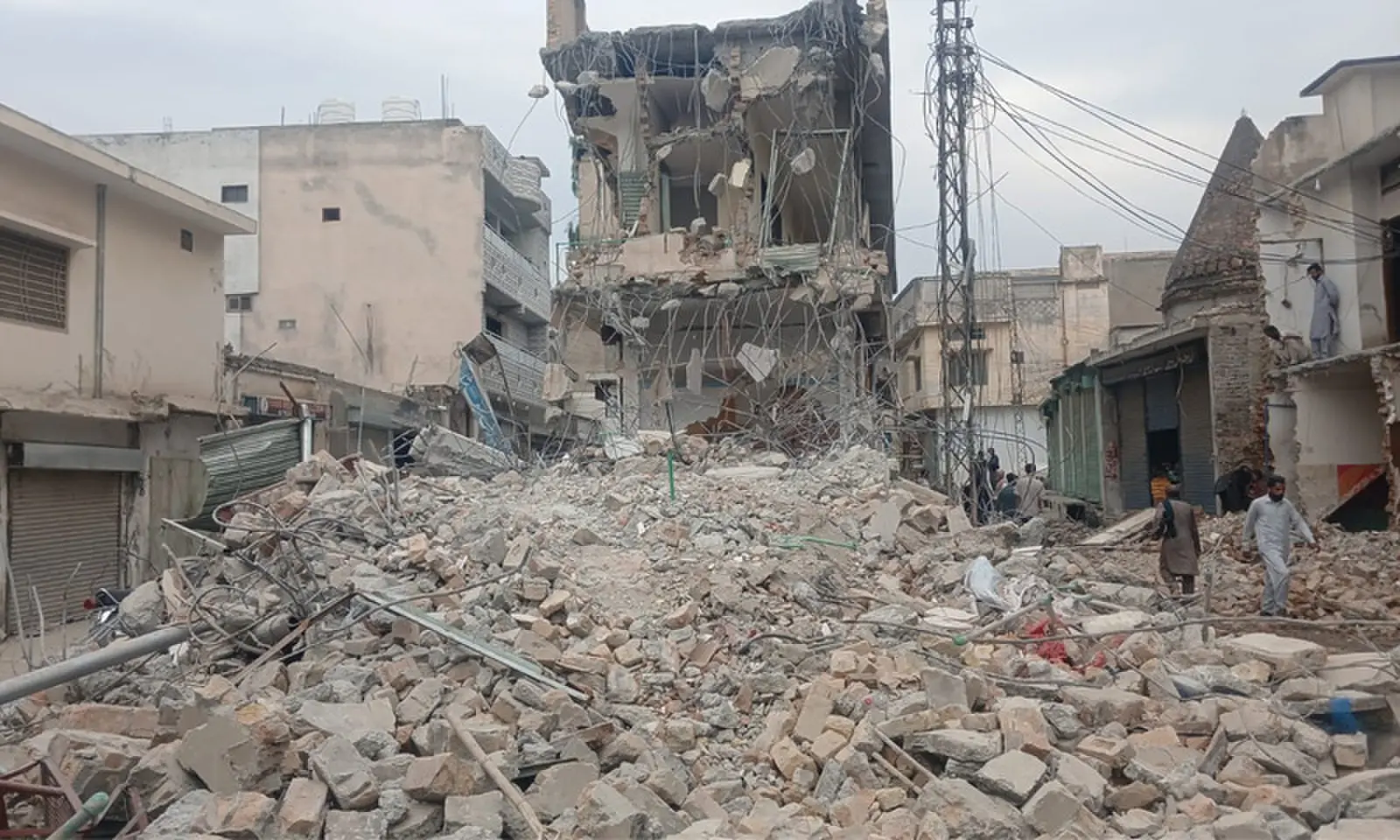
HARIPUR: Business activities remained suspended in Haripur’s main bazaar for the 10th consecutive day on Monday, causing financial and psychological distress to hundreds of traders and their employees as the district administration has yet to allow the reconstruction of partially demolished shops.
Traders attributed the delay to the incomplete removal of encroachments, clearance of debris, fresh demarcation of shops and restoration of roads and drains. They said the prolonged closure had deprived thousands of people of their livelihoods and left shopkeepers struggling to meet financial obligations.
Additional Assistant Commissioner-II Nazimuddin, who is supervising the anti-encroachment operation, said the administration was working to clear debris, shift electricity poles and restore roads and drains according to the original settlement plans of 1872 and 1903-04. He hoped that the process would be completed within the next two months, enabling traders to resume business.
Business activities in main bazaar suspended for 10 days
Haripur has witnessed one of its largest anti-encroachment operations, which began on Oct 31 and affected the historical main bazaar, Mochi Bazaar, Loharan Bazaar and Rehmania Road.
According to Qasim Khan, an octogenarian, Hari Singh Nalwa, the founder of Haripur, built this bazaar during Khalsa Raj between 1822 and 1846.
He said the intact remains of some gurdwaras and temples in the urban limits bore testimony to the historical importance of the city.
The operation, which was deferred several times in the past reportedly due to political meddling, left several commercial areas in ruins, with authorities claiming that shopkeepers had extended their businesses four to 14 feet beyond the prescribed limits. Some influential businessmen had allegedly constructed commercial buildings over drains, obstructing the natural flow of water.
The operation drew mixed reactions from traders and citizens. While affected traders described it as a severe blow to their livelihoods, many shoppers welcomed the initiative, saying encroachments had created serious mobility problems and that the bazaars needed improvement.
All Traders Association (ATA) President Abdul Saboor Qureshi said around 2,500-3,000 small and large shops and plazas between GPO and Chowk Sheranwala Gate, including those in the main bazaar, Mochi Bazaar, Loharan Bazaar and Rehmania Road, had suffered demolitions ranging from four to 14 feet. Several structures built over water channels have been demolished.
He criticised the administration for launching the drive without giving shopkeepers sufficient time to arrange alternative business premises or voluntarily remove extended portions of their properties.
Shopkeeper Sajjad Khan said many extensions had been approved by the then municipal committee, now the tehsil municipal administration, over the last 50-60 years.
He argued that shopkeepers shouldn’t be held entirely responsible for administrative shortcomings and questioned why corrective action had not been taken earlier to prevent financial losses.
Labour leader Tahir Amin termed the operation excessive and said its implementation had affected more than 10,000 families, including shopkeepers, employees and pushcart vendors.
Zeeshan, a general-store owner whose shop was completely demolished, feared that prolonged business closures could expose traders and their employees to severe mental stress and anxiety. He said normal commercial activities might take nearly a year to resume.
Former MPA and senior Qaumi Watan Party leader Dr Faiza Rasheed said the economic losses could have been minimised had the administration implemented the drive in three phases, giving traders sufficient time to make alternative arrangements.
Responding to the criticism, AAC Nazimuddin said notices had been served on shopkeepers since 2013.
He also said the deputy commissioner held a detailed meeting with representatives of local traders around a week before the operation began at Swat Chowk, urging them to voluntarily remove temporary and permanent encroachments.
The official said the revenue department was examining settlement records from 1872 and 1903-04 to restore roads, drains and commercial properties to their original dimensions.
He said the Water and Sanitation Services Company’s teams were working round the clock to remove debris, while the next phase would focus on rehabilitation and restoration.
“The administration aims to complete the planned work within two months to facilitate the resumption of business activities in the affected areas,” he said.
Published in Dawn, November 10th, 2026