Hindu community celebrates Diwali at home as Krishna Temple remains closed
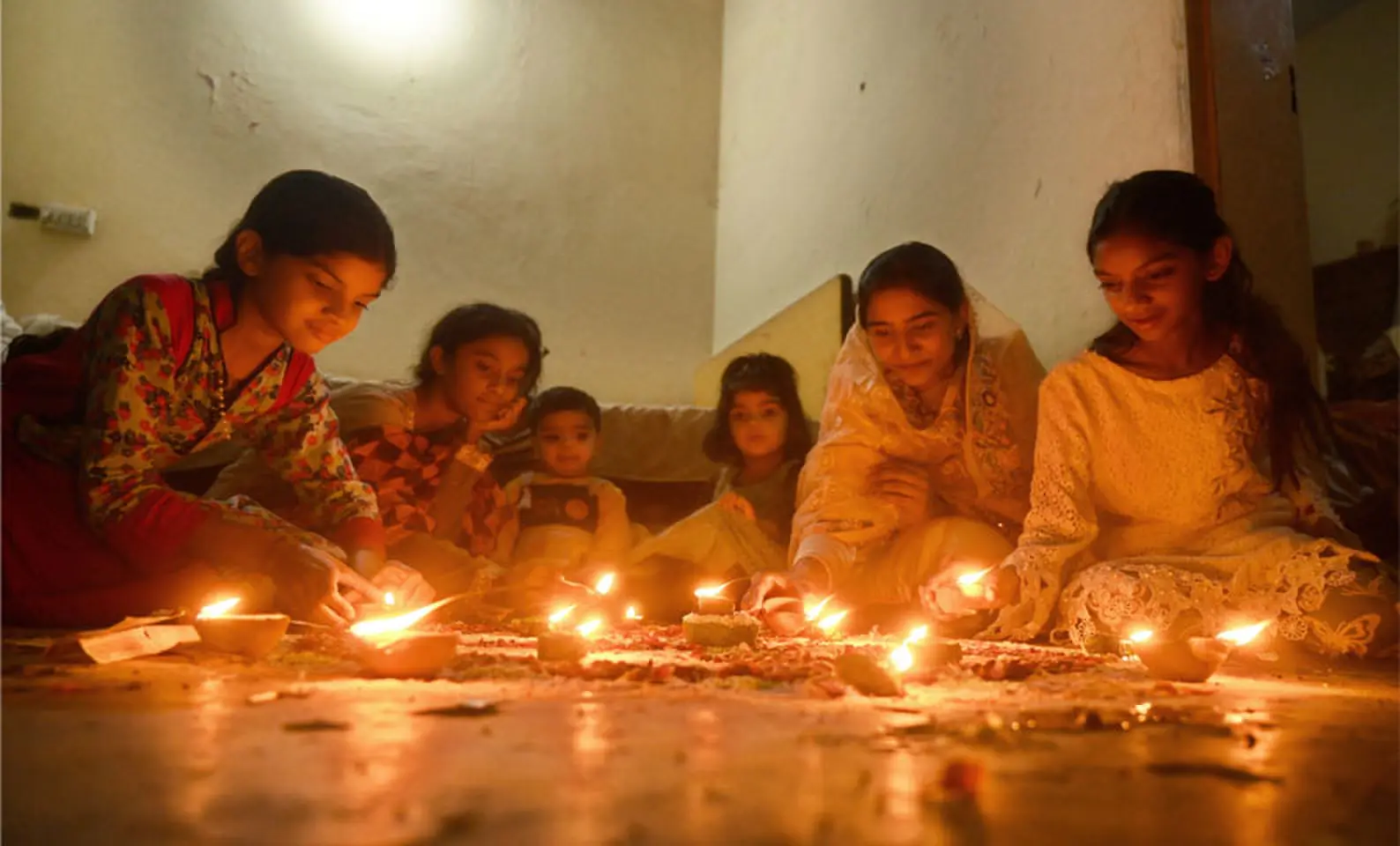
RAWALPINDI: The Hindu community in Islamabad and Rawalpindi celebrated Diwali at their homes on Sunday instead of temples, as the only functional temple in the twin cities - Krishna Mandir in Saddar - remained closed for reconstruction.
It was the second consecutive Diwali without a mass puja at Krishna Temple due to ongoing construction work. However, members of the Hindu community celebrated the main festival on the Hindu religious calendar in their homes.
Families decorated the entrances of their houses with colours and lit earthen lamps to celebrate the homecoming of their Hindu god, Shri Ram. Small footprints of a Hindu goddess, made with rice and flour powder, were also drawn on the walls of their houses.
The Punjab government had directed that the temple’s reconstruction be completed as soon as possible. According to the temple management, the project has an estimated cost of Rs40 million.
The temple was handed over to the Evacuee Trust Property Board (ETPB) on June 12, 2025, and reconstruction work began in July.
The reconstruction includes halls, rooms, washrooms and other parts of the building. At present, the puja room and verandah remain intact, while the rest of the temple is under construction. Members of the Hindu community said that due to the ongoing work, many people avoided visiting the temple, particularly on Tuesdays, which is a day of prayer.
However, the work has reportedly been stopped. ETPB Administrator Yasir Asghar was not available for comment despite repeated attempts.
Pakistan Hindu Sikh Social Welfare Council President Sardar Hira Lal told Dawn that Diwali had been celebrated with simplicity for the second time in the past two years because the temple remained closed and the community had no other place to offer mass prayers.
He said Krishna Temple in the garrison city was still under construction and no mass prayers had been held there. Consequently, people celebrated their religious festivals in their homes.
Mohan Das, a Hindu resident, said the closure of the temple had made it difficult to offer prayers on Tuesdays and other days as part of the community’s routine.
He said mass puja was necessary, but there was no alternative place for it. He added that although there was a private temple in Lal Kurti, the community preferred to visit Krishna Temple.
Jai Ram, the priest, said he was in Sindh to celebrate Diwali with his relatives because Krishna Temple was closed.
He said Hindus celebrated Diwali every year as it is one of the biggest festivals on the Hindu calendar.
He said it symbolised the victory of good over evil, while lights were lit as a sign of celebration and the victory of God.
Attock
The Hindu community in Attock also celebrated Diwali with traditional fervour, spiritual devotion and cultural enthusiasm, illuminating their homes with oil lamps and offering prayers for peace, prosperity and harmony in Pakistan.
Around 30 Hindu families residing in Attock Cantonment marked the festival by lighting traditional earthen lamps (diyas), decorating their homes and exchanging sweets, keeping alive centuries-old religious and cultural traditions associated with the festival of lights.
The celebrations centred on Valmiki Temple, the only Hindu place of worship in Attock, where religious proceedings began with the recitation of the sacred
Hindu epic Ramayana, followed by special prayers and worship led by Pandit Sarwan Kumar. The temple was decorated for the occasion, creating an atmosphere of religious solemnity and festive joy.
Speaking on the occasion, Pandit Sarwan Kumar said Diwali held immense religious and spiritual significance for Hindus across the world and was celebrated with devotion and enthusiasm by millions of followers.
Explaining the religious significance of the festival, he said it was traditionally associated with the return of Lord Shri Ram Chandra Jee to Ayodhya after completing 14 years of exile in the forests.
According to the Hindu epic Ramayana, the people of Ayodhya illuminated their homes with oil lamps to celebrate his homecoming, a tradition that continues to define the festival.
He said the lighting of lamps represented the victory of righteousness over evil and light over darkness, while the festival also conveyed a universal message of compassion, hope, tolerance and peaceful coexistence.
Pandit Sarwan Kumar lauded the government and local administration for providing security and facilitating members of the Hindu community during their religious festivals. He said such arrangements enabled them to observe their religious traditions with dignity and freedom.
Published in Dawn, November 9th, 2026