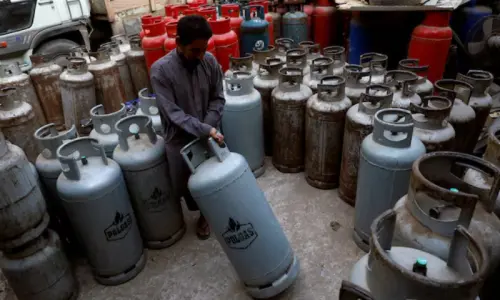
EACH winter, millions of working-class households across the country face the same ordeal. LPG, long considered the poor man’s fuel, is now what many middle-class families use for cooking and heating. An increasing number of homes lacking piped connections in cities end up buying cylinders as temperatures fall.
Gas rationing due to shortages caused by dwindling domestic gas reserves, together with increasing tariffs on imported RLNG, is boosting the demand for LPG. When winter sets in, demand jumps, supply tightens, and traders hoard stocks.
This year, as the petroleum minister told the National Assembly last month, the closure of the western borders has disrupted import shipments, which account for 70pc of LPG imports, exacerbating the shortages. The Saudi Aramco price, to which local LPG is linked, has also risen to $705 per tonne and the fuel is selling at Rs700-800 per kilogram — well above the official ceiling. For families already stretched by inflation, even LPG has become something to ration.
It is against this backdrop that the government has announced a new LPG policy that directs four SOEs to resume bulk imports through government-to-government and business-to-business deals. Their base prices will be published, giving the market a landed-cost benchmark.
The policy also scraps the discretionary quota system. Locally produced gas will be sold through open auctions, which should cut out the intermediaries who profit from the existing arrangement. The gap between auction proceeds and the SOEs’ import parity price will go into a dedicated fund, allowing the government to sell LPG at Rs300-350 per kilogram to BISP beneficiaries, without burdening the government budget or widening the fiscal deficit.
Enforcement is the weak point. It always has been. The authorities have issued many price and market rules that were never properly implemented. The Competition Commission of Pakistan, the National Explosives and Petroleum Safety Agency, and district administrations are all expected to act against collusion. They will have to be present at the retail level, where distributors have long kept the margins meant for consumers.
The auctions need watching too, since a handful of large bidders could capture them. If the policy is enforced effectively, it could potentially help end shortages and slash prices. But the question remains whether it will.
Published in Dawn, November 5th, 2026