What the US midterms mean for ties with China

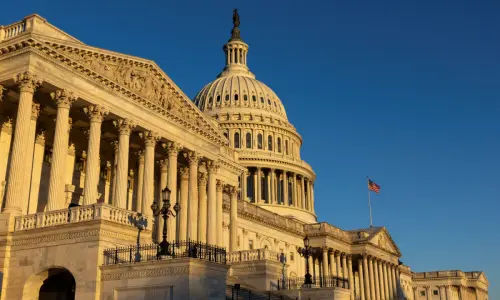
A sweeping victory for Democrats in US midterm elections this week, giving them control of Congress, presents both an opportunity and a challenge for top rival China, analysts say.
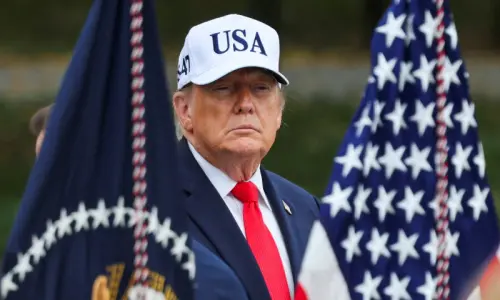
Here is how the outcome of the vote, which offers the Democratic Party the power to stymie President Donald Trump’s maverick foreign policy, could impact the thorny relationship between Washington and Beijing:
Will tariffs be limited?
Winning control of both houses in the US Congress puts Democrats in a position to limit Trump’s liberal use of tariffs on Chinese products in the two years he has left in office, analysts say.
That could be a blow to Trump, who had wielded duties throughout a frenzied US-China trade war before the two sides reached a truce, set to expire in January.
If Democrats limit Trump, that means he “will be less able to leverage a tariff card in negotiations with China”, said Wu Xinbo, dean at the Institute of International Studies at Fudan University in Shanghai.
However, Democrats will also have to weigh their actions against the popularity of Trump’s tariffs among US businesses.
Congress will “take every opportunity to thwart (Trump’s policies) over the next two years”, said Drew Thompson, a senior fellow at the S. Rajaratnam School of International Studies at Singapore’s Nanyang Technological University.
But Democrats will still have to tread carefully on further restricting tariffs that “are popular with unions, blue-collar workers and small businesses… who have historically been a base constituency for the Democrats”, Thompson said.
Congress will be “less inclined to support measures that would sharply escalate pressure on China if doing so risks raising costs for American consumers and businesses or increasing the likelihood of conflict”, said Patricia Kim, a foreign policy fellow at the Brookings Institution in Washington.
Taiwan a ‘game changer’?
The issue of Taiwan, the US-backed democratic island claimed by Beijing, could be a “game changer”, said Neil Shearing, group chief economist at Capital Economics.
Washington is Taipei’s most important security backer and has sold billions of dollars’ worth of arms to Taiwan that the island would use to fend off a potential Chinese attack. But Trump threw the US stance into question in May when he declared that US arms sales to Taiwan could be a bargaining chip in talks with China.
His administration has since delayed for months a $14-billion batch of weapons. China could use the remaining two years of Trump’s presidency to increase pressure on Taiwan, particularly if Beijing “judges that Washington is distracted or that Trump would be willing to agree terms to not intervene”, Shearing wrote in a note. Trump, who recently hailed his “great friendship” with China’s President Xi Jinping, has so far resisted political pressure from Democrats — and some Republican lawmakers — to greenlight the arms package.
But a Democrat-controlled Congress “may force Trump to resume arms sales to Taiwan next year”, Wu said. “If that happens, that will also undermine the stability of US-China relationship.” Alternatively, for China, renewed support of Taipei from the US Congress may be “a stronger incentive for (Beijing) to play it safer with Taiwan”, said Steve Tsang, director of the SOAS China Institute.
Nevertheless, Thompson pointed out, while Congress can pass bills requiring Trump to approve an arms sale, the president retains the power to veto it “or simply ignore it”.
Will Beijing treat Trump as a lame duck?
From China’s perspective, even though Trump has been politically weakened by the midterms, Beijing is unlikely to change its strategy towards working with him, analysts say.
“Beijing is likely to continue cultivating him through high-profile, leader-to-leader engagement with Xi Jinping, viewing this as the least costly way to manage relations with Washington,” said Kim. “Neither Beijing nor Washington appears to expect or seek a fundamental improvement in bilateral relations,” she added.
Tsang of the SOAS China Institute said “Trump being relegated to lame-duck status will be used by the Chinese to put more pressure on him”. But, he added, Beijing is “calculating” and “would not want to push too hard and trigger Trump behaving totally irresponsibly”.