Imagine losing 15 pounds in two weeks. It might sound like a dieter’s dream; for me, it was a warning sign.
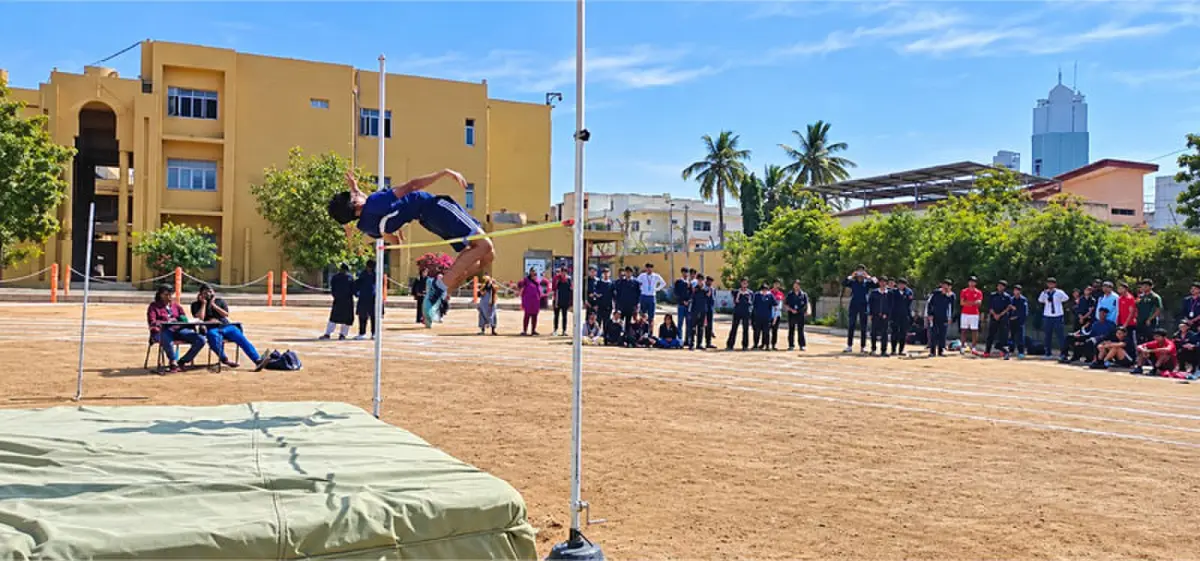
I was a student-athlete, specialising in high jump, at the start of my high school journey in July 2023. That year, I went from hospital to hospital in Karachi as doctors repeatedly misdiagnosed my symptoms. My family and I lived with the quiet dread of an illness no one could identify.
For a time, my life revolved around repeated blood tests, doctor visits, second and third opinions, endless examinations and trials-and-errors with medication. The ordeal would have rattled any high schooler, but it was especially difficult when the illness itself affected my gut.
Eventually, I finally had a name for it: inflammatory bowel disease (IBD), specifically Crohn’s disease. Although its exact causes remain unclear, Crohn’s disease is understood to involve interactions between genetic susceptibility, immune-system dysfunction and environmental factors.
After a year of misdiagnoses in Karachi, a student-athlete turned Crohn’s disease into a research question, and a reason to keep clearing the bar
I’ve lived with it for the last three years. In Pakistan, gaps in data and repeated misdiagnoses meant I spent my first year with the disease without a diagnosis.
TACKLING IT LIKE AN ENGINEER
While the diagnosis brought relief, it came with a harder task: building a life in which chronic illness did not limit my ambition. How could I prepare for the Junior National Games while managing my diagnosis?
One of my strongest qualities is that when something affects me personally, I instinctively want to understand the mechanism behind it rather than simply accept it. I began studying how the disease develops, while continuing my athletic pursuits.
Supported by my family, mentors and friends, I knew I also had to be my own first line of defence. They say I approached the challenge like an engineer. In a way, I did. I designed routines: planning meals around what my body could tolerate and the nutrients it needed; scheduling hospital visits; tracking triggers and flare patterns like experimental variables; and protecting recovery time, so exams and athletics would not collide with my body’s limits.
Athletics made my curiosity physical. Training turned observations about my energy and recovery into data. I saw how breathing cadence affected performance, sleep influenced adaptation and nutrition shaped results. Recovery, I learned, was not simply rest but rebuilding.

FROM PATIENT TO RESEARCHER
My experience made me question how many others in Pakistan might be suffering without an accurate diagnosis or access to appropriate care. My search for answers expanded into a broader question: how do geography, socio-economic circumstances and healthcare infrastructure shape diagnosis and access to treatment?
I began investigating the relationship between ‘Westernisation’ and Crohn’s disease prevalence in Pakistan. The argument is that a Westernised diet — high in animal protein, saturated fats, refined carbohydrates and additives but low in fibre — can disrupt the gut microbiome and reduce its diversity.
But Westernisation involves more than dietary changes. Urbanisation also brings changes in hygiene, antibiotic use, pollution and exposure to microbes, all of which can affect the developing gut microbiome. Childhood antibiotic use has also been linked to a higher risk of IBD, while limited exposure to harmless microbes early in life may affect how the immune system develops. The shift from rural to urban living, therefore, changes the microbial exposures that help shape human immunity.
In December 2025, a two-week internship at the Aga Khan University Centre for Regenerative Medicine and Stem Cell Research resulted in hands-on laboratory experience in DNA extraction, polymerase chain reaction and gel electrophoresis while being part of Crohn’s disease-related research.
I later published my research in the August 2026 issue of the digital, peer-reviewed Global Scientific Journal. The paper explored whether changes in diet, behaviour and environmental exposures associated with Westernisation might contribute to microbiome disruption and Crohn’s disease prevalence in countries such as Pakistan.
In summer 2026, I virtually attended the Global Health Leaders’ Conference at Johns Hopkins University in the US, where I presented my research on Crohn’s disease and industrialisation to an international audience. Living with Crohn’s disease gave me firsthand insight into the physical and emotional challenges IBD patients face, often compounded by stigma, limited resources and weak support systems. Patients must also have a voice alongside clinicians, public-health experts, policymakers and scientists working to improve IBD care and research.
CLEARING THE BAR
Now, when my spikes hit the track and the crowd blurs into a wall of noise, I find silence. My focus narrows to the bar, my breath and the decision to commit. I pursue precision not because it is easy, but because it brings clarity.
I hope that advances in transnational research will one day transform the treatment of Crohn’s disease and other immune-mediated conditions. A breakthrough of that scale would be like the Fosbury Flop: a new way of clearing a hurdle once thought insurmountable.
To everyone living with IBD: be proud of your resilience and adaptability. Life may look different than you imagined, but accepting a new chapter does not mean settling for a worse one. My motto may help on your journey: “My illness does not define me. My response to it does.”
The writer is an A-Level student at the Karachi Grammar School. He can be
contacted at zayanajanee08@gmail.com
Published in Dawn, EOS, November 1st, 2026