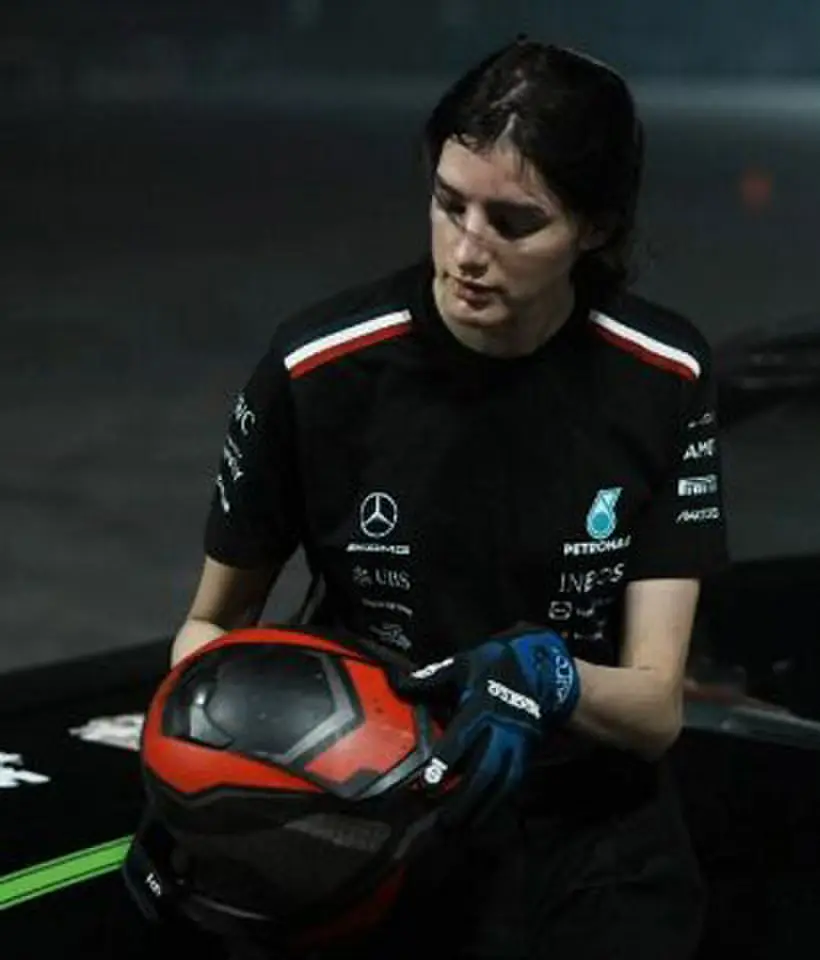
In 2024, Laiba Khan Lodhi posted a video of herself doing donuts in her Mercedes, a skill she had learned at the Pro Drift Academy Dubai.
The video caught the attention of the local street-racing community, and someone made a meme out of it, making fun of the young female driver. All sorts of negative comments, such as “Women belong in the kitchen” and “Leave driving to the boys” along with teacup emojis, abuse and threats, started pouring in.
It disappointed her. At the same time, it fueled her passion, motivating her to adopt drifting as a career.
“The attitude behind those comments implied that motorsports somehow was a property of men only — I wanted to challenge that,” Laiba says while talking to Eos. “I knew I couldn’t change everyone’s mind, but I could prove that women belong on the track too.”
Mocked in a meme and flooded with misogynistic online comments over an early car drifting video, Laiba Khan Lodhi used that negativity to fuel her drive to become a professional drifter
Drifting is a type of motorsport in which the car must slide sideways in an oversteer condition — such as the rear-wheel slip during cornering — and be controlled by the drivers. Competitors are judged based on their drifting skill and manoeuvring, and drivers must demonstrate speed and control of the drift.
When she asked her parents to allow her to pursue drifting professionally, they did not hinder her. In fact, they restored her confidence and encouraged her to prove her detractors wrong.
“Their support has meant a lot, especially at a time when so many people were trying to discourage me,” she says.
GROWING UP WITH CARS
Cars have always been a part of Laiba’s life. Her father owned a car business in Islamabad and would often bring different vehicles home, sometimes wanting her to be the first to drive them.
From convertibles to classic cars, she grew up experiencing all kinds of rides and gradually developed an emotional attachment to them.
“I get attached to cars very easily,” she admits. “I still remember the cars I’ve sat in, and I’ve even cried when we sold a few of them.”
Still, a career behind the wheel was never part of her life plan. Her ambitions kept changing as she grew up. At one point, she wanted to join the army and, later, she considered becoming a pilot. Though her career aspirations had always been adventurous, drifting never crossed her mind.
Then came the meme, and it changed everything.
THE CHALLENGE OF DRIFTING
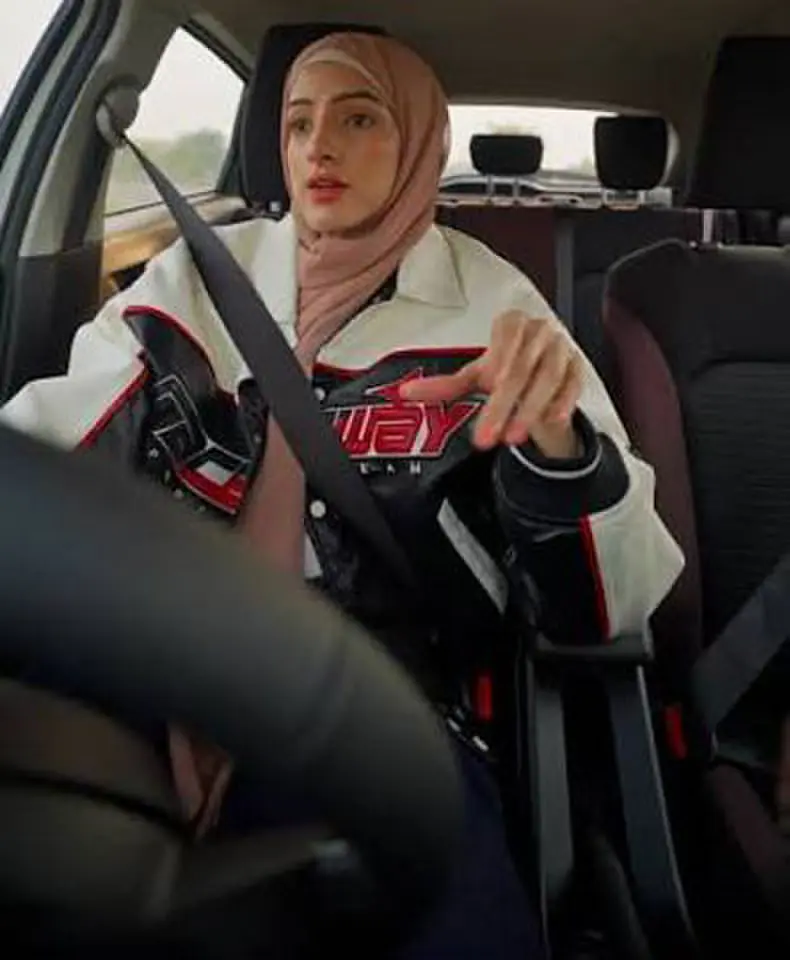
Instead of retreating under social pressure, Laiba took it as a challenge to the stereotype, reflecting her strong personality.
By 2026, Laiba had become a household name in Pakistan’s drifting and racing community, earning over a million followers on Instagram, with drifting videos garnering millions of views.
Drifting is not cheap, and Laiba knew that when she chose it. You need a well-maintained car, you pay for tracks, and you spend on training. To bear her expenses and grow as an individual, she creates content around cars, collaborates with brands and also runs a modest-wear brand, Ajwa Modest Wear.
“I have even bought [drifting] cars with my own money, which makes me proud. Being financially independent matters a lot to me,” she says.
Her hard work and skill have gained her some international exposure. Earlier this year, in January, she competed in the Saudi Toyota Drift Championship in Jeddah, Saudi Arabia, where she was the only female drifter and the sole representative of Pakistan.
THE FIRST ACCIDENT
Then came a different kind of test. Looking to push her limits and conquer other tracks, Laiba competed in the Cholistan Desert Rally in the Women’s Prepared Category, venturing into unfamiliar territory.
It was a tough but memorable experience, as she had her first accident while driving. She got off to a difficult start when she hit a tree, damaging the side mirror and front windscreen, but carried on. Later, she could not spot a pothole in time, and the impact hurt her arm so badly that paramedics had to check on her.
“It was a lot to go through in my first race, but I consider it an important experience,” she says. “Motorsport always carries risks, and that day reminded me how much proper preparation and safety matter. I was proud that I finished, and even came away with a podium [finish].”
Laiba Khan Lodhi has come a long way from the girl who faced online hate. Today, people tell her they are proud of her, and parents say their daughters want to try drifting, too.
“Hearing that makes me really happy,” she gushes. “I feel that by showing up and continuing, I have helped make the sport feel more possible for other women.”
The writer is a communication specialist and a freelance sports journalist
Published in Dawn, EOS, November 1st, 2026