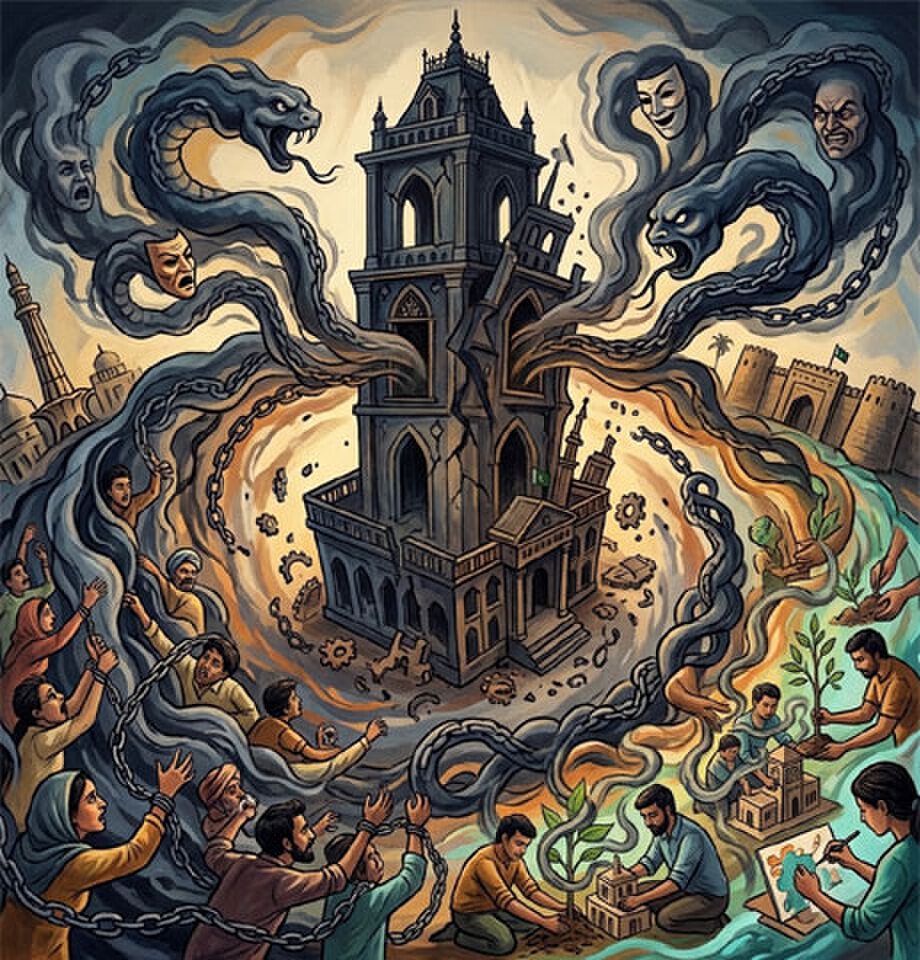
SOME political parties possess a peculiar advantage: they gain political fame not necessarily through their own achievements, but through populism and the mistakes of their opponents. The political journey of the main opposition leader, currently in prison for financial corruption, raises an important question about whether political popularity in Pakistan is earned through governance, or created through the failures of rival parties.
When the man was removed from office through a parliamentary vote of no confidence in 2022, he transformed his removal into a powerful political narrative. Rather than marking the end of its political influence, the event became a rallying
point for its supporters. The mistakes and controversies of its opponents helped keep the party at the centre of national politics even as questions about the merit of its own governance remained relevant.
A similar concern is related to Khyber Pakhtunkhwa (KP), where terrorism, educational shortcomings, gender dis-parities and economic difficulties demand urgent attention. However, controversies surrounding governor’s rule and the provincial political leadership have potentially shifted public attention from these persistent problems towards grave confrontation, even victimisation.
Whenever the government and its allies take action, the party portrays it as an attack on its political mandate, and, in the process, uses the action as yet another opportunity to mobilise its supporters.
This surely does not mean that the party has achieved nothing of substance. Indeed, it does not mean either that other political parties have achieved anything of subs-tance. Rather, it highlights a troubling feature of Pakistan’s political culture: a party can gain public sympathy on the basis of its opponents’ mistakes without necessarily demonstrating corresponding success in governance.
Ultimately, the actual measure of any political party should be its ability to improve people’s lives, not its capacity to turn every political setback into a victory of public perception.
When opponents repeatedly strengthen a party through their own miscalculations, political fame becomes easier to acquire than political performance, and ordinary citizens continue waiting for solutions.
Aurangzeb Rajper
Karachi
Published in Dawn, November 1st, 2026