Unsafe blood transfusions
“BLOOD transfusions (48pc) and contaminated needle use (48pc) are the primary contributors to the outbreak.”
This was the conclusion of a joint mission by the Punjab government, WHO, Unicef and UNAIDS investigating the HIV outbreak among children in Taunsa, Dera Ghazi Khan. Between Dec 2024 and April 2025, 120 children under 12 were infected. As unsafe practices continued, the number eventually reached 331, by the time the BBC made its incriminating documentary.
How many more outbreaks will it take before we recognise that this is not an isolated medical mishap but a systemic governance failure?
Pakistan has one of the fastest-growing HIV epidemics in Asia and the world’s largest burden of hepatitis C. Both are blood-borne infections. Unsafe transfusions and contaminated injections are preventable sources of infection, yet they continue to endanger lives, particularly those of poor children who depend on an inadequately regulated healthcare system.
Unsafe blood flows through non-functional institutions.
The tragedy is not that Pakistan lacks the knowledge to make blood transfusions safe. It is that we repeatedly fail to translate policies, technical knowledge and institutional arrangements into action.
Consider history. Established in 2010 with substantial German financial and technical assistance, the Safe Blood Transfusion Programme (SBTP) made important progress. It established 17 state-of-the-art Regional Blood Centres (RBCs) and upgraded and linked 83 public-sector hospital blood banks. It also supported relevant policies, legislation, technical guidelines, training and monitoring systems.
Yet the programme gradually became dormant. After its national coordinator retired in 2020, no replacement was appointed, to date. The programme lost momentum, and opportunities to sustain international cooperation were not adequately pursued. A national initiative that had laid the foundations of reform was left high and dry, without the leadership needed to carry it forward.
This is a familiar Pakistani story: programmes are launched, institutions established, laws enacted and policies approved. Then positions remain vacant, resources are withheld, regulations unfinished and accountability absent.
The consequences are visible nationwide. Islamabad’s Blood Transfusion Authority is non-functional, while its RBC remained inoperative for years before being handed over to the Indus Hospital & Health Network in July 2026. Punjab has yet to frame rules under its 2016 law. Sindh has failed to replace outdated rules despite subsequent legislation. Khyber Pakhtunkhwa has a regulatory framework, but its regional centres remain underutilised. Balochistan has laws and institutions, but lacks adequate operational capacity, staffing and financing.
In Aug 2026, a Technical Working Group (TWG) was established following the prime minister’s intervention after the Taunsa outbreak. Its mandate is to translate the earlier task force’s recommendations into action, also reflected in the National Blood Transfusion and Blood Products Policy 2025-2030. The TWG reports directly to the PM monthly.
The TWG’s Sept 2026 policy brief provides a practical roadmap. Its value lies not in announcing another policy but in specifying actions that must be implemented immediately.
First, the SBTP must be revived, with a merit-based, qualified national coordinator, professional staff, a functioning office and adequate resources. The centre must ensure sustainable financing through the recurrent budget and seek renewed international cooperation.
Second, regulatory authorities must become functional. Islamabad needs an operational authority with competent staff and adequate funding. Punjab must frame rules under its existing law and strengthen its authority. Sindh must finalise regulations and build institutional capacity. KP and Balochistan need effective provincial counterparts to the national programme.
Third, RBCs must be linked to hospital blood banks across the public and private sectors. Existing centres are underutilised. Connecting more hospitals would expand access to quality-assured blood and reduce fragmentation. Blood safety cannot be confined to government hospitals while private establishments escape effective regulation.
Fourth, screening standards must be enforced uniformly. The TWG recommends automated chemiluminescence immunoassay as the minimum screening standard, with nucleic acid testing introduced as an additional safeguard. Manual rapid diagnostic kits must be prohibited for donor screening. A real-time national database, including a donor deferral registry, should prevent people with reactive screening results from donating blood again.
Fifth, the Inter-Ministerial Health and Population Council should regularly review blood safety and monitor implementation. Model regulations should be approved by the National Technical Advisory Committee and adopted by provincial authorities.
Finally, Pakistan should reduce its dependence on imported plasma-derived medicinal products. While these products are imported at considerable cost, recovered plasma is wasted or discarded. The TWG recommends a national plasma fractionation programme, with WHO technical assistance, to improve availability and move towards domestic production.
The roadmap is clear. What remains uncertain is whether political will, administrative discipline and financial commitment will be sustained long enough to implement it.
The PM’s direct involvement offers an opportunity, but personal intervention cannot substitute for strong institutions. The real test is whether competent professionals are appointed, funds released, regulations enforced, hospitals connected to safe blood supplies and results independently monitored.
Nor can governments act alone. Citizens, professional associations, medical practitioners, civil society and the media must demand safe healthcare and hold public and private providers accountable. Voluntary, non-remunerated blood donation must be encouraged while infection prevention and control guidelines must be implemented.
The children of Taunsa have already paid an unacceptable price for our collective failure. Their suffering must not become another forgotten episode in Pakistan’s public health history.
The choice is stark: continue treating each outbreak as a temporary media scandal, or confront the institutional weaknesses that make the next one possible. Unsafe blood flows through non-functional institutions.
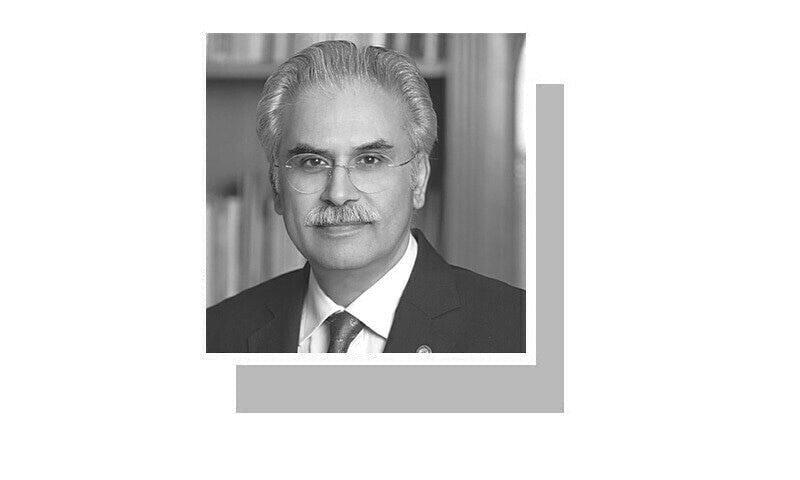
The writer is a former SAPM on health with ministerial status, adjunct professor of health systems and president of the Pakistan Association of Lifestyle Medicine.
Published in Dawn, October 30th, 2026