People talk about attachment in many ways, whether to people or objects. But detachment, its opposite, rarely receives the same attention. We celebrate attachment, and rightly so, but why not detachment?
Detachment can be just as beautiful as attachment. It all depends on how and when it happens. Attachment teaches us many positive things, but it can also bind us to the people and things we love. Detachment, on the other hand, can lead us to discover parts of ourselves we never knew existed. It is a path towards rediscovering the self that existed before labels, expectations, dependencies and the need for external validation took over.
While healthy attachment teaches trust, vulnerability and companionship, detachment teaches freedom, self-awareness, boundaries and inner peace.
Detachment reminds us that everything in this world is temporary and that we can learn to live without the things we once thought we could never let go of.
Sometimes, finding yourself begins with learning what you can live without
Attachment can sometimes make us emotionally dependent on someone or something, while detachment allows us to see the world differently and reconnect with ourselves. That is the power of knowing yourself.
Sometimes, attachment can make the thought of loss almost unbearable. If you are deeply attached to your pet, for instance, you may never imagine a life without it. Your days revolve around it, and you become so consumed by love that the possibility of losing it seems unthinkable. So, if your pet has a short life, its loss can feel like a disaster, as though you have lost a part of yourself.
Attachment is natural and necessary, but we must learn to manage our emotions rather than let them consume us.
Detachment, in contrast, is a long and often difficult process, yet it can be deeply rewarding. The hardest part is often the beginning, when letting go feels almost impossible. It is a pain that seems to pierce the soul, as the body, heart and mind struggle silently with what the heart is not yet ready to release.
And yet, gradually, detachment begins to offer freedom: the freedom to exist without being entirely defined by anything or anyone.
Detachment can feel like losing a part of yourself. But sometimes, what you are losing is the version of yourself you created while trying to fit in or be accepted. It is the version that overcompensated, sought approval and adjusted itself to meet others’ expectations.
You may feel as though you are losing yourself before you begin to find your true self again. It can be a phase of solitude, a time to understand who you are without the extra layers you have accumulated along the way. Detachment means unlearning the versions of yourself you adopted simply to fit in.
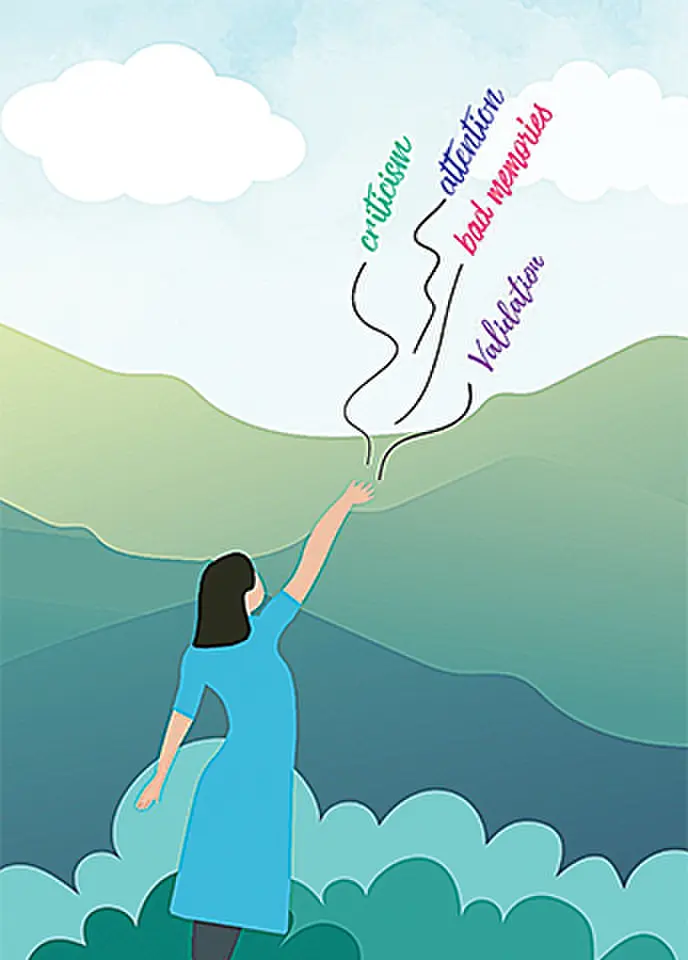
Attachment can make us dependent on the people and circumstances around us, sometimes leading us to seek constant validation. Detachment, on the other hand, helps us become less dependent on what others think. It allows us to recognise the beauty of our unfiltered selves.
Sometimes, attachment stems from a longing for attention, appreciation and kind words. Detachment begins when we realise that we are enough and that our worth does not depend on external validation. It grows from self-awareness and a deeper understanding of who we are.
Detachment can also change the way we respond to criticism and praise. As we become more aware of ourselves, we learn what triggers us and what brings us peace. Criticism that once kept us awake at night may gradually lose its power over us. We learn when to distance ourselves from hurtful opinions and when to accept useful feedback. Not every criticism deserves our attention; other people’s opinions reflect their own perspectives, not necessarily who we are.
This process teaches us to respect and care for ourselves and to keep growing until we can give love to others without losing ourselves in the process. We learn to pursue hobbies, value relationships and dedicate ourselves to meaningful things while maintaining a sense of who we are.
Eventually, we begin to understand balance: how to be detached, yet deeply connected to others. This is the healing phase, when we learn to recognise our boundaries and understand where we end and others begin.
Detachment can also bring us closer to our Creator. As we become more self-aware, we may begin to recognise the deeper purpose behind our experiences and see how seemingly scattered events fit together as parts of a larger picture, shaped by the Creator’s plan. Our souls seek a peace that worldly attachments alone cannot provide. After all, knowing ourselves can be an important step towards knowing our Creator.
Another stage of this journey is learning to rely on something greater than ourselves. We begin to recognise that we are part of a bigger story, that our existence carries purpose and that our lives are not entirely within our control. We learn to place our trust in the One who created us and holds the destiny of every soul.
A person who has learnt detachment may also become more attentive to the feelings of others. With less of their attention consumed by their own attachments, they may notice emotions that go unspoken and recognise what others are going through. Attachment can sometimes narrow our focus to the person or thing we are attached to, while detachment can widen our perspective.
Perhaps that is the greatest gift detachment offers: not distance from people, but closeness to ourselves. When we understand our own worth and become familiar with the deepest parts of our being, we no longer need to depend on others’ validation to feel complete.
Published in Dawn, Young World, October 31st, 2026