Everyone knew Ali as a brilliant student. His notebooks were organised, his homework was always on time and his exam papers were filled with excellent answers. Mathematics came easily to him, he remembered scientific facts effortlessly and English was one of his strongest subjects. His parents proudly praised him to their relatives.
But there was one thing Ali struggled with: speaking in front of others. He often knew the answers in class, yet his hand would sink back down as soon as another classmate raised theirs.
“What if my answer is wrong? What if everyone laughs at me?” he would wonder nervously.
During group activities, Ali preferred to stay behind the scenes, writing things down while his classmates presented their work. If a teacher asked him to explain something, he would stare at his desk and mumble, “Can someone else do it?”
To Ali, excellent marks were proof enough of his abilities.
Then, one Monday morning, his English teacher made an unexpected announcement. “Our school is holding a Young Speakers Competition. Each class will choose one student to represent it.”
Ali hoped no one would mention his name.
But his teacher turned towards him. “Ali, I think you should take part.”
“Me, Miss?” he asked nervously.
“Yes, Ali. You have so many wonderful ideas. Now you need to learn how to express them.”
Ali wanted to refuse, but his teacher encouraged him to give it a try.
That evening, Ali prepared a speech titled “Small actions, big changes”. He chose simple ideas, such as saving water, helping others and keeping the environment clean. He memorised every sentence and practised aloud, only to discover that delivering the speech was much harder than learning it.
Two days later, the participants presented their speeches to the class. As Ali stood before his classmates, his hands grew cold and his voice faltered. He forgot two sentences and stared at the floor as a few classmates whispered among themselves. Feeling ashamed, he returned to his seat.
“I knew this would happen,” he thought.
His teacher, however, did not scold him.
“Ali, you know your ideas well. You’re simply afraid of making mistakes,” she said. “Remember, a mistake doesn’t make you a failure. It teaches you what to improve.”
She gave him a simple challenge. “Starting tomorrow, speak for two minutes every morning. Choose any topic you like — a book, your breakfast or something you noticed on your way to school.”
Ali took her advice seriously. He began by practising in front of a mirror, then recorded his voice on his phone. Listening to himself, he noticed that he rushed through his words and fell silent whenever he felt nervous. He took a deep breath and tried again, determined to improve a little each day.
Gradually, his voice grew clearer and his confidence improved.
One morning, his younger sister appeared at the door.
“Are you talking to yourself?” she asked, giggling.
“No, I’m practising my speech,” Ali explained.
She listened for a moment and smiled. “Wow! It really does sound much better now!”
For the first time, Ali smiled instead of feeling embarrassed.
A week later, the competition day arrived. The school hall was packed with students and teachers. Backstage, Ali clutched his speech, his heart pounding.
“I can do this,” he whispered.
When his name was called, he walked to the microphone. For a moment, he wanted to turn and run. Then he remembered his teacher’s words about learning from mistakes.
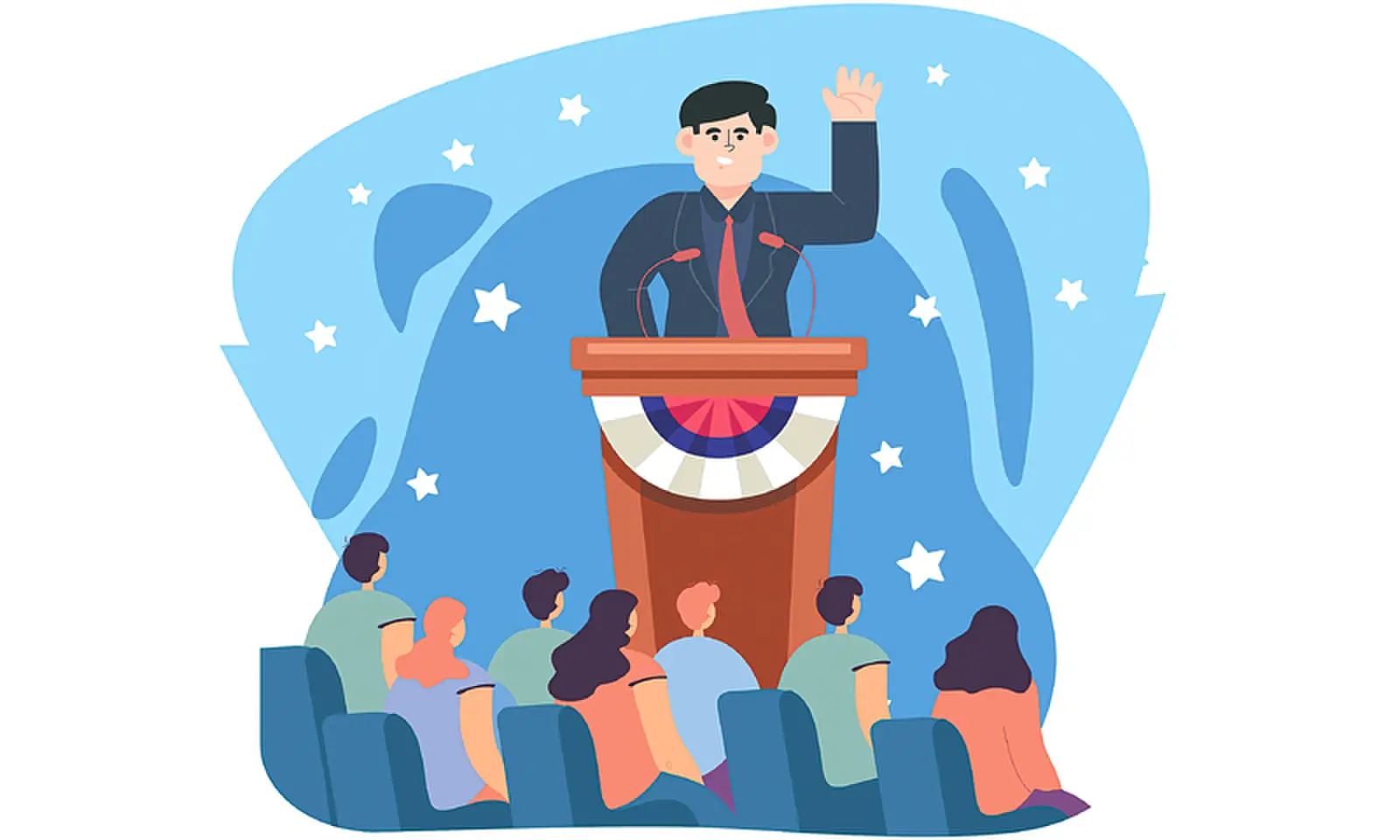
Taking a deep breath, he began. His first few sentences were shaky, but he kept going. Soon, he focused less on his nervousness and more on his message. Looking up at the audience, he spoke about how small actions, such as turning off a tap, planting a tree, helping a classmate or picking up litter, could make a big difference.
When he finished, the hall burst into applause. Ali returned to his seat, filled with pride. He had stood before everyone and shared his ideas! He didn’t win first prize, but he received a certificate of participation. That evening, he proudly showed it to his father.
“I’m proud of you, son!” Dad said.
“So am I, Dad! Do you know why? Because I stood there and spoke.”
His father smiled. “Then you’ve learnt something far more valuable than winning a prize!”
From that day on, Ali kept practising. He still made mistakes and felt nervous when speaking in front of others, but he no longer allowed fear to silence him.
Published in Dawn, Young World, October 31st, 2026