The phrase “No regrets” sounds great. But the truth is, nobody really lives like that.
While scrolling through reels, as everyone does, I saw a picture of a person standing on a rock, staring at the sea, with “No regrets” written in big, bold letters. Then I saw the same phrase on a boy’s T-shirt. It looked cool.
So I started thinking about it. What does it actually mean? Does it mean we have lived such a full life that we haven’t done anything we regret later? Is that really possible?
I doubt it. Most of us have a few regrets and some of us have a lot. Some are small and a bit silly, like spending all your Eidi in one day and wanting it back by evening. Others are bigger, like speaking badly to your grandparents when they are no longer in your life, hurting someone, lying to someone or being unfair to someone.
This article is about those regrets — the ones that stay with us and keep weighing on our conscience.
Regrets have a way of following us around. But perhaps the answer isn’t to forget them. So, what do you do when your mind keeps replaying something you wish you’d done differently?
So what is regret, exactly?
To put it into words, regret is the feeling of “I wish I had done that differently.” And it almost always comes with a replay. Our brain takes us back to the exact moment and makes us imagine how things might have turned out differently.
We start asking ourselves, “What if I had said something else? What if I had just stayed quiet?” But we can’t go back and change what happened, and the trouble starts when the regret doesn’t go away. When it keeps coming back, it stops being a passing thought and turns into something we carry around for days, months and sometimes years.
If only I had…
Regret often begins with two simple words: “If only…”
Regret can be about things we did or things we didn’t do. If only I had studied harder. If only I hadn’t said those words. If only I had tried out for the team. If only I had stood up for my friend. If only I hadn’t been so afraid of what people would think. And the list goes on…
Sometimes we regret a decision only because we now know how it turned out. At the time, it may have seemed like the right thing to do. But later, we realise what we lost or what we could have done better. And the choice we made back then becomes the regret we carry.
Why is it so hard to let go?
You’re at an age when almost everything is happening for the first time. It’s your first time choosing subjects. Maybe your first big fight with a best friend or the first time you felt disliked. You feel emotions more intensely and, when you mess up, you feel it deeply.
According to the US National Institute of Mental Health, the front part of the brain, which helps us plan, make decisions and control our impulses, is one of the last parts to mature. It keeps developing until our mid-to-late twenties, while the emotional parts of the brain develop earlier. So the feeling comes first and the control catches up a little later.
On top of that, you live in a digital world where an embarrassing moment can get screenshotted. A bad message stays in the chat forever, and you can scroll up and come face to face with your own mistake. Our brains also hold on to emotional moments more than ordinary ones. You may not remember what you ate last Tuesday, but you remember exactly what you said on the day you felt embarrassed.
Most people have probably forgotten that moment. The person you upset may have moved on and the embarrassing thing that felt so big to you may have been just a small moment for everyone else. After all, everyone has their own life to deal with. But you still remember it, and that’s why it’s so hard to let go.
What carrying a regret does to you
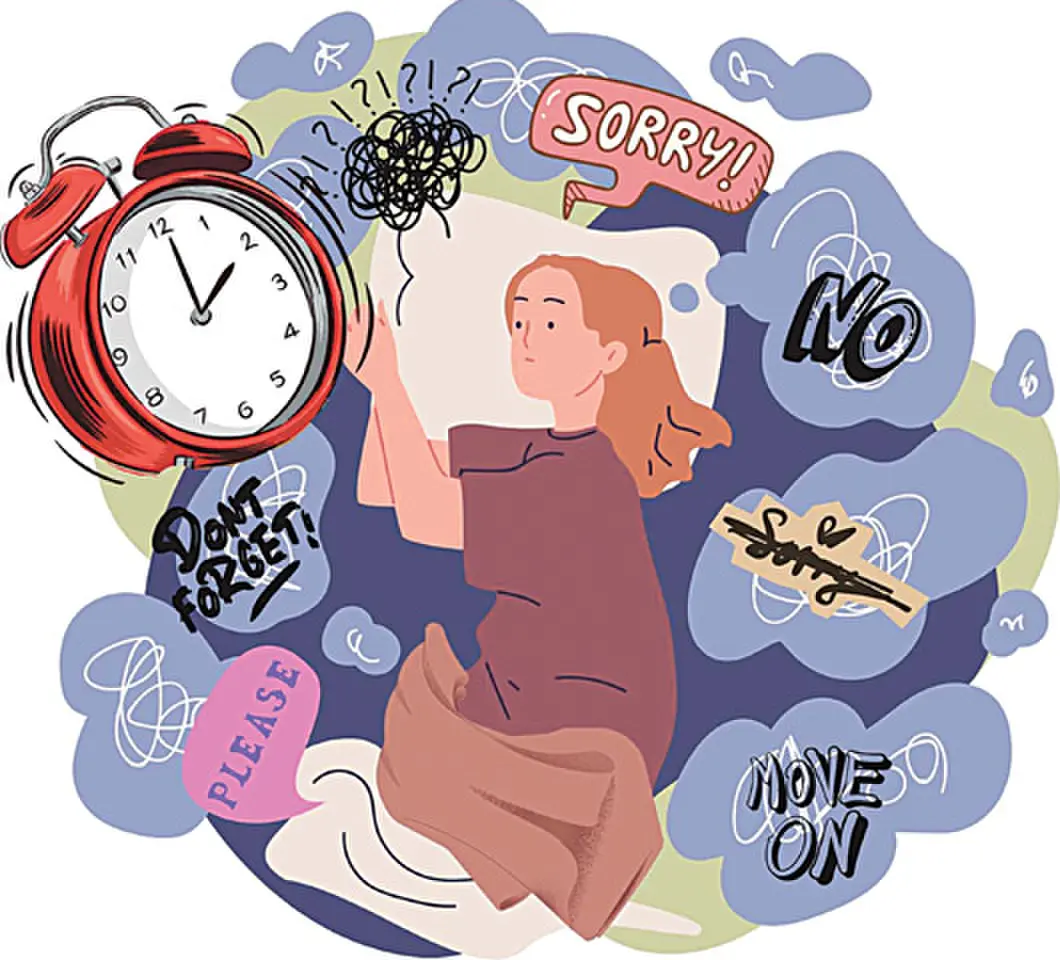
Regret is a really heavy feeling. Some of us realise how heavy it is, and some of us don’t. Sometimes it comes to mind just as you’re closing your eyes to sleep. You keep going over the same moment again and again, and the next morning, you feel tired before the day has even started.
It ruins your focus too, whether you’re at home or in class, because you can’t let go of that guilty feeling. You’re there in the room, but your mind is somewhere else. It can make you grumpy. You snap at the people around you and don’t even know why.
It also changes how you see yourself. You start calling yourself stupid or careless, and the more you say it, the more you believe it. Slowly, you get scared to try again because what if you mess up one more time? So regret isn’t only a bad feeling. It can slowly change how you live.
“Just forget it” doesn’t work!
Those of us who share our regrets with someone we trust often get the same reply: “Just forget it, it’s in the past now.” They mean well because they don’t want us to feel bad. But has that ever actually worked for you?
It’s easy to say and very hard to do because you cannot order your brain to forget something. The irony is that the more you try to push a regret away, the more it stays with you and stresses you out.
How do you get rid of it?
Speak out. When someone tells you to “just forget it”, explain that you don’t want to forget it; you want to make peace with it. If it’s about a person and a long time has passed, you can still reach out. Tell them you did something wrong in the past and want to apologise. Or, if that feels too hard, start by being kind to them from now on.
Fix it if you can: If you broke something, repair it. If you failed a test because you didn’t study, prepare better next time, ask for advice or talk to your teacher. Many regrets, even if they can’t be fully resolved, can at least be partly addressed.
Take one lesson: “I’ll read my message again before sending it when I’m angry.” “I’ll start revising earlier than the night before.” “I’ll try to be more patient with the elderly in my family, no matter how agitated I get.” Take that lesson to heart and let the regret go.
Talk to yourself: Self-talk helps. When you’re alone, you don’t have to hide what you’re feeling. Take some time out to think about what happened, what you did, what you shouldn’t have done and what you will do differently from now on. Putting your thoughts into words can make things clearer and stop them from going round and round in your head.
Write it down: For some people, writing helps them express their feelings. If you’re one of them, write down what happened, what you can fix and what you learnt. Writing things down can help you process your feelings and make them feel less overwhelming.
For the things you didn’t do: Sometimes, it wasn’t in your hands. Maybe you missed the cricket or football trials because you were sick or out of town. Don’t let that regret weigh on you. Go outside and play with friends, and try again next year.
Always wanted to learn the guitar? Watch one free lesson tonight. It won’t be the same as starting earlier, but it can help you move past the feeling that you never even tried.
When you can’t fix it: Some regrets can’t be resolved because the other person isn’t around anymore. Maybe you were rude to a grandparent and never got the chance to make it up to them.
That’s one of the hardest kinds of regret. You can still express your feelings to someone close to you, write a letter you may never send or find another way to honour their memory.
So, no regrets?
Honestly, I’ve concluded that having no regrets isn’t the right goal. Nobody gets through life without making mistakes and anyone who says they have is probably editing their story. A better goal is simpler. When you mess up and you will, don’t carry the regret around for years. Say sorry, learn from it, try not to repeat the same mistake, make amends where you can and close that chapter.
Famous people and their regrets
When we see famous people on screen, we often feel that their lives are perfect. But they are human too. They make mistakes, have regrets and learn from their experiences.
Here are a few who have spoken about things they wish they had done differently.
Tom Holland, Spider-Man
When Tom Holland got the role of Spider-Man, he took over from Andrew Garfield. Holland was so excited about his big chance that he never stopped to think about how Garfield might be feeling. He didn’t call him.
Years later, he told The Hollywood Reporter that he regretted not calling Garfield when he took over the role.
Then, in Spider-Man: No Way Home, the two finally got to work together. Sometimes, it’s only later that we realise how someone else might have felt.
David Attenborough
Sir David Attenborough has spent his life showing us the natural world. But in a 2017 interview with Radio Times, he said that if he had one regret, it would be about his children.
When they were young, his filming took him away for months at a time. He said he had been very lucky in life, but regretted missing those precious months of his children’s lives that he could never get back.
Jordan Harvey
Jordan Harvey played football for LAFC in America. During a Q&A with young players at the club’s academy, he said he wished he had taken school more seriously while chasing his football dream.
He did get his degree in the end, but it took him years after leaving college. He said it was hard to study while playing at the top level. He told the young players that a football career doesn’t last forever, so they would need their education for what came next.
David Beckham
In the 1998 World Cup, England played against Argentina. An Argentine player fouled Beckham, and he lost his temper and kicked him. The referee gave him a red card and sent him off, leaving England to play the rest of the match with ten men. They lost.
Afterwards, many fans blamed Beckham, and they continued to do so for a long time.
Beckham has since said that he wishes the incident had never happened. It was one moment of anger that cost him a lot. But he learnt from it. He got better at controlling his temper and played for England for many more years. We have all said or done something in anger that we wish we could take back. We can’t undo it, but we can try to do better next time. — M.S.
Published in Dawn, Young World, October 31st, 2026