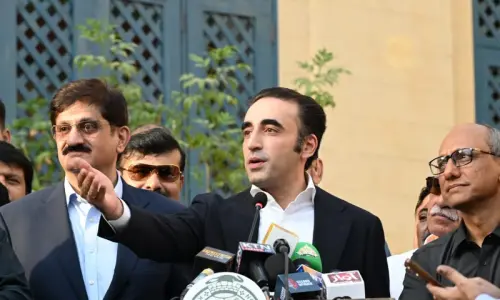
THE PPP appears quite perturbed over the fact that the creation of new provinces or administrative units continues to be discussed. Speaking at an event in Karachi on Tuesday, PPP chairman Bilawal Bhutto-Zardari asserted that no one outside Sindh could decide its future. “So we should now put a full stop to this conversation as well.”
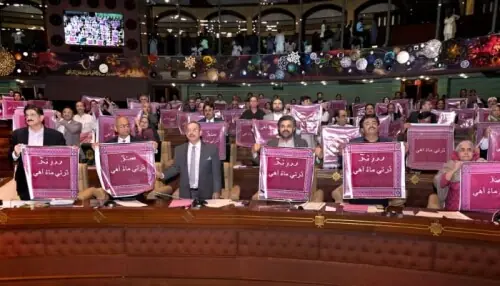
The Bhutto scion said the people of Sindh and their elected representatives had “given their verdict” on this matter, ostensibly referring to a Sindh Assembly resolution in early September.
Solely on principle, his position cannot be faulted. The Constitution does lay out a clear process for decisions of this sort, and it gives the elected assembly of each affected province a final say on the matter. Of course, there are public representatives from the same province, albeit from other parties, who disagree with the PPP chairperson’s view. However, that disagreement alone cannot be used to override a defined legal process.
Unfortunately, as recent events in KP have shown, the public’s mandate and verdicts delivered through the ballot box can be brushed aside if the centre is sufficiently motivated. For KP, its decisions are now being made not by its elected representatives, but by administrators handpicked by Islamabad.
It can be argued that this is, perhaps, not a fair comparison, but Mr Bhutto-Zardari should still realise that his position may not hold as much force as he thinks it does, and it will, therefore, not be as easy to bury this agenda as he would like. There are many voices within the federal government’s ruling coalition that are actively advocating for the division of all provinces into more ‘manageable’ units.
As was seen in KP, such voices can be amplified to find causa proxima, the trigger for an intervention, if it comes to that. Therefore, a better course of action would be to address governance grievances proactively.
The primary reason for governance failure in Pakistan is not the geographical size of the existing provinces but the reluctance of provincial capitals to empower local bodies. Few can convincingly argue that the local government system, as it exists today, is capable of positive change at the grassroots level.
At the same time, simply creating more provinces will only add heavy, expensive layers of provincial bureaucracy at a time when Pakistan can ill afford them. There are also steep social costs to consider, as pushing forward without public validation could trigger ethnic strife.
Therefore, empowered local bodies remain the best answer to all those issues which seem to warrant a fracturing of the provinces in the eyes of those demanding an administrative restructuring. The decrepit LG system needs to be revitalised, with resources invested in it judiciously. Doing so can improve service delivery at the neighbourhood level in a meaningful way.
Published in Dawn, October 29th, 2026