Iran keeps diplomacy open as US weighs fresh strikes

• Araghchi says ‘in contact’ with mediators after Qatar presents new seven-day plan to end war
• US warns Gulf states of possible ‘short, intense’ Iran war after midterms, reports WSJ
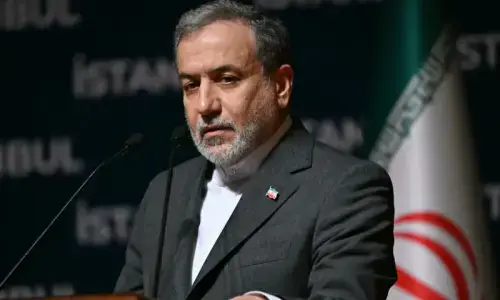
TEHRAN: Iran’s foreign minister said on Wednesday that Tehran remained in close contact with mediators over ways to implement its proposal to end the Middle East war, even as Iranian officials rejected ideas put forward by Qatar for a new agreement.
Foreign Minister Abbas Araghchi said Iran continued to give diplomacy a chance to succeed and raised the possibility of the seven-day plan proposed by Tehran being completed in less than a week if implemented.
Araghchi’s remarks came as Qatari mediators have presented Iran with a new draft deal to end the war with the US and Israel, an official briefed on the negotiations said.
The official briefed on the negotiations, who is not from Iran, said a new draft peace proposal for the eight-month-old conflict was presented on Sunday and was being considered by Tehran, with a response expected by the end of the week.
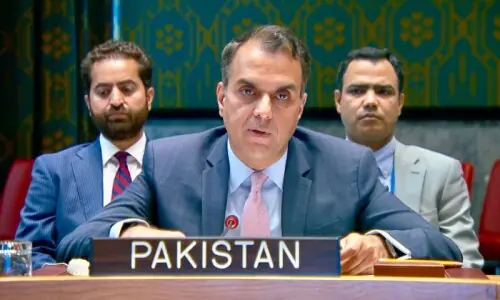
Qatar, along with Pakistan, has led mediation to end the war, which has disrupted global shipping and oil supplies and recently spread to Saudi Arabia and Yemen.
The proposal presented by Qatar sets a seven-day timeline addressing both Tehran’s and Washington’s concerns, laying out daily confidence-building steps that each side must take, the official briefed on the negotiations said. The timeline could begin early next week and several countries would act as guarantors of the deal, the official added.
The draft discussed in Tehran on Sunday was different from that proposal, the official briefed on the negotiations said, though the details of the latest plan were not immediately clear. The official had previously told Reuters that the Qatari mediators had coordinated with Washington before going to Tehran.
On Friday, US President Donald Trump repeated threats to strike Iran again, while Iranian security officials told Reuters Tehran had drawn up detailed plans to attack Gulf undersea cables if the US and Israel resumed attacks.
US military preparations
Meanwhile, the US has told several Gulf Arab countries to prepare for a “short, intense military campaign” against Iran after the Nov 3 midterm elections, Anadolu reported, citing The Wall Street Journal.
The messages, conveyed through diplomatic and military channels, are among growing signs that the US and Israel are preparing a new round of heavy combat operations to weaken Iran and push it toward negotiations, according to the report.
Washington is moving a Patriot missile defence system from Texas to the region and has moved troops from bases where they were vulnerable, while US forces are restocking munitions and preparing bombers and fighter jets for strikes, the newspaper said, citing officials.
An additional aircraft carrier strike group and a Marine expeditionary unit are expected to join roughly 20 US warships in the Middle East next month, it added.
US President Donald Trump has not made a final decision, but is leaning toward a “large postelection attack” that could target Iranian infrastructure and nuclear sites, the report said, citing people familiar with his thinking.
US war costs top $47bn
The US military has spent over $47 billion so far to prosecute the war in Iran, more than 25 per cent higher than the Defence Department’s estimate in July, according to Pentagon data obtained by Reuters.
The Pentagon did not immediately respond to a request for comment on its estimate, which has not been shared publicly.
The Pentagon’s latest estimate was tied to the operational costs of carrying out the war, with a projected cost of more than $29bn to replace expended munitions used in the conflict.
More than $6bn would be needed to replace military equipment and so-called “platform losses,” which include the loss of aircraft, including many drones lost during the war.
Published in Dawn, October 29th, 2026