ISLAMABAD: A new art gallery opened its doors with a debut group exhibition in the capital’s posh F-7 sector on Saturday, bringing together 40 artists working in painting, sculpture, printmaking, collage and mixed media.
Curated by Arfiras Art Gallery founder Tayyab Khurshid, ‘Threshold ’ is an ambitious survey of the contemporary art landscape while marking the gallery’s own transition from concept to physical space.
The participating artists, including some established ones, have explored memory, belonging, and cultural inheritance. Several artists demonstrate genuine innovation and seem to be pushing their mediums toward fresh perspectives on geopolitical displacement, domesticity and tradition.
As the curator notes, “the gallery grew through conversations with artists and collectors. It aims to provide a dedicated platform for shared practices and conversation.”
Material experimentation provides many of the show’s best moments. It succeeds through diversity and curatorial framing, but forty artists mean shallow representation and inconsistent quality. Calligraphic and figurative works vary in risk. Some individual works transcend their contexts.
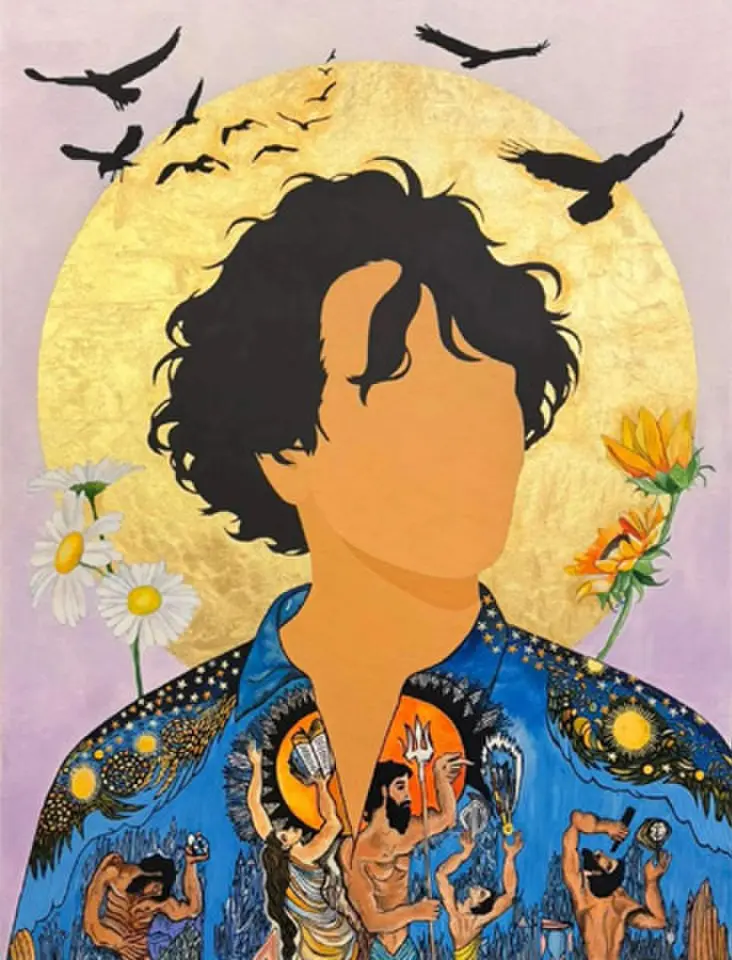
Veteran artist Akram Dost Baloch draws on Balochistan’s heritage and lived realities, bringing regional identity into his mixed-media practice.
Atif Khan’s ‘Air’ stands out for its ambitious conceptual scope. He uses miniature traditions to visualise “brain drain” through bird imagery while highlighting the contemporary Pakistani experience. The visual metaphor is handled with profound elegance, the oppressive weight of dark clouds contrasting with the fragile diaspora of birds.
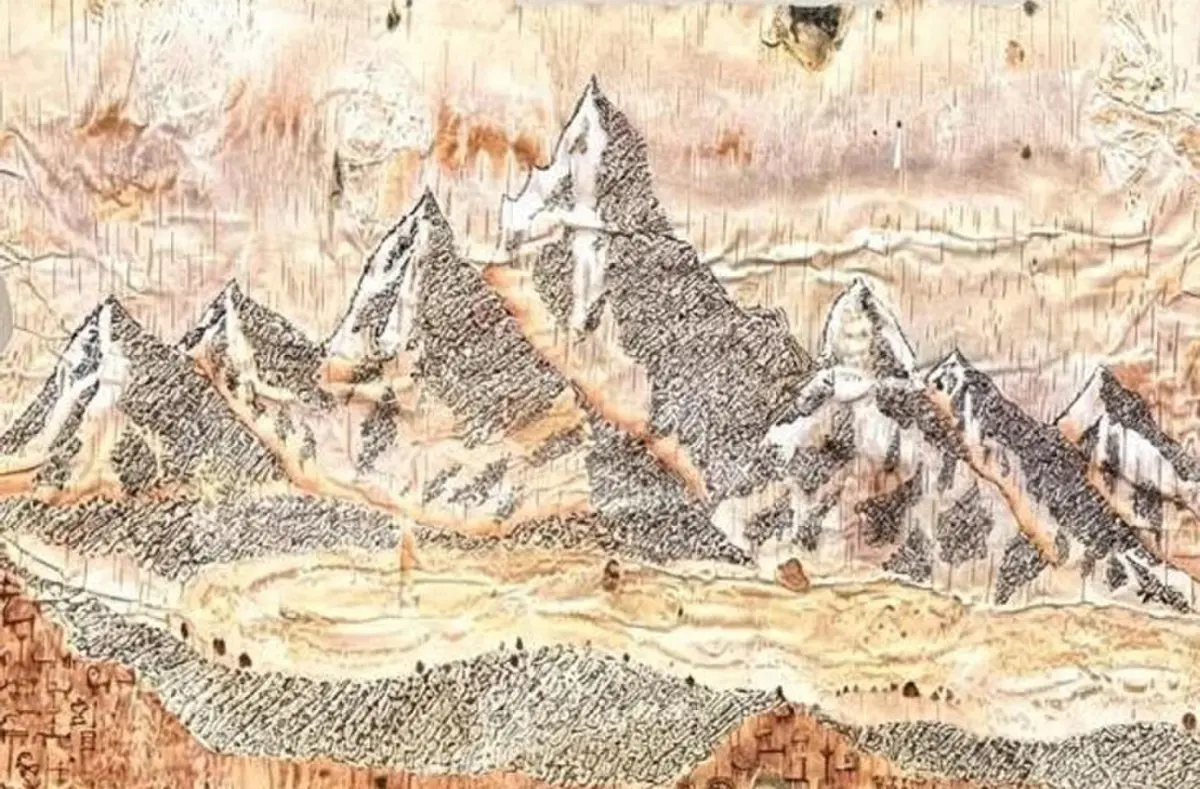
Qamar Abbas’s birch-bark landscapes make material and territory inseparable, a politically charged gesture layering dense ink cross-hatching into a mountain landscape literally rooted in its material; Saman Shabbir’s cut-paper work and Isra Noman’s obsessive “Convergence” are formally accomplished, pushing miniature traditions toward abstraction.
Senior artist Masood A. Khan combines paper collage and acrylic in ‘Perfect Balance of Ethics in Nature’, extending his interest in everyday experience and questions of truth; Mohsin Fayzi’s ‘Bricked Up’ reflects his interest in the meanings viewers bring to images and objects; Hina Tabassum’s metal sculpture ‘Sweet Wonder’ carries childhood memory and vulnerability into three dimensions.
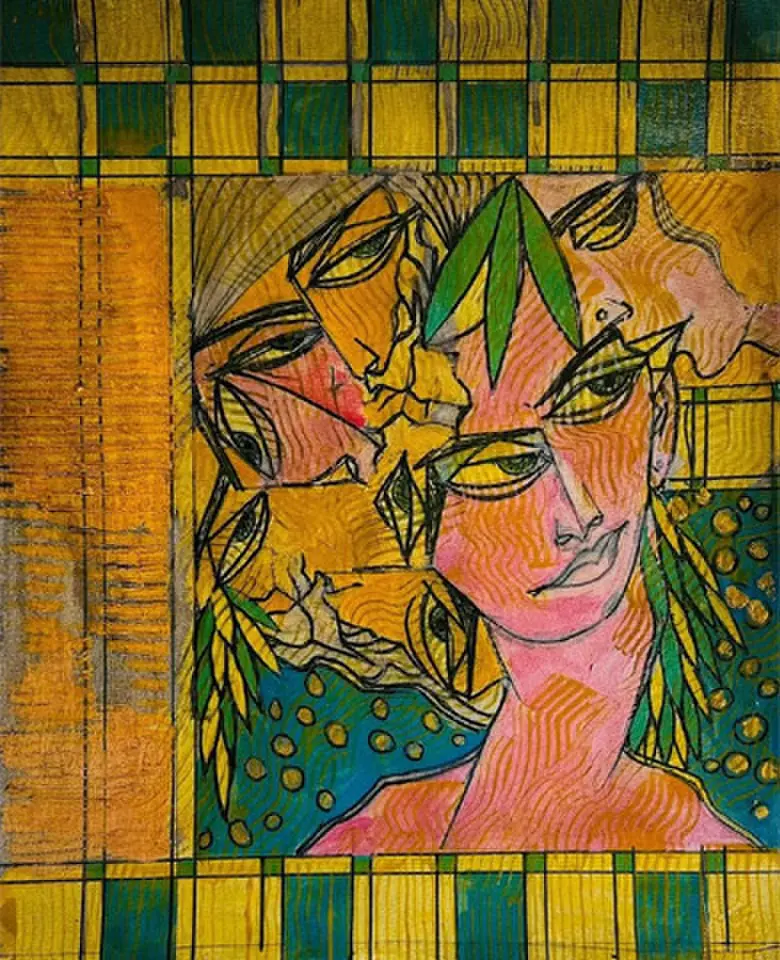
Works like Aisha Rehman’s figurative painting ‘The Red Rot’ engage domestic space and gendered experience with sophistication. Similarly, Duraeshawar Tariq’s ‘Amidst Where I Exist’ captures vulnerability through intimate figuration; Kainat Atta’s ‘When She Left the Home’ communicates displacement through fragmented architecture and domestic memory; Saman Shabbir’s intricate cut-paper composition is among the show’s most accomplished works, its geometric precision and layered depth pushing miniature traditions toward abstraction.
The exhibition presents diverse approaches to calligraphic and figurative traditions. Tahir Bin Qulander’s calligraphy of Quranic verses demonstrates technical mastery; Rafiq Ullah’s large-scale Persian ink and acrylic piece creates rhythmic tension; Rahman Zada’s ‘The Red Rug’ uses gold leaf, prism sheet and cotton fringe decoratively, despite a compelling conceptual framework; Imran Baloch’s terracotta relief pushes furthest into material exploration, transforming linguistic heritage into a deeply tactile, sculptural form.
Among the prints, Iram Wani’s ‘Between Breath and Wings’ is one of the more accomplished, its butterfly motifs suggest both movement and entrapment; Danish Kumar Gahlot’s ‘Saat Janam’ offers organic abstraction suggesting growth and renewal, though its palette and composition feel derivative; while Mona Naqsh’s floral painting offers sustained attention to organic form.
With most artists represented by a single work, individual practices struggle for deep contextual engagement; some pieces feel under-resolved, derivative or reliant on established tropes.
Arfiras is poised to become a significant voice in Islamabad’s contemporary art landscape. The exhibition will continue through Nov 1.
Published in Dawn, October 29th, 2026