Sudan drone strikes kill 21, cause mass outages in east
Sudan’s warring sides have traded drone strikes that killed 21 people in the western Darfur region and left vast swathes of the country’s east without electricity, medics and witnesses said Tuesday.
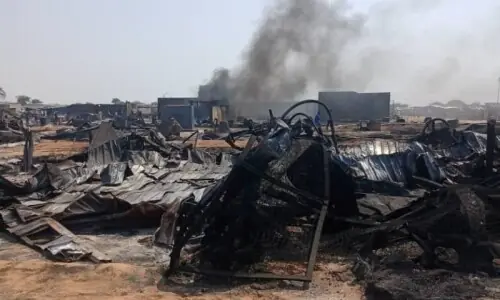
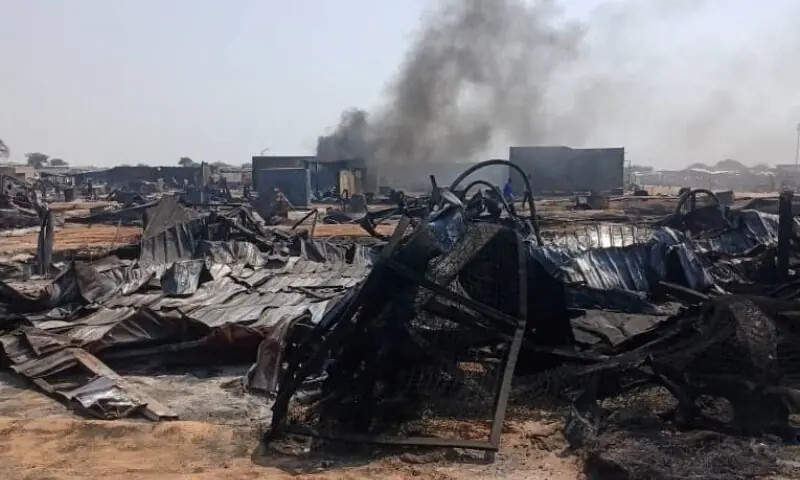
A drone strike on a market in Nyala, the de facto capital of Sudan’s paramilitary Rapid Support Forces in Darfur, killed 21 people and wounded at least 40 others, a medical source and witnesses told AFP.
One Nyala resident said a market in the city’s north was struck by a drone on Monday around 8pm (11pm PKT).
Another said the market was frequented by young men, particularly RSF fighters.
“Twenty-one people were killed in last night’s bombing, and more than 40 others injured,” a medic at Nyala Hospital said, though he was unable to identify how many were RSF fighters.
Sudan’s military, at war with the RSF since April 2023, regularly strikes Nyala, where the RSF has declared an administration rivalling the army-backed internationally recognised government in Khartoum.
The RSF has in turn launched repeated strikes targeting Khartoum’s airport, as well as dams and power stations across the country’s east.
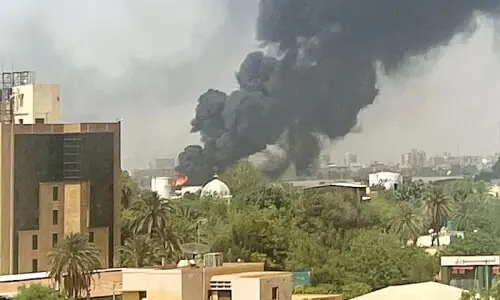
On Tuesday, “RSF militia drones targeted the Al-Markhiyat transformer station, disrupting the power supply across large parts of Khartoum and Al-Jazira states,” a source in the national electricity company told AFP on condition of anonymity.
The strike comes a day after a coordinated RSF drone attack on six power stations left millions without power in Al-Jazira, White Nile, Sennar and Gedaref states.
Famine risk
The war is currently being fought primarily via drones, with both sides launching sophisticated attacks from across the country, killing dozens of civilians at a time.
In the first three weeks of October alone, drone strikes killed over 300 people and injured hundreds more, according to a UN tally.
Since it began, the war has killed more than 200,000 people, aid workers estimate, and has triggered the world’s largest hunger and displacement crises.
The United Nations has repeatedly warned that attacks on power stations threaten health and services for millions of people.
Close to three million people have returned to Khartoum state since it was recaptured by the army last year, but many have struggled to rebuild their lives in a scarred city.
Power and water supplies remain unreliable, much of the capital remains unsafe from unexploded bombs, and many struggle to put food on the table in a collapsed economy.
On Monday, 30 countries including the United States, France and the United Kingdom warned that urgent action was needed to prevent famine expanding across the country.
Sudan is facing “an alarming deterioration” of food security, they said, citing the war, a currency in freefall, higher fuel prices due to the Middle East war and a drought induced by the El Nino climate phenomenon.
Sudan’s foreign ministry on Monday insisted the country’s food security was “reassuring”, in an attempt to “refute claims of famine”.
It accused “some countries and organisations” of “politically exploiting the humanitarian situation”.
The army has for years denied claims of documented famine and has been accused of blocking access to humanitarian aid.