PAKISTAN has treated the closure of its Afghan border as a security measure. The crossings have been largely shut since October 2025, apart from limited reopenings, but terrorism has not stopped. The people paying the price happen to be young residents of border districts, especially in Balochistan who are the same people militant groups often try to recruit. Closing the border without a diplomatic plan may affect Pakistan’s economy, its leverage over Kabul, and the security situation in Balochistan. The threat is real, and Pakistan’s concern is legitimate. The question is whether the current policy answers it.
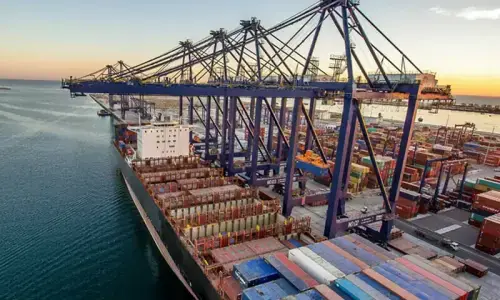
Consider the cost. Afghan transit trade through Pakistan fell to $367 million in FY26, from $5 billion in FY21. The decline began before the closure, but the closure accelerated it as Kabul moved cargo to Iran and Central Asia. Chaman carries the local burden. A Chaman Chamber of Commerce leader claimed losses above $100 million in the first 110 days, and hundreds of labourers now gather each morning in its vegetable market looking for work. After a meeting with traders in December, the Ministry of Commerce itself acknowledged rising unemployment and hardship in border communities.
Census data suggests that 1.5 million of the province’s 2.8 million young people aged 15-24 years are either unemployed or are neither working nor studying. This is a demographic risk, and no security strategy can ignore it. Poverty alone does not explain militancy. Policies related to the young in Balochistan, therefore, need to create political space as well as jobs. A province where more than half of young people are idle offers ‘recruiters’ many an option.
Policymakers should consider reopening the border in phases, with Chaman as the pilot project comprising registered traders, scanned cargo, digital manifests and joint customs. The process of verification should be handed to third-party contractors having a stake, such as China, Turkiye and Qatar. Also, there is a need to create a Balochistan youth compact.
There should be apprenticeships and jobs in customs, logistics, scanning and warehousing for the local young, and training may be funded from the revenue generated through duties and levies at the reopened crossings. Finally, quarterly indicators must be made public, including crossing volumes, border-district youth unemployment and militant attacks. A public target for youth employment in border districts would let parliament hold the policy to account. What is measured has the potential to be corrected.
Critics might say that reopening the border would be like rewarding a government that has not acted. That is why every step must be conditional and verified. Permanent closure, by contrast, punishes Pakistan’s own border towns first.
Pakistan can either keep a locked gate and an unemployed generation, or it can use diplomacy to turn the border into a source of jobs and revenue. Only one of these choices protects Balochistan’s youth.
Ruqia Khan Nasar
Islamabad
Published in Dawn, October 27th, 2026