Premier launches Chromebook initiative for students
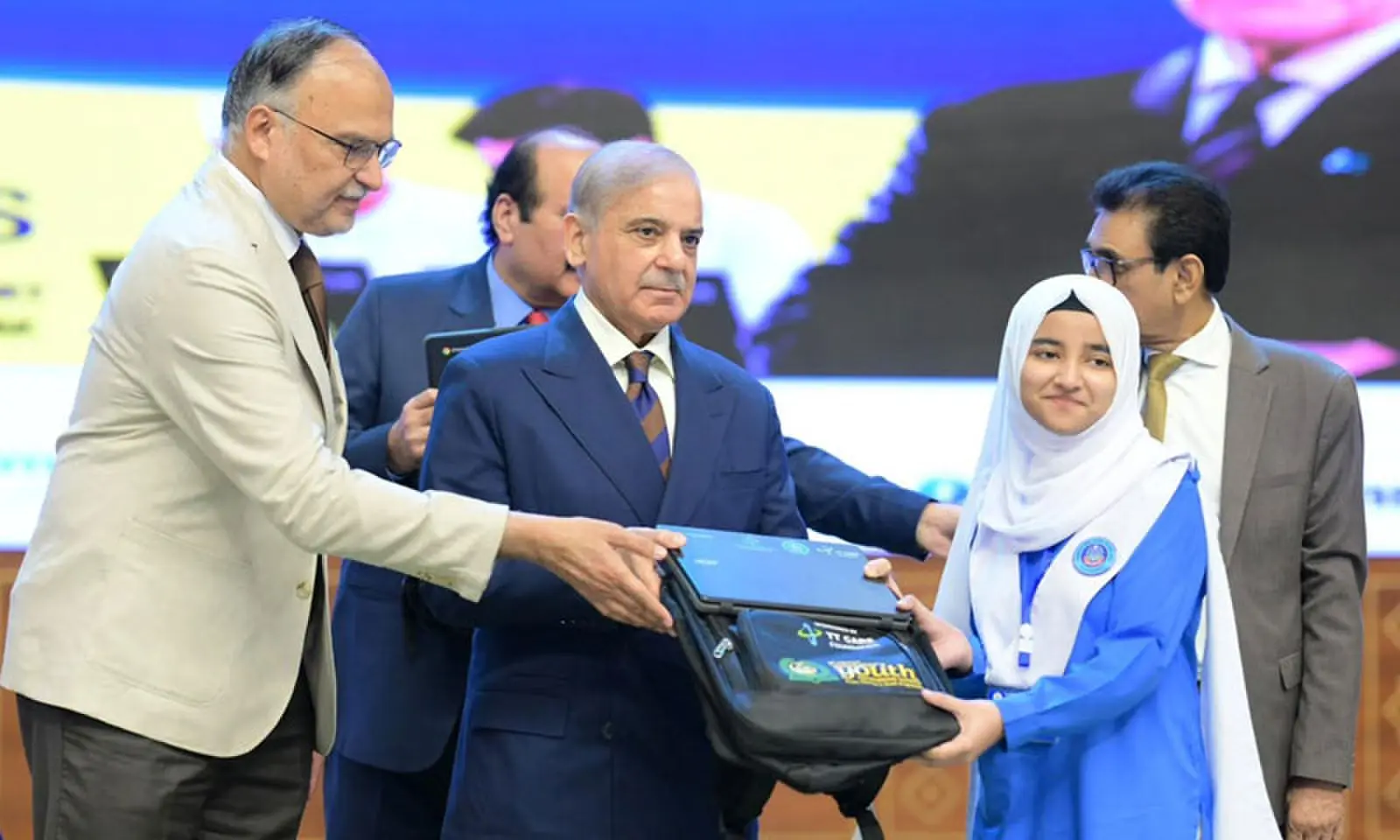
ISLAMABAD: Prime Minister Shehbaz Sharif on Sunday formally launched a nationwide initiative to distribute 500,000 Chromebook laptops and ‘MiFi’ internet devices among deserving students and high achievers.
He reaffirmed the government’s commitment to expand access to modern education and digital technology regardless of financial circumstances of the students.
Speaking at the launching ceremony, the prime minister said that equipping the country’s youth with modern educational tools and technology was a fundamental responsibility of the government and a key step towards building a prosperous, knowledge-based Pakistan.
He said that Chromebooks would be distributed strictly on merit, recognising students’ talent, dedication and hard work, with the entire allocation to be completed within two years.
Emphasising that poverty must not stand in the way of educational achievement, the prime minister said the initiative was designed to provide students from diverse educational backgrounds with greater opportunities to pursue top quality education, access digital resources and compete in an increasingly technology-driven world.
The prime minister recalled that the previous PML-N government had distributed 600,000 laptops across the country over the course of a decade.
He said the earlier laptop schemes had helped students continue their studies and develop their skills, particularly during the Covid-19 pandemic, when digital devices became an essential means of sustaining education and earning livelihoods.
The premier said the new initiative would build on those experiences by combining access to digital devices with internet connectivity, enabling students to make greater use of e-libraries and other online educational resources.
Highlighting the wider impact of the programme, the prime minister said the MiFi connectivity accompanying the Chromebooks was expected to benefit students’ family members as well, extending the initiative’s reach to an estimated 2.5 million people.
He said access to digital technology could help bridge educational disparities and give young Pakistanis the tools to pursue learning opportunities beyond the limitations imposed by poverty or geographical location.
The initiative has been undertaken in partnership with Tokyo Technology Care Foundation (TT Care), whose representatives also attended the ceremony.
The prime minister also highlighted the government’s efforts to expand educational infrastructure, referring to the recent inauguration of a Daanish School in Islamabad and the construction of 27 additional campuses across the country.
He said investment in education, digital skills and human development was essential to preparing the country’s young population for the demands of the global economy.
The ceremony also featured stories of students whose achievements, despite challenging circumstances, illustrated the importance of educational opportunities and recognition based on merit.
Among them were Syed Shams Raza, a student living in an orphanage whose father was a martyr, and Alma Mahak Sabir, a dedicated student from a madressah.
Their achievements were highlighted as examples of young people pursuing education and demonstrating their abilities despite difficult circumstances.
PM Shehbaz recalled that previous laptop distribution programmes had also reached students associated with prominent religious seminaries, reiterating the importance of recognising talent across educational streams.
The two students expressed gratitude for the recognition of their hard work and the opportunity to benefit from the Chromebook initiative.
Federal Minister for Education Khalid Maqbool Siddiqui, speaking at the ceremony, said the government was working to improve the country’s standing internationally by adapting to changing educational trends and technological developments.
He said transforming the country’s approximately 150 million young people into a productive national asset was critical to ensuring that the youth population became a source of economic and social progress rather than a challenge.
Published in Dawn, October 26th, 2026