200-kanal barren land in Khyber converted into olive farm
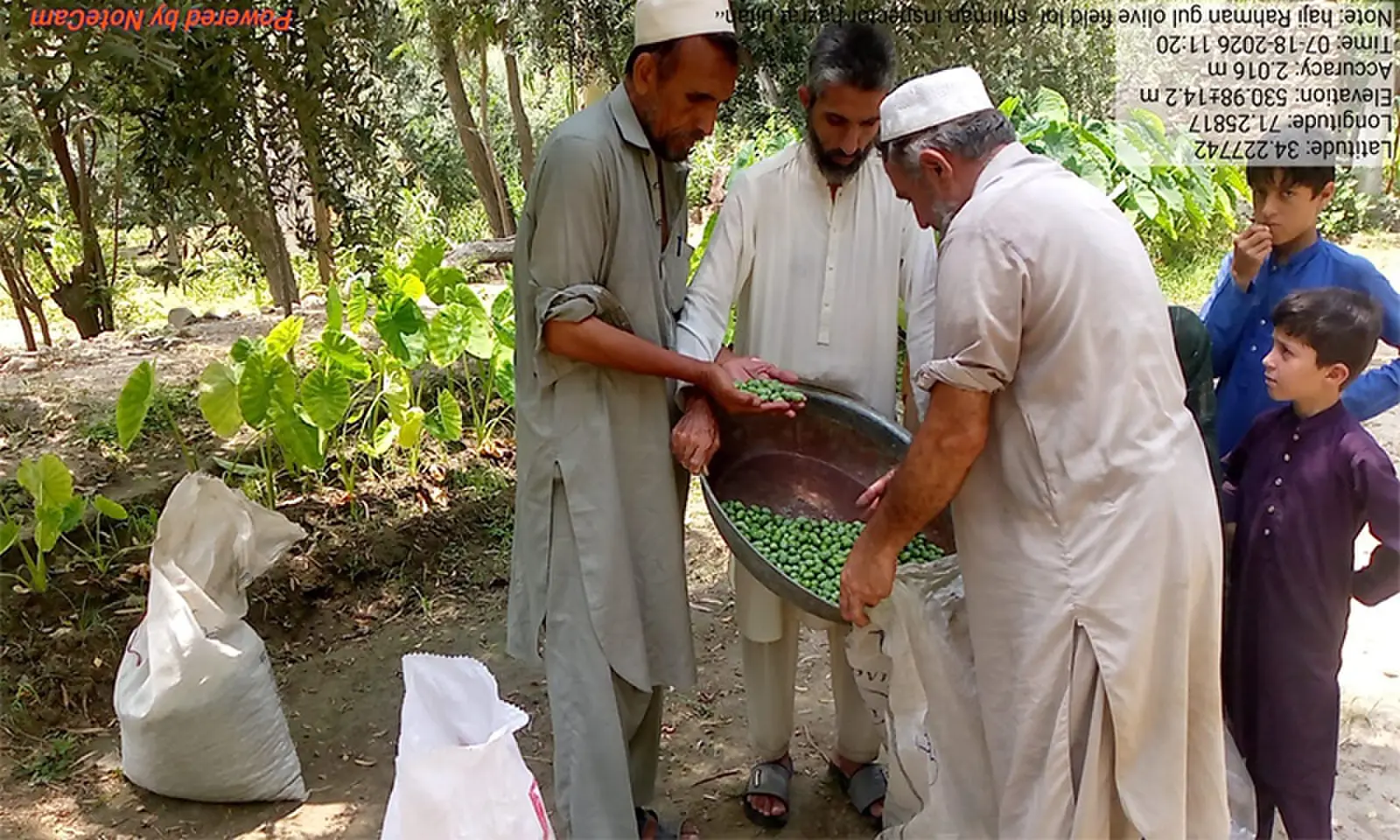
KHYBER: The agriculture department with support of local farmers has converted 200 kanals of barren land into a green olive farm in Khyber tribal district.
Hazratullah, an official of agriculture department, told Dawn that olive plants cultivated over 200 kanals of barren land in Loe Shalman area of Landi Kotal in 2021 produced 4,000kg fruit in the current year as compared to 2,000kg in 2025.
He said the department brought three varieties of olive plants from Italy and cultivated their saplings at Durma Kuroona, Wali Mohammad Kuroona and Wazir Kuroona in Loe Shalman in 2021 with active support of local farmers, who were anxious to turn barren lands into cultivable fields with handsome monetary yields.
He said the imported olive species included Alovena, Arbequina and Gemlik that were considered friendly to the weather and soil conditions of Loe Shalman. He said the rapid and speedy growth of those types of olive plants encouraged farmers to take proper care of the newly-established farm.
Grafting of 30,000 wild olive plants also completed in Bara
He said that with successful experimentation at Loe Shalman, the department was encouraging more farmers to cultivate olives on their lands with an expansion in its land cover.
Duniya Gul, a local farmer, told Dawn that the ripe olive fruit was also converted into olive pickles while he also planned to extract oil from the fruit, which he sent to both local and Punjab markets.
He said that successful experiment of olive farms would help in augmenting their revenues alongside cultivation of seasonal crops and vegetables. He, however, demanded of authorities concerned to provide them with the best quality olive saplings along with fencing the farms to save growing plants from animals.
Meanwhile, agriculture department in collaboration with farmers in upper Bara has completed the grafting of at least 30,000 wild olive plants.
The district forest officer, Zahid Masud, said that a watchtower would be constructed in Sandana area to keep a constant vigil on the local forest.
He said that bamboo would be cultivated on both sides of the Bara River to protect farmlands from flash floods during rainy seasons. “It will also enhance the natural beauty of upper Bara, which has a great potential for both agriculture and tourism,” he added. Published in Dawn, October 23rd, 2026