• Raja Nasir Abbas claims country ‘has become a prison’; questions how politicians can accept ‘such humiliation, misuse of law’
• Warns against getting involved in Yemen conflict
• Upper house passes fresh bill allowing ex-lawmakers to retain blue passports; earlier draft seeking to extend facility to their children withdrawn
ISLAMABAD: The Senate on Monday witnessed a war of words between the opposition and treasury benches over the imposition of emergency and governor’s rule in Khyber Pakhtunkhwa.
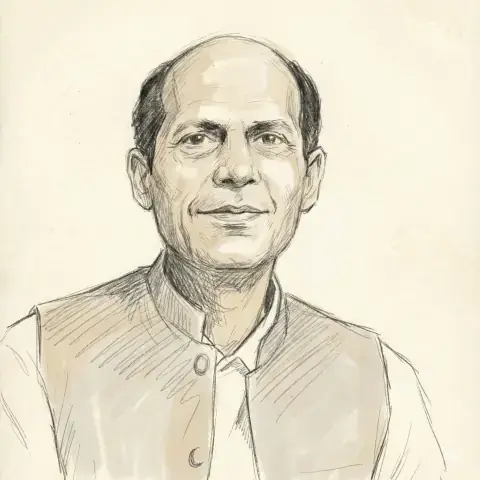
Leader of the Opposition in the Senate Raja Nasir Abbas launched a scathing attack on the government, saying an assault on the people’s mandate had begun on Oct 11, and that 98 per cent of the population rejected the move.
“There was only one place left that irked you,” he said, alleging that committees comprising select individuals had been formed to run the province’s affairs, while MPAs and MNAs were being picked up left and right.
“Pakistan has become a jail for us, a prison,” he said, questioning how politicians could accept their humiliation and the misuse of the law.
“First you robbed the people of their votes. Your own minister said the system has collapsed,” he said, referring to Interior Minister Mohsin Naqvi’s recent call for a ‘system reset’ and the creation of more administrative units.
Referring to the situation in KP, Mr Abbas described the federal measures as sheer oppression, which could have been avoided. New rulers had been forcibly imposed on the public, he said, urging the government not to push people to a breaking point.
He also argued that both houses of parliament were not functioning as they should, and that the judiciary had been made a spectacle of through the 27th Constitutional Amendment.
“You snatched the mandate from Bengalis and they separated. You still have not learned,” he said.
The opposition leader also sought a briefing on the Yemen situation, recalling that parliament had passed a resolution in 2015 against Pakistan becoming part of the war. He said he had written to the prime minister and foreign minister, urging them to mediate, rather than becoming involved in the conflict.
“This is a sensitive issue. Countries are being economically devastated and we are going to become part of another war,” he said.
Responding to the opposition leader, Minister for Parliamentary Affairs Dr Tariq Fazal Chaudhry said emergency and governor rule had been imposed through a presidential order under Articles 233 and 234 of the Constitution, which were subsequently ratified by the Senate, National Assembly and a joint sitting of Parliament.
The federal government understands that it must succeed in what it has started in KP, he said, adding that experts from relevant fields had been included in the KP Advisory Council to improve governance.
“All steps have been taken in the interest of peace, stability and national interest,” he said.
Blue passports
Separately, the upper house of parliament passed a bill that allows former lawmakers to retain blue passports, even if they had not served a full term in the National Assembly or Senate.
In the same sitting, the house rejected a bill seeking to allow the issuance of blue passports to ex-parliamentarians’ dependent children under the age of 28.
Official blue passports are issued to key constitutional, government and judicial office holders, senior bureaucrats and their eligible dependents, allowing them visa-free entry to 55 countries, including 22 European countries.
The two bills were moved by Senator Abdul Qadir. Of the two, an amendment to insert a new Section 3-A in the Passports Act, 1974 was passed.
This states that: “a retired parliamentarian who has taken oath as a Member of the National Assembly (MNA) or the Senate, whether for a full term or for the remainder of the term of another member, shall, on such terms and conditions as may be prescribed, be entitled to retain and use the gratis official (blue) passport issued to him or her after ceasing to hold office”.
The amendment also covers lawmakers who leave office before completing five years as an MNA or six years as a senator.
At present, blue passports are issued to those ex-parliamentarians who remained a member of either House for at least one term, according to the Passport Rules 2021.
The statement of objects and reasons of the bill approved by the Senate states that the amendment “brings parity with the privileges available to other high-ranking officials and ensures uniform treatment of persons who have served the state at the highest level”.
The bill has yet to be passed by the NA.
The second bill, which sought to amend Section 12 of the Members of Parliament (Salaries and Allowances) Act, 1974 to provide that “an ex-member, the spouse of the ex-member and the dependent children of the ex-member below the age of 28 years shall be entitled to a gratis official (blue) passport”, was withdrawn after opposition by treasury members in the Senate.
In July, the bill had been approved by the relevant Senate committee, with the government drawing backlash. After criticism of the bill, Minister of State for Interior Tallal Chaudhry had assured that measures would be taken to ensure that the travel document was used for “only official duties” abroad and issued for a limited time in most cases.
Published in Dawn, October 20th, 2026