Colombia opens embassy to Israel in Jerusalem
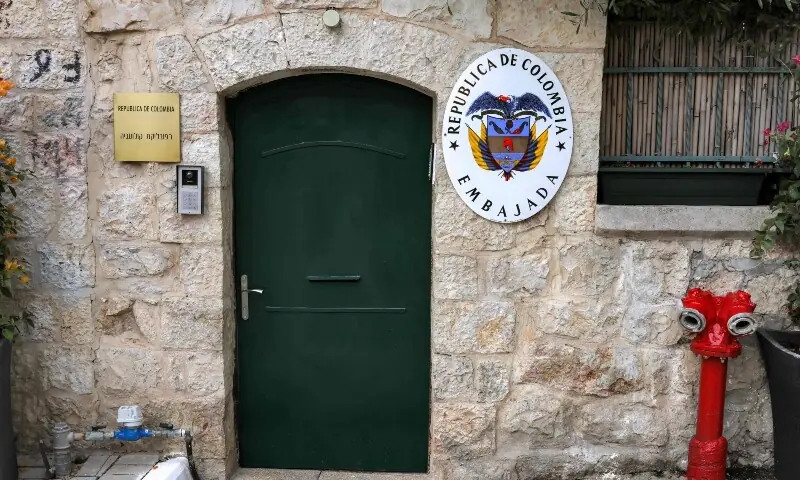
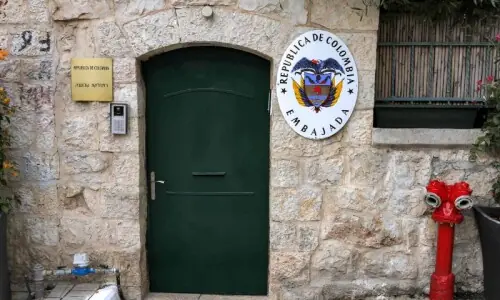
JERUSALEM: Colombia on Wednesday officially opened its embassy in Jerusalem, joining a small group of countries including the United States in taking the symbolic step of backing Israeli sovereignty in the contested city.
The vast majority of countries keep their embassies to Israel in Tel Aviv on the grounds that the status of Jerusalem will be settled in a final resolution of the Israeli-Palestinian conflict.
“This is an important date for the State of Israel. It’s also an important date for the city of Jerusalem,” Israeli Foreign Minister Gideon Saar said during a ceremony while signing the Colombian embassy’s guest book.
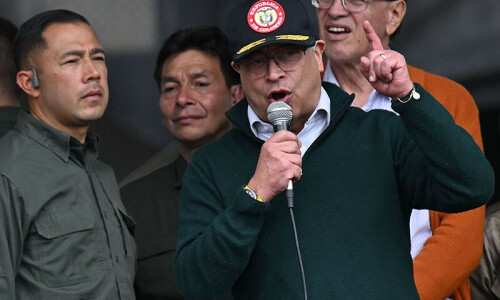
Colombia’s new hard-right president, Abelardo de la Espriella, in July announced that he would move his country’s embassy to Jerusalem, a sharp shift from his leftist predecessor. In 2024, president Gustavo Petro severed ties with Israel, one of Colombia’s key security partners, over its offensive in the Gaza Strip.
By moving US embassy to Jerusalem in 2018, Trump upended decades of global policy
Colombian Foreign Minister Omar Bula said Tuesday’s move was “a concrete step toward the restoration of our diplomatic relations; a relationship that should never have been interrupted.” “Israel is a strategic partner; it always has been, and from now on it will be so with even greater determination and strength,” said Colombian ambassador Tania Gilinski.
“This is the beginning of a golden age in relations between our two countries,” Saar said. The Palestinian Authority condemned the move. In a statement, its Foreign Ministry said that “opening an embassy to Israel in occupied Jerusalem constitutes a violation of international legitimacy resolutions…, undermines the international consensus on the legal status of the holy city, and infringes upon the inalienable rights of the Palestinian people.” President Donald Trump shattered international consensus in 2018 during his first term by moving the US embassy to Jerusalem, which is home to Israel’s parliament, prime minister and most other major governmental institutions.
Since Trump’s move, only a handful of small, US-aligned countries have followed suit — Fiji, Guatemala, Honduras, Papua New Guinea, Paraguay and Nauru. Kosovo and Somaliland, which are not member-states of the United Nations, have also opened what they consider their embassies in Jerusalem.
Most contentious issue
Argentine President Javier Milei, another right-wing Latin American who is an outspoken supporter of Israel, has promised to move his country’s embassy to Jerusalem. The status of Jerusalem is one of the thorniest issues in the Israeli-Palestinian conflict.
Israel regards Jerusalem as its capital, while Palestinians seek East Jerusalem as the capital of a future independent state. The city’s status remains one of the most contentious issues in the Israeli-Palestinian conflict
Former Colombian president Gustavo Petro broke diplomatic relations with Israel in 2024 over its actions in Gaza and had heavily criticised Prime Minister Benjamin Netanyahu. Petro also halted coal exports to Israel, closed Colombia’s embassy in Tel Aviv and recalled its ambassador, a move Israel said was antisemitic and a reward for Hamas.
“It is also recognition of a historical truth that no honest person can deny. Today, we are taking a concrete step towards restoring diplomatic relations between our countries, relations that should never have been broken. Israel is a strategic partner. It always has been, and from now on, it will be an even stronger one,” Colombian Minister of Foreign Affairs Omar Bula said at the opening.
Israel’s foreign ministry noted that Saar and Bula will hold bilateral talks on Wednesday. The Colombian foreign ministry said in a statement the meeting will focus on political dialogue, security and defence cooperation, the strengthening of trade and new opportunities for investment.
Israel occupied East Jerusalem and annexed it in 1967, in a move not recognised by the vast majority of the international community. In August, Colombia’s new hard-right government recognised Israel’s claim over the Golan Heights, which it seized from Syria in 1967.
The US was until then the only country to recognise Israel’s annexation of the territory in 1981. The United Nations maintains that the plateau is Syrian territory under Israeli military occupation.
Published in Dawn, October 15th, 2026