Islamabad ATC disposes of plea to drop terrorism charges against Imaan, Hadi in security breach case
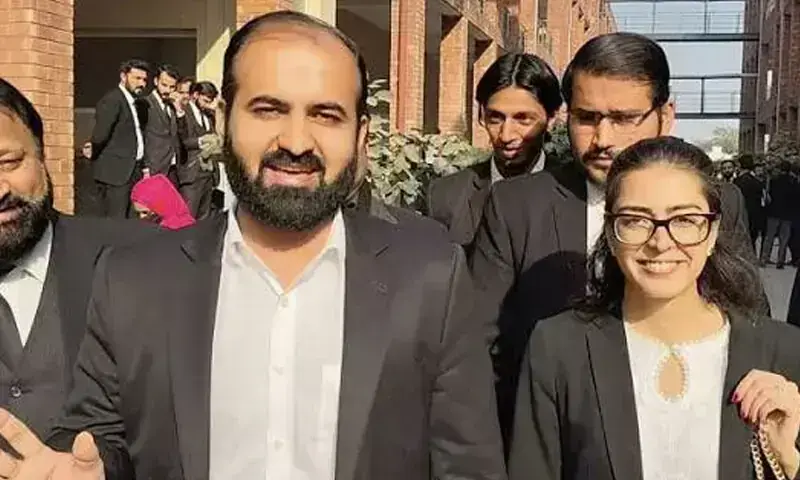
ISLAMABAD: An anti-terrorism court (ATC) on Saturday disposed of a petition seeking to drop terrorism charges against human rights lawyer Imaan Mazari and her husband, Hadi Ali Chattha, in a case related to the removal of security barriers erected for the English cricket team.
The court also sought an explanation, which was provided after a brief adjournment, from jail authorities for failing to produce the accused in person despite a court order.
The couple were indicted by the ATC on Tuesday in the case. Both opposed the framing of charges, arguing that they had not been provided copies of the case record or allowed to meet their lawyers.
ATC Judge Tahir Abbas Sipra was hearing the case in which the couple have challenged the framing of terrorism charges. Neither accused was initially produced before the court, and no representative of the jail administration appeared to explain their absence.
The judge directed prosecution and police officials to contact the jail authorities by telephone to ascertain the reason for their non-production. He also ordered the submission of a written explanation via WhatsApp by 11am.
Advocate Aimal Khan requested the court to ensure the personal appearance of both accused, pointing out that an earlier order had directed the authorities to produce them either physically or through a video link.
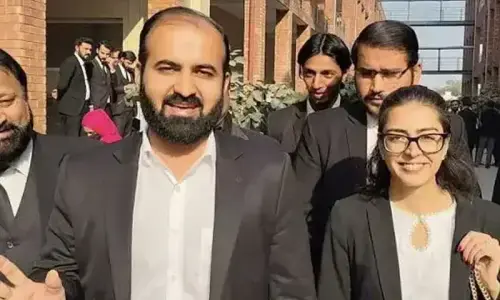
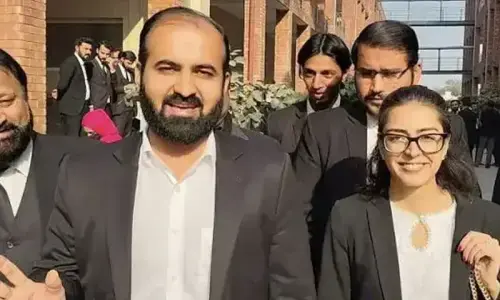
The couple were subsequently produced before the court through a video link. Dr Shireen Mazari also appeared, along with lawyers Zainab Janjua and Aimal Khan.
At the outset of the hearing, Judge Sipra inquired about photographs taken during the previous proceedings and imposed a ban on mobile phones inside the courtroom. The restriction was later lifted following a request by court reporters.
Advocate Zainab Janjua informed the court that the accused had challenged the framing of charges before the Islamabad High Court (IHC), where their petition was scheduled to be heard on Monday. She requested the trial court to defer proceedings until the high court considered their challenge.
“What does it matter? If the framing of charges is set aside, the entire proceedings will come to an end,” Judge Sipra remarked, observing that the challenge before the high court did not automatically prevent the trial court from proceeding.
The judge also questioned why the trial had stalled at this stage, noting that superior courts had already dealt with related matters and that a show-cause notice had previously been issued.
Janjua questioned the repeated failure of jail authorities to produce the accused despite standard operating procedures governing their appearance. She also sought an adjournment, saying senior counsel Riasat Ali Azad was unavailable.
During the video-link hearing, Chattha told the court that he and his wife respected the judge and had regularly appeared before him. Referring to the principle of a fair trial, he said they had learnt from the judge that judicial proceedings could not be conducted without due process.
“Why are we not being produced before the court?” he asked, questioning how their right to a fair trial under Article 10 of the Constitution was being protected. He also referred to newspaper reports stating that charges had been framed against them.
Judge Sipra asked whether the couple had challenged the framing of charges, observing that the high court could set them aside if they had not been framed in accordance with the law.
The judge also directed a prison official to arrange chairs for the accused during their video-link appearance and questioned why they had not been brought to court physically as ordered.
He directed the relevant authorities to submit a written explanation by 11am regarding the failure to produce the couple.
The court adjourned the proceedings pending the submission of the report by the jail administration.
When the hearing resumed, the court disposed of the petition seeking to drop the terrorism charges, saying that this was not an appropriate stage to grant the relief sought without hearing arguments from the lawyers representing the two accused, whose counsel had boycotted the proceedings.
During the proceedings, the court noted that, according to the report submitted by the jail authorities following the adjournment, the Islamabad Police had failed to provide an escort to bring Imaan Mazari and Hadi Ali Chattha to court.
The court observed that the two accused could not be brought to court because the police had failed to provide the required security.
Advocate Janjua said the state was acknowledging that the accused had not been brought to court owing to its own failure to provide an escort.
“On the one hand, the state is asking the court to record the witnesses’ statements today, while, on the other, the same state is failing to provide security for Imaan and Hadi to appear before the court,” she remarked.
She maintained that the failure to ensure their appearance was undermining the accused’s right to a fair trial.
Imaan and Hadi’s rearrest
The lawyer couple has been in jail since their arrest on Jan 23 in a case registered against them for protesting outside the Islamabad High Court (IHC) and allegedly manhandling the IHC Bar Association (IHCBA) president. The arrest prompted criticism by rights bodies, politicians and journalists, who stressed the couple’s right to a fair trial.
Just a day later, a sessions court sentenced them to 17 years on multiple charges under the Prevention of Electronic Crimes Act (Peca) in a case pertaining to controversial social media posts.
The convictions were widely condemned by lawyers and United Nations (UN) experts.
On Sept 17, following months of litigation before the courts, the Supreme Court suspended their sentences in the case. The SC ordered their release pending the Islamabad High Court’s final verdict on their appeals against the trial court’s decision.
However, the reprieve was short-lived as hours later, Islamabad police arrested the couple again in connection with another case and produced them before an ATC, which sent them to jail on judicial remand.
The fresh case in which the two were arrested was registered at the federal capital’s Kohsar police station on March 22 last year on the complaint of City Magistrate Ghulam Murtaza Chandio.
Imaan and her husband were accused of chanting anti-government slogans and blocking roads and were nominated by name in the FIR. However, at the time of registration of the case, no section of the Anti-Terrorism Act (ATA) had been added.
The FIR included sections 188 (disobedience of an order lawfully promulgated by a public servant), 341 (wrongful restraint), 506 (punishment for criminal intimidation), 353 (assault or use of criminal force to deter a public servant from discharging their official duty) and 186 (obstructing a public servant in the performance of official duties).