The Moscow format’s persistent Taliban dilemma and the way forward
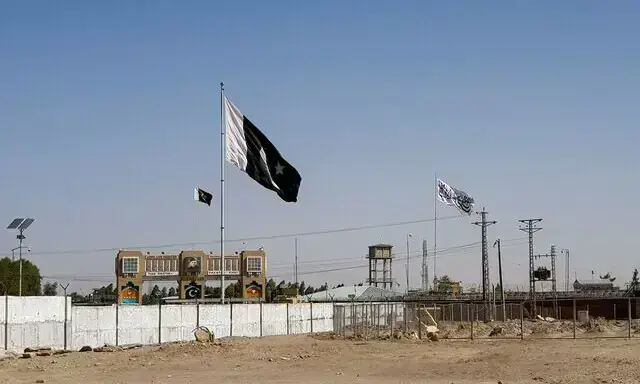
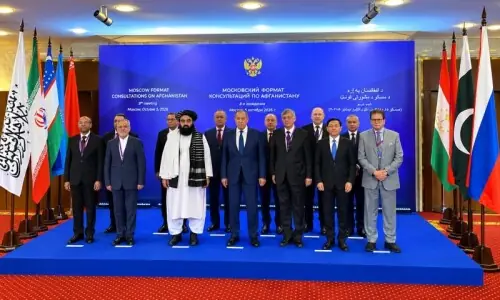
The eighth meeting of the Moscow format of consultations on Afghanistan concluded in Moscow on October 5 without issuing a joint statement. Zamir Kabulov, the Russian presidential envoy for Afghanistan, attributed the lack of consensus on a joint statement to disagreements between Pakistan and Afghanistan.
A more balanced portrayal, however, would attribute this failure to the Taliban regime’s refusal to take verifiable action against the more than 20 terrorist groups on its soil, whose activities are well-documented in several UN Security Council Sanctions Monitoring Team reports, and then refusing to acknowledge it, rather than disagreements between any two members of the forum.
If the forum recalls its 2024 joint statement, it urged the Afghan “de facto authorities to take visible and verifiable actions in fulfilling the international obligations and commitments made by Afghanistan to fight terrorism, dismantle, and eliminate all terrorist groups equally and nondiscriminatory and prevent the use of Afghan territory against its neighbours, the region, and beyond.”
Even though the 2025 joint statement took a relatively softer tone by laying more emphasis on cooperation with the Taliban regime “so that Afghan soil is not used as a threat to the security of the neighbouring countries and beyond,” it once again underscored the need for dealing with Afghanistan as a safe haven for terrorist groups. Therefore, the forum’s failure in producing a joint statement should be linked to its actual cause rather than a vague statement of disagreement between its two members.
Even more amazing than this was to witness how the Taliban regime’s interim foreign minister Amir Khan Muttaqi could not see the paradox in his statement at the forum when he called for resolving all outstanding issues affecting relations between the two countries through dialogue and diplomacy.
Pakistan’s diplomatic overtures
The interim foreign minister conveniently forgot all the effort that Pakistan put into hectic diplomacy with his regime for a good part of the year 2025. While efforts were under way since the start of the year, Pakistan’s diplomacy gathered momentum in the second half of April 2025, when Deputy Prime Minister and Foreign Minister Ishaq Dar visited Afghanistan and held crucial meetings with Amir Khan Muttaqi himself, as well as the Acting Afghan Prime Minister Mullah Muhammad Hassan Akhund and Afghanistan’s Interior Minister Sirajuddin Haqqani.
Starting May 2025, China also started playing an active role in bringing the two countries closer. On May 10, 2025, Ambassador Sadiq and Chinese special envoy for Afghanistan Yue Xiaoyong met with various Afghan officials including Muttaqi, Haqqani, and the Afghan Commerce Minister Nooruddin Azizi in Kabul to pave the way for the revival of Trilateral Foreign Ministers’ Dialogue with its 6th meeting, which later took place in Kabul on August 20. Dar also visited Kabul in July to sign the framework agreement for a joint feasibility study of the Uzbekistan-Afghanistan-Pakistan railway. Pakistan also provided Afghanistan with humanitarian assistance after the September 2025 earthquake.
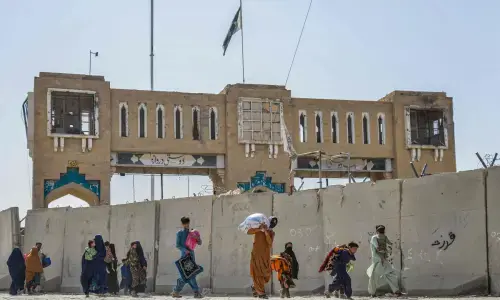
As Pakistan upgraded its diplomatic relations with Kabul from chargé d’affaires to the ambassadorial level, while aiming at laying the foundations for a “qualitative change” in its bilateral relations with Afghanistan during the period mentioned above, it continued to be on the receiving end of terrorist violence planned and executed from Afghan soil. Pakistan lost over 1,100 lives, including civilians, to terrorism emanating out of the Afghan soil between March and September 2025.
The honourable interim foreign minister needs to keep in mind that Pakistan’s current policy toward Afghanistan is not only defensive in nature but also an outcome of the failure of diplomacy that he is yearning for. He also needs to remind himself that diplomatic engagement is never an end in itself but a means to resolving outstanding issues between the two sides involved.
At wit’s end
A careful look at the timeline of Pakistan’s kinetic measures against terrorist targets in Afghanistan reveals that when all of Pakistan’s well-intentioned diplomatic overtures toward Kabul did not result in a meaningful reduction in cross-border terrorist attacks, Pakistan was left with no other option but to take action inside Afghanistan in self-defence.
Even when the crisis escalated and Qatar and Türkiye had to step in for de-escalation, the insistence of the Taliban regime was on maintaining ceasefire rather than addressing the core issue affecting bilateral relations. As Kabul continued to drag its feet on negotiating a lasting solution to Pakistan’s security concerns vis-à-vis Afghanistan and kept insisting on maintaining a ceasefire alone, casualties from cross-border terrorism continued to mount to another 823 lives lost between October 2025 and February 2026.
It was, therefore, only after the failure of the sincere efforts from Ankara and Doha, exhaustion of all other available options, and the continuing loss of lives to cross-border terrorism in Pakistan that Islamabad had to take the difficult decision of launching Operation Ghazab lil-Haq in February 2026 as an ongoing long-term military operation against terrorist targets inside Afghanistan aimed at neutralising terrorists inside Afghan territory through the sustained use of air power.
Russia is the only country in the world that recognises the Taliban regime in Afghanistan and its roots can be found in the Moscow format as well when a delegation of the Taliban movement, which was an insurgent group at the time, was invited to the November 2018 meeting of the forum despite the Republic government of Afghanistan’s boycott over the inclusion of the Taliban. As Russia deepens its engagement with Afghanistan, it also needs to revive the counter-terrorism emphasis of the Moscow format for consultation on Afghanistan.
As far as the honourable interim foreign minister Muttaqi’s desire for diplomacy with Pakistan is concerned, he will have to understand that diplomacy would bear fruit only if Kabul would reorient its foreign policy paradigm in light of the following realities:
- Pakistan will not compromise on its sovereignty and territorial integrity.
- No matter how deeply New Delhi has entrenched itself with his regime to further its interests by using Afghan soil against Pakistan, Kabul’s relations with Islamabad will always be of greater significance and consequence for Afghanistan.
- Pakistan’s kinetic responses against terrorist hideouts in Afghanistan do not signify its aggression but its restraint. Since the Taliban’s return to power in Afghanistan, Pakistan has lost close to 7,000 lives to cross-border terrorism. No country shows the kind of restraint Pakistan has shown over the past five years against such a consistent onslaught of cross-border terrorist violence.
- While the Taliban regime is fond of equating Pakistan’s response to terrorism as enmity with Afghanistan, if its support to terrorist groups on its soil targeting Pakistan is subtracted from the equation, there is nothing to quarrel about, neither with the Taliban regime of Afghanistan nor with its people.
- If the Taliban regime would take one step in the right direction, Pakistan would take two, because the futures of the populations of the two countries are intertwined both in adversity and prosperity.