LAHORE: Punjab is fast heading towards a looming crisis in training for more than 40 postgraduate medical education programmes after the College of Physicians and Surgeons Pakistan (CPSP) has withheld accreditation status from all the public sector medical institutions across the province.
The CPSP reacted a couple of months after the Punjab Specialised Healthcare & Medical Education (SH&ME) Department under a new policy discontinued postgraduate supra specialty training programme in Second Fellowship which was formerly designated as Level-IV for the FCPS students in all the public sector medical institutions.
Some medical educationists believed that the department’s decision has put the future of thousands of the FCPS students at grave risk, leading to a confrontation between the CPSP offering training programmes over decades and the health department.
It is evident from the official correspondence between the health secretary and the college president.
CPSP forms committee as row over Punjab’s Second Fellowship policy deepens
The copies of the official correspondence between the two sides are also available with Dawn.
Taking a tough stance on the matter, the CPSP has sought a ‘clarification’ from the health secretary about the compelling circumstances which forced him to take this, what it called, abrupt decision as Punjab is the only province which came up with this strange policy.
An explanation was demanded in response to the official letter of the health secretary he addressed to the Pakistan Medical & Dental Council, Higher Education Commission, all the vice chancellors and principals etc.
“Pursuant to the decision of the Postgraduate Admission Committee, it is hereby notified that with effect from January 2027 induction, the postgraduate training in Second Fellowship (erstwhile Level-IV) under central induction shall be offered only against the University Degree Programmes (MD/MS),” reads the July 9 official letter of the health department.
The same notification, however, provides that Second Fellowship seats in public-sector teaching hospitals would be allocated in a 50:50 ratio between MD/MS-qualified and FCPS-qualified candidates.
The medical teachers say apparently the contrasting provision of the notification has become a key point of discussion among the teaching faculty and postgraduate doctors in Punjab.
On the other hand, the FCPS students are showing serious concerns as to how the health department can compel them (FCPS students) to join Level IV training which was designated for rival degree programmes (MD/MS).
CPSP’s reaction
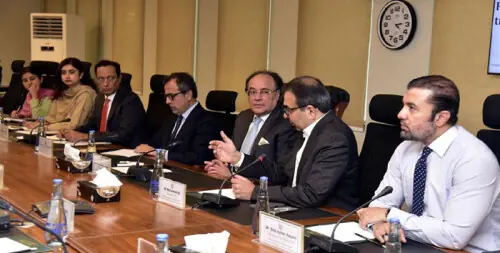
Following the notification of the health department, the CPSP held a series of meetings and then formally raised the matter ‘officially’ with the Punjab government.
In a letter on Sept 7, the CPSP secretary informed his counterpart in the SH&ME department that no response had been received to the college’s previous frequent correspondences regarding the July 9 notification.
The CPSP conveyed to the health secretary that the college had consequently decided to withhold, with immediate effect, accreditation of all the respective institutes and registration of trainees under the department.
Another subsequent letter was also written around three weeks later raising the same issue until a satisfactory response or clarification from the competent authority of the health department.
On finding the health department unmoved by the issue, the CPSP on Sept 24 formed a five-member committee of senior representatives from the college to ponder various aspects including legal ways.
CPSP Vice President Mohammad Masroor was made the convener of the committee with four councillors of the college as members. They included Maj-Gen Prof Waseem A Khan, Prof Jehangir Khan, Prof Syed Khalid Ahmad Ashrafi and Prof Aisha Siddiqa.
As per the terms of references, the committee will examine the legal and regulatory aspects and suggest appropriate remedial measures, plan a moot/consultative session of fellows and postgraduate trainees for dialogue and feedback on the matter, and examine the exclusion of the specialised healthcare and medical education department and its implications.
Similarly, the committee will review the matter from academic, professional and institutional perspectives and propose recommendations and consider any other matter with the permission of the Chair.
Supra-specialty pathway
Talking about the programme, a senior official explained that the Second Fellowship provides a pathway for doctors who have completed their first FCPS in medicine or surgery to pursue further training in nearly 42 ranges of supra-specialties.
The supplied CPSP list contains 44 Second Fellowship disciplines including breast surgery, colorectal surgery, critical care medicine, endocrinology, gastroenterology, interventional cardiology, interventional radiology, maternal-fetal medicine, molecular pathology and cytogenetics, neonatal paediatrics, paediatric cardiology etc.
He said the policy dispute, therefore, concerns not merely the nomenclature of a postgraduate qualification but the future structure of supra-specialty medical training in Punjab.
The official said the controversy comes at a time when both university postgraduate degrees and CPSP fellowships form part of Pakistan’s postgraduate medical education system.
The issue has also raised implications for the FCPS doctors already enrolled in Second Fellowship programmes and institutions currently providing CPSP-accredited training.
“The dispute now centres on how Punjab intends to reconcile its policy of promoting university-based MD/MS qualifications and training as the medical institutions in Punjab were lacking the required number of supervisors and structured training programme”, the official said.
Published in Dawn, October 8th, 2026