Russia warns diplomats to leave Kyiv amid new strikes threat
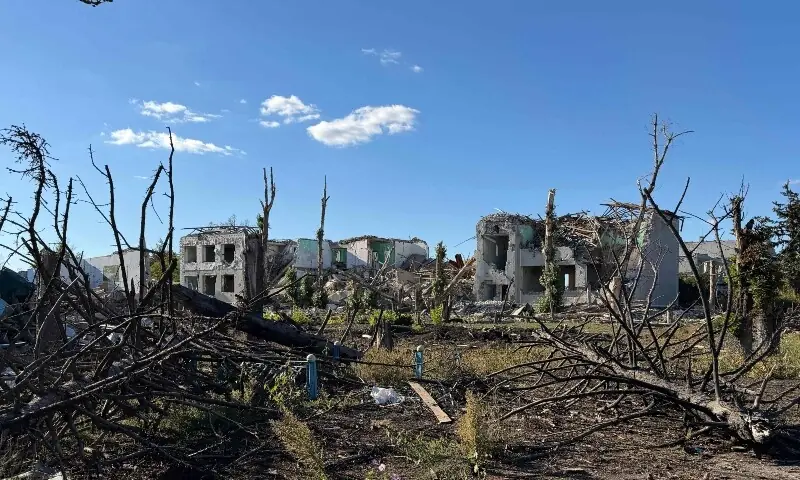

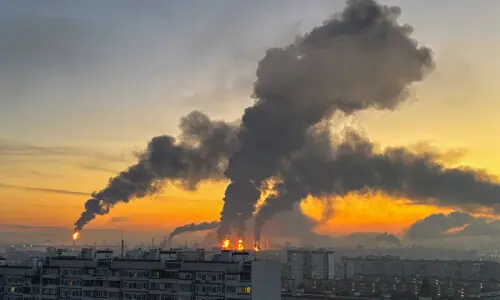
KYIV: Russia issued a new call on Saturday for diplomats and foreigners to leave Kyiv, warning the Ukrainian capital of new “massive” air attacks hours after striking another major bridge in the city.
Moscow has ramped up its pummelling of Kyiv, launching waves of drones at the city, targeting key infrastructure and putting the capital on a near-constant state of alert against attacks.
The strike on the Northern Bridge wounded two people and damaged road surface and trolleybus overhead wires restricting traffic, Kyiv’s mayor Vitali Klitschko said.
Eyewitnesses saw traces of an explosion on a pedestrian walkway and technicians repairing power lines on the bridge.
Hours after the attack, the Russian authorities warned of more strikes, issuing a fresh call for diplomats and foreigners to leave the city and refrain from visiting Ukraine.
“We note with concern that not everyone has heeded these warnings, and that individuals are knowingly exposing themselves to mortal danger,” the Russian foreign ministry said in a statement.
The Russian ministry also stated “responsibility for any potential negative consequences rests entirely with those who ignore this warning”.
Moscow issued a similar warning in May, but heads of state and governments from countries backing Ukraine have defied it by travelling to the country and the capital in show of support.
On Friday, Klitschko said the city was in a “very dramatic situation” and should now be on a war footing as the enemy was “tearing Kyiv apart” with strikes on bridges and energy infrastructure.
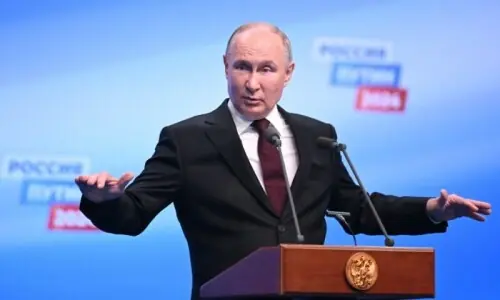
President Volodymyr Zelensky accused his Russian counterpart, Vladimir Putin, of ripping up the rulebook of armed conflict by sanctioning massive attacks on civilian areas, an accusation the Kremlin has rejected.
Kyiv has been increasingly under aerial bombardment in recent months, with the attacks and alerts disrupting daily life and sowing traffic chaos.
Long lines of stationary cars and buses clogged major roads on Friday as commuters sought alternative routes, with some forced to continue their journeys on foot.
Air raid sirens warning of approaching threats sound almost round the clock, urging the city’s estimated three million people to seek shelter.
Strikes across the country in recent days have also caused power outages in several regions in the east, north and centre, with grid operator Ukrenergo urging consumers to limit usage even as demand increases with colder weather.
Ukraine braces for another difficult winter. Last year, heating and power were cut for days on end as temperatures plunged to -20C.
The grinding war has turned into Europe’s bloodiest conflict since World War II.
Ukraine has appeared to stabilise the front in recent months, but depleted air defence stocks since the start of the Iran war have left its cities exposed to Russian barrages.
The US-brokered peace efforts are effectively frozen as Moscow has shown no signs of dropping its maximalist conditions to end the war, including a demand that Ukraine cede territory in the east that Russian troops have not captured.
Attack on ship
Russia attacked a Liberian-flagged cargo ship in one of Ukraine’s Black Sea ports in the Odesa region on Saturday, killing one person and injuring three.
Thirteen other crew members were evacuated to safety.
Russia effectively renewed its blockade of the Ukrainian Black Sea ports since the summer, disrupting trade routes, reducing grain and steel exports and dealing a heavy blow to the Ukrainian economy.
Oil deal
The Trump administration’s talks with Russia on ending the war have expanded to include a multibillion-dollar oil deal that would benefit Middle Eastern business executives with ties to US negotiators Steve Witkoff and Jared Kushner, the New York Times said.
The deal, which is contingent on approval from the US government and the Kremlin, involves a sprawling set of oil fields, refineries and gas stations around the world owned by Russian energy group Lukoil, according to the report.
The group pursuing the deal includes US investor and billionaire Todd Boehly, two Middle Eastern groups that have done business with Kushner or Witkoff’s family, and an arm of the US government, the newspaper said.
Russian President Vladimir Putin raised the deal during a Sept 5 meeting with Witkoff and Kushner at the Kremlin, the NYT said.
Putin proposed completing the deal as a way to show Russians they could do business with the United States, a source said.
Published in Dawn, October 4th, 2026