Govts should be allowed to complete their terms: CM Maryam


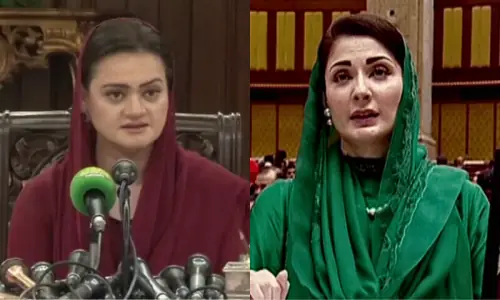
LAHORE: Punjab Chief Minister Maryam Nawaz has said governments that perform well should be allowed to complete their five-year terms, arguing that the lack of policy continuity in Pakistan remains a major hurdle to development.
She was addressing a delegation of the National Command Authority Senior Officers Leadership Course on Thursday, according to an official handout.
Speaking on the occasion, she said Pakistan’s “excellent image and new face” had emerged before the world during the recent conflict with India, adding that the army and other security institutions were rendering invaluable services for the country’s defence.
The chief minister said good governance and performance were essential to tackling internal security threats. “We are Pakistanis first, regardless of whether we belong to Punjab, Khyber Pakhtunkhwa, Balochistan or Gilgit,” she said, stressing the need for continuity in national policies.
Credits PML-N’s extended rule over Punjab for ensuring policy continuity, leading to better governance; Azma says policies should not be sacrificed to ‘political changes’
Building on her argument for political continuity, CM Maryam said governance standards had improved because the PML-N had remained in government in the province for longer periods. She also claimed that terrorism had been brought under control in Punjab, but acknowledged that the threat had not disappeared, adding that the provincial government remained prepared for any possible attacks.
The chief minister said the province previously had around 70 areas regarded as “no-go areas”, but claimed that there was no such area now.
“I am responsible for the safety of 140 million people, so I had to take decisions that had not been taken before,” she said.
Referring to criticism of her government, CM Maryam said there were occasions when she had to choose between “protecting myself or protecting the people”, adding that she had always prioritised the public.
The chief minister said she had no personal grievances against anyone, and did not seek credit for herself. “I ensure 100 per cent merit in Punjab, and neither accept recommendations nor do people now approach me with recommendations,” she said.
Listing her administration’s ‘achievements’, she said the government had strengthened security infrastructure, particularly in border areas, by establishing fortified posts and providing weapons and night-vision cameras. She also highlighted round-the-clock surveillance to detect terrorist activity.
The chief minister said the Punjab government had established separate groups for administration and law and order and that special attention was being given to crimes against women and children.
She said the government had dismissed around 1,000 police and revenue officials as part of measures against corruption and claimed that sustained action had created a fear of the law among officials demanding or accepting bribes.
The chief minister said the government had established virtual police stations for women unable to visit police stations, particularly victims of domestic violence, claiming that hundreds of thousands of cases had been dealt with through the system.
In a subsequent statement, Punjab Information Minister Azma Bokhari also stressed the importance of policy continuity, saying that CM Maryam’s “clear stance is that governments may change, but the national vision and policies aimed at public welfare should not change”.
She insisted that the country’s development was not the responsibility of any single province, government or political party; rather, it is a shared responsibility of all. “Policies formulated for the country’s development and public welfare should not be sacrificed to political changes.”
Ms Bokhari said that if a policy introduced today is abandoned or changed tomorrow merely because of a political change, the country cannot move forward. “Pakistan needs a consistent national vision and continuity of policies instead of short-term political agendas,” she noted.
Published in Dawn, October 3rd, 2026