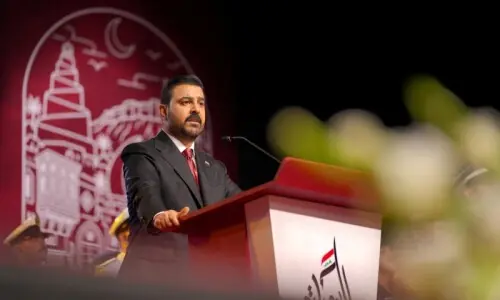
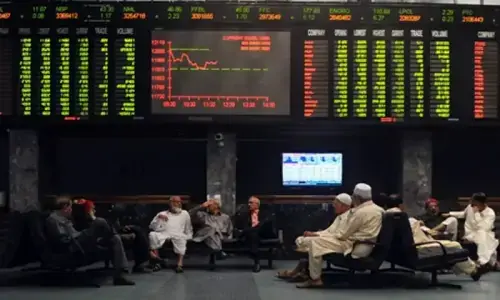
KARACHI: Prime Minister Shehbaz Sharif on Thursday placed the onus of driving Pakistan’s next phase of economic growth on the private sector, urging businesses to focus on exports and productive employment rather than relying on decades of protection.
Addressing a gong ceremony virtually for the listing of Naya Nazimabad Apartments real estate investment trust (Reit) at the Pakistan Stock Exchange (PSX), he said many sectors had been protected since the 1960s but had failed to deliver expected returns in exports or import substitution.
But while the private sector is being asked to take a greater role in driving growth, business leaders said the government also needs to create the right taxation and regulatory environment for investment to expand.
Emphasising the importance of the real estate and construction sector, business tycoon Arif Habib said it creates employment for 40 related industries. Showing a 2002 photo of the barren land on which Dolmen City was built, Mr Habib pointed out that the mall now supports more than 7,000 jobs and generates annual rent of Rs5.83 billion.
Says decades of protection failed to deliver returns
The Arif Habib Group has 16 Reit funds with a combined size of $630 million in the pipeline, of which four have been listed so far. The total project size of the 16 funds is around $4bn.
Dr Kabir Ahmed Sidhu, chairman of the Securities and Exchange Commission of Pakistan (SECP), said the potential for formalisation extended well beyond individual Reit projects. The country’s real estate market was worth around Rs7.6 trillion, he said, but much of this wealth remains undocumented and outside the banking system.
Reits could bring greater documentation, governance and liquidity to the sector.
Building on the importance of construction, Finance Minister Muhammad Aurangzeb said Rs60 billion had been disbursed so far under the PM Apna Ghar housing scheme, with banks approving Rs340bn. “The banking industry has stepped up,” he said, adding that the supply side now needed to respond with more housing.
While acknowledging potential in various sectors, the finance minister warned against falling back into the boom-bust cycle. “We can push growth towards 6 per cent by pumping liquidity in the market, but this would create the familiar balance of payments problems,” he warned.
Part of the government’s strategy is to show more fiscal discipline and turn towards retail investors rather than banks. The Capital Market Development Council is formulating a framework to tap into all asset classes, including venture capital, infrastructure funds, equities, sukuk, Reits, etc.
That transition, he suggested, would also require looking beyond traditional sectors. The ‘new economy’ extends to crypto, Web3 and blockchain, he said, with Pakistan having an opportunity to help shape rules for the Global South rather than simply adopt them.
Against this backdrop, the finance minister emphasised the growth in retail investors. The number of stock market investors has increased by 185,000 over the past six months, from around 500,000-600,000, and the SECP is targeting 2.5 million investors, roughly 1pc of Pakistan’s total population.
Gen Z and millennials account for over 80pc of the new investor base over the past year and are used to digital convenience, PSX Chief Executive Farrukh Sabzwari said. As the exchange is overhauled to keep up with the times, he said extending the stock market’s operating hours beyond 5pm is under consideration.
Published in Dawn, October 2nd, 2026